Advertisement — New Report continues below
Concerned About Your Water Quality? You’re Not Alone.
Recent headlines and viral test results have more families questioning what’s coming out of their taps. Even if your water looks clear and tastes fine, it can still carry PFAS chemicals, chlorine byproducts, heavy metals, and other contaminants — often within legal limits, but still worth a second look.
The good news? There are trusted filtration systems designed to tackle exactly these concerns — improving water safety, taste, and peace of mind.
Smart Solutions for Safer Drinking Water:
✅ Targets harmful contaminants with advanced filtration
✅ Lab-tested and trusted for household use
✅ Options for every need — from under-sink units to full-home systems
Prefer no installation? Check out the A2 Countertop System
Disclaimer:
This advert contains affiliate links. If you buy through these links, we may earn a commission at no extra cost to you.

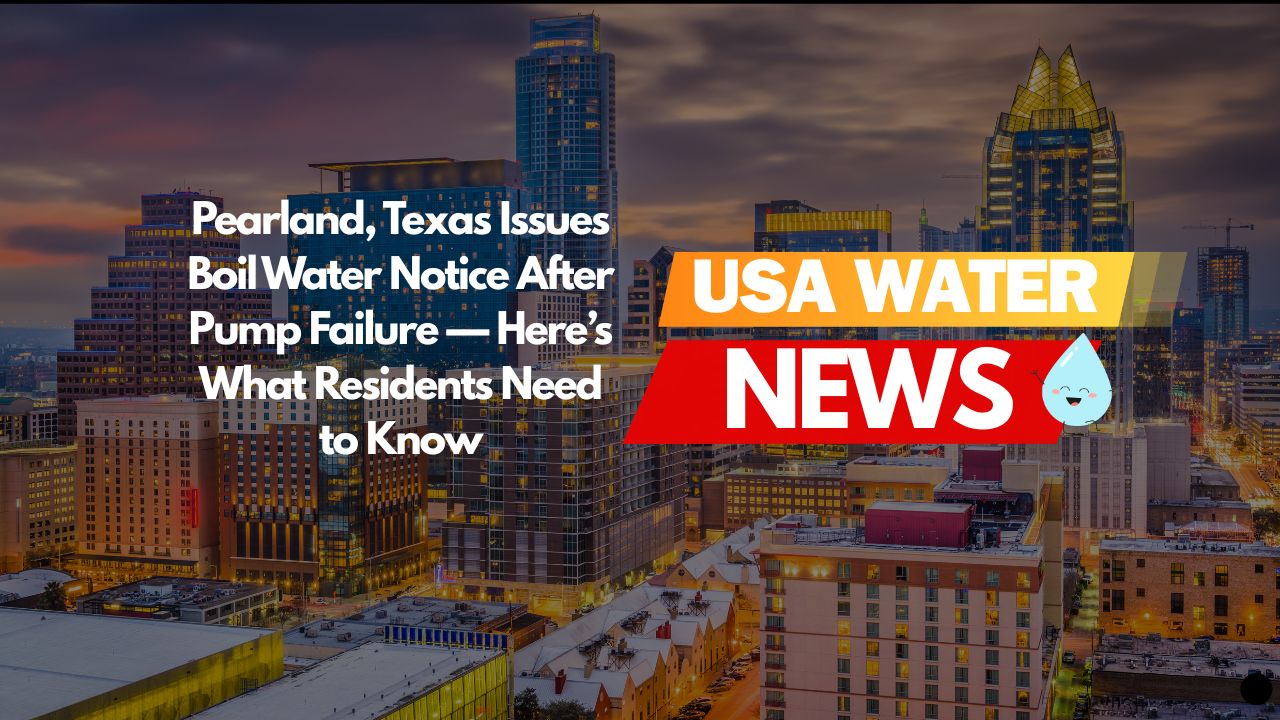
Residents in parts of Pearland, Texas, woke up this week to something no household ever wants to hear: a citywide boil water notice following a pump malfunction at the water production facility. The incident, which occurred late Thursday, forced local officials to warn thousands of households to boil their tap water before drinking it, cooking with it, or brushing their teeth.
For many families, the announcement arrived unexpectedly through text alerts and local news updates. One moment, everything seemed normal — the next, the city was urging immediate precautions and explaining that water pressure had dropped below state-required safety levels during the pump failure.
It wasn’t a chemical spill.
It wasn’t contamination entering the system.
The issue was simpler, but serious: a sudden loss of pressure, which can allow bacteria to infiltrate the distribution network.
The city acted quickly, isolating the affected zone, beginning emergency repairs, and launching widespread sampling. By early Friday, crews were running 24-hour tests to confirm whether the water supply remained safe.
What Happened? A Pump Failure Triggered a Pressure Drop
According to Pearland Public Works, the problem began when a key pump at the water plant malfunctioned, leading to an unexpected drop in system pressure. Under Texas Commission on Environmental Quality (TCEQ) rules, any time pressure falls below 20 psi, a boil water notice must be issued — even if there is no evidence of contamination.
That safety rule exists because pressure is what keeps untreated groundwater and outside material from seeping into the pipes. A temporary dip doesn’t guarantee contamination, but it does create a window where it could occur — which is why the precaution is mandatory.
Pearland officials followed the law exactly as designed.
What Residents Are Being Asked to Do
Until the notice is lifted, TCEQ and city officials are instructing households to:
- Bring tap water to a rolling boil for at least two minutes
- Use boiled or bottled water for cooking, brushing teeth, or making ice
- Avoid using unboiled tap water for infants or anyone with compromised immunity
Bathing and showering remain safe as long as the water isn’t swallowed.
City crews are now flushing lines, stabilizing pressure, and conducting bacteriological testing at multiple points across the network. Residents should expect additional updates throughout the weekend as laboratory results come in.
How Long Will It Last?
Most boil water notices in Texas last 24 to 48 hours, depending on lab turnaround times and system stabilization. Pearland officials have already indicated that testing is underway and that they’ll lift the advisory as soon as the water meets state safety standards.
In similar Texas cases, results often return the next day — but residents should wait for the official green light before returning to normal use.
Why These Notices Matter
Pressure-related boil water notices are among the most common across the country, especially in fast-growing areas with aging or heavily-loaded infrastructure. They’re not a sign of long-term water-quality problems — they’re a short-term safety measure meant to protect residents.
Pearland’s response has been quick, transparent, and fully compliant with state law. The system is stable, the repairs have been made, and testing is underway.
For now, residents are simply waiting for the all-clear.
CleanAirAndWater.net will continue monitoring the situation and tracking updates from Pearland Public Works and TCEQ as new information becomes available.
Sources & Notes
KHOU 11 – Pearland boil water notice issued after pump malfunction
https://www.khou.com/
ABC13 Houston – Pearland issues boil water notice following equipment failure
https://abc13.com/
City of Pearland Public Works – Water Notices
https://www.pearlandtx.gov/
TCEQ – Boil Water Notice Requirements
https://www.tceq.texas.gov/drinkingwater
Click2Houston – Pearland residents under boil water advisory
https://www.click2houston.com/
This article is informational and does not provide legal or medical advice.
Check your water now!
We have translated and compiled water reports on every state in the US, and covered over 100 cities. Find out how good your water is today!
Please read – our information
The information presented on cleanairandwater.net is compiled from official water quality reports, trusted news sources, government websites, and public health resources. While we strive for accuracy and thoroughness in our presentations, we are not scientists, engineers, or qualified water quality professionals.
Our mission is to present water quality information in an accessible, real-world format that helps people understand what’s in their water and make informed decisions about their health and safety. We believe that complex environmental information should be available to everyone in a format that’s easy to understand.
We make every effort to ensure our content is current and accurate, but we cannot guarantee that all information is complete or error-free. This website should not replace official communications from your local water utility or health department. We always recommend consulting official sources for the most up-to-date information regarding your specific water system.
Clean Air and Water is not liable for any unintentional errors, omissions, or outdated information. The content on this site is provided for informational purposes only and should not be considered professional advice.