← Private Well Water Directory / Michigan
Michigan Private Well Water Quality 2026
Michigan has more confirmed PFAS contamination sites than any other state in the US — over 300 identified by the state’s own environmental agency. With 1.12 million private wells and zero federal protection for well owners, Michigan residents face some of the most serious untested drinking water risks in the country.
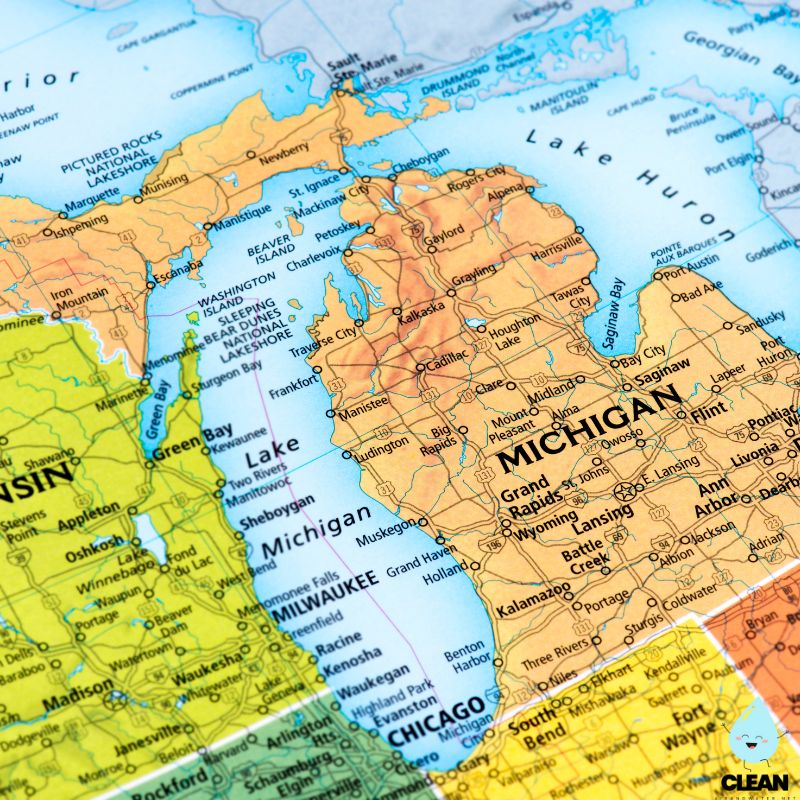
Michigan’s PFAS Crisis in Private Wells
Michigan leads the nation in confirmed PFAS contamination sites, with the Michigan Department of Environment, Great Lakes and Energy (EGLE) having identified over 300 sites statewide. The contamination stems from decades of industrial activity — the automotive manufacturing sector, military bases, tanneries, paper mills, and metal-plating operations have all been significant sources of PFAS in Michigan groundwater.
The scale of the problem becomes stark when you consider the numbers. Michigan has been ahead of the curve when it comes to testing for PFAS and mitigating the issue in municipal water, but 2.6 million residents get their water from private wells — with the state having no legal authority to mandate testing of those wells.
Some of the most severely affected areas include:
- Rockford and Belmont (Kent County) — the Wolverine World Wide tannery dumped waste containing 3M Scotchgard for decades. Contamination affects hundreds of private wells across a wide plume, with some wells testing at levels many times above safe limits.
- Oscoda (Iosco County) — the former Wurtsmith Air Force Base used large quantities of AFFF firefighting foam, with PFAS migrating into nearby residential wells and Van Etten Lake.
- Parchment (Kalamazoo County) — a paper mill contaminated municipal water and surrounding private wells.
- Cadillac — a 2024–2025 state investigation found PFAS in dozens of private wells, with evidence suggesting residents may have inadvertently tainted their own wells by flushing common household chemicals down the drain and into septic systems — a newly identified contamination pathway.
Michigan’s PFAS crisis traces back to multiple sources. Military bases used AFFF firefighting foam for decades. Manufacturing facilities discharged PFAS into waterways. Landfills accepted PFAS-containing products that leached into groundwater. The result is contamination spanning every region of the state.
Arsenic in Michigan Well Water
Beyond PFAS, Michigan well owners face a naturally occurring arsenic risk. Michigan has naturally elevated arsenic levels in groundwater due to its geology, and EGLE recommends all private well owners test for arsenic. The state health advisory level mirrors the federal MCL — arsenic above 10 ppb (0.010 mg/L) means you should not use your well for drinking or cooking.
Arsenic is colourless and tasteless — it cannot be detected without laboratory testing. Long-term exposure is linked to cancers, cardiovascular disease, and nerve damage. Areas with higher lakeshore density and shallow wells — including parts of Oakland County — have shown elevated arsenic in testing. EGLE maintains county-level arsenic maps through its Water Quality Maps portal.
Quick Important Advertisement – Boil Water Alerts continue below
Don’t Wait for the Next Emergency to Act
Boil water alerts are a warning sign. Whether caused by pipe breaks, contamination, or natural disasters, they highlight how vulnerable our water systems can be.
The safest long-term solution? A reliable home water filtration system designed to remove bacteria, parasites, and harmful chemicals — so you’re protected even when advisories are issued.
Stay Ready with Trusted Filtration:
✅ Removes pathogens, chlorine, PFAS, and heavy metals
✅ Safer than boiling alone — no need to wait for alerts
✅ Easy options for homes, renters, and families
Prefer no installation? Check out the A2 Countertop System
Note: This advert may contain affiliate links. If you choose to buy, we may receive a small commission — thank you for supporting our work!
Nitrate and Bacteria Risks
In agricultural areas of Michigan, nitrate contamination from fertiliser runoff is a documented risk, particularly in shallow wells. High nitrate levels are especially dangerous for infants under six months. EGLE notes that nitrate and nitrite are more common in shallow wells near farmland.
Coliform bacteria contamination can occur when wellheads are improperly sealed, flood water enters, or septic systems are located too close to well casings. Michigan remains the only state in the US without a unified septic code, meaning septic system standards vary by county and older systems may pose an ongoing contamination risk to nearby wells.
Regulatory Situation for Michigan Well Owners
Private residential wells in Michigan are not regulated under the Michigan Safe Drinking Water Act or its federal equivalent. The state has no authority to test or regulate drinking water from private wells. EGLE can investigate wells near known contamination sites and may request to test private wells in high-risk zones, but there is no requirement for regular testing and no notification system for well owners.
For PFAS specifically, Michigan has set its own state MCLs through EGLE — including 8 ppt for PFOA and 16 ppt for PFOS — though the stricter federal limits of 4 ppt for both now take precedence. These federal standards apply to public water systems, not private wells. Testing and treatment of your own well remains entirely your responsibility.
Check our Michigan municipal water quality page for city-by-city tap water data, or use our live boil water notice tracker for active advisories across the state.
Known High-Risk Areas in Michigan
If you live near any of the following locations, well water testing is urgent — not precautionary.
Rockford & Belmont, Kent County
Wolverine World Wide tannery waste containing 3M Scotchgard contaminated hundreds of private wells. Some tested at over 100,000 ppt PFAS — thousands of times above the federal limit.
Oscoda, Iosco County
Former Wurtsmith Air Force Base used AFFF firefighting foam for decades. PFAS have migrated into nearby residential wells and Van Etten Lake.
Parchment, Kalamazoo County
Paper mill contamination affected both the municipal water supply and surrounding private wells. The city switched to Kalamazoo’s water; private wells remain at risk.
Cadillac, Wexford County
Active MPART investigation (2024–2025) found PFAS in dozens of wells. Contamination partly traced to household chemicals flushed through septic systems — a risk in any lakeside community.
Ann Arbor Area, Washtenaw County
Multiple PFAS sources affect groundwater near Barton Pond and surrounding areas. Oakland County also has documented elevated arsenic in well water.
Across Michigan — 38 Orphan Sites
MPART has identified 38 so-called “orphan” PFAS sites — locations with confirmed contamination where the source cannot be definitively identified, scattered across the state.
How to Test Your Michigan Well Water — and What to Do Next
Given Michigan’s contamination profile, every private well owner in the state should test their water — regardless of location. The MPART recommendation is clear: even homeowners not near a known contamination site should take the precautionary step of testing. PFAS is colourless, odourless and tasteless, and contamination can exist at harmful levels with no detectable sign.
Contact your local county health department to find a certified laboratory, or use EGLE’s certified lab list at michigan.gov/egle. For properties near any of the high-risk areas listed above, PFAS testing should be treated as urgent.
For filter options, our well water filter guide covers reverse osmosis systems for PFAS and arsenic, UV disinfection for bacteria, and whole-house well systems for comprehensive treatment. You can also browse our full water filter solutions page or check your ZIP code for local water quality context.
For other Midwest well water risks, see our pages on Wisconsin wells, Iowa wells, and Ohio wells. Return to the private well water directory to find your state.
Quality News About Your Water
Get the comprehensive water quality news coverage you need with our dedicated US Water News Service. From coast to coast, we deliver in-depth reporting and expert analysis on PFAS contamination, EPA regulatory changes, infrastructure developments, and emerging water safety issues affecting communities nationwide. While mainstream media only covers the biggest stories, we provide the detailed, ongoing coverage that helps you understand the full scope of America’s water challenges.
What’s actually in your tap water? Enter your ZIP code for a full breakdown of contaminants detected in your local supply
Drinking water from a well? Check our directory here for more information
Please read – our information
The information presented on cleanairandwater.net is compiled from official water quality reports, trusted news sources, government websites, and public health resources. While we strive for accuracy and thoroughness in our presentations, we are not scientists, engineers, or qualified water quality professionals.
Our mission is to present water quality information in an accessible, real-world format that helps people understand what’s in their water and make informed decisions about their health and safety. We believe that complex environmental information should be available to everyone in a format that’s easy to understand.
We make every effort to ensure our content is current and accurate, but we cannot guarantee that all information is complete or error-free. This website should not replace official communications from your local water utility or health department. We always recommend consulting official sources for the most up-to-date information regarding your specific water system.
Clean Air and Water is not liable for any unintentional errors, omissions, or outdated information. The content on this site is provided for informational purposes only and should not be considered professional advice.