← Private Well Water Directory / New Jersey
New Jersey Private Well Water Quality 2026
In 2018, New Jersey became the first state in the US to set an enforceable drinking water limit for any PFAS chemical — but those limits apply only to public water systems. Around 1.1 million New Jersey residents rely on private wells that carry no equivalent legal protection, and arsenic contamination in the state’s northern counties ranks among the highest in the Northeast.
New Jersey’s Unique Position on PFAS
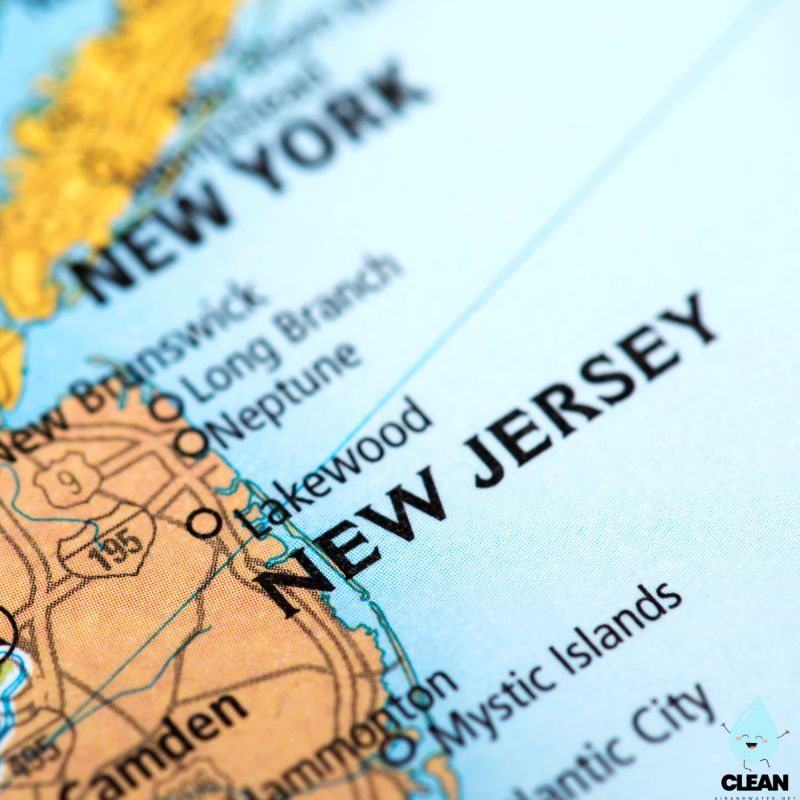
New Jersey was the first state in the country to set an enforceable maximum contaminant level for any PFAS chemical. In September 2018, NJDEP established an MCL of 13 parts per trillion (ppt) for perfluorononanoic acid (PFNA) — a standard the NJDEP has described as “the first regulatory drinking water standard set for any PFAS in the nation.” MCLs for PFOA at 14 ppt and PFOS at 13 ppt followed in June 2020. These standards are more stringent than the equivalent federal limits, and they apply to public water systems. They do not apply to private wells.
On December 1, 2021, NJDEP expanded the Private Well Testing Act (PWTA) to require testing for PFOA, PFOS, and PFNA at property sale or lease. This was a significant step — but the PWTA is a consumer information and disclosure law, not an enforcement law. If PFAS are found above limits at a tested well, there is no legal requirement for the seller, buyer, or landlord to treat or remediate the water. The responsibility for action falls entirely on the property owner.
The data emerging from the PWTA since PFAS testing was added is stark. A 2024 peer-reviewed study in Water Policy examining 20-plus years of the programme — covering approximately 134,000 tested wells — found that since PFAS testing requirements came into effect, over 12% of tested wells have exceeded the limit for at least one PFAS compound. Across approximately 400,000 private wells in the state, that represents tens of thousands of households potentially drinking contaminated water.
PFAS contamination in New Jersey groundwater is documented across all regions of the state, with multiple confirmed sources. Military bases used AFFF firefighting foam for decades. Chemical manufacturing facilities — including DuPont’s Chambers Works plant in Salem County and Solvay Specialty Polymers in Gloucester County — discharged PFAS into soil and groundwater. Airports, landfills, and sewage treatment plants have all contributed to the contamination load. The widespread nature of the problem is confirmed by NJDEP’s own statewide testing programme: of 678 wells tested across 15 counties in a state-led investigation, 320 did not meet state standards for PFNA, PFOA, or PFOS.
Arsenic in New Jersey Well Water
Arsenic contamination in New Jersey private wells is a serious, well-documented problem rooted in the state’s geology. In 2004, New Jersey became the first state to adopt an arsenic MCL below the federal standard, setting its limit at 5 micrograms per litre (µg/L) — half the federal limit of 10 µg/L. This standard took effect in January 2006 and is confirmed by NJDEP as the most protective arsenic drinking water standard in the nation. For private wells, NJDEP recommends using the 5 µg/L threshold as the action level, but there is no legal obligation to treat even if a well exceeds it, because private wells are not regulated under the Safe Drinking Water Act.
The PWTA data illustrates the scale of the problem: among the 12 northern counties where arsenic testing is mandatory under the Act, 8.3% of tested wells exceed New Jersey’s 5 µg/L arsenic MCL — making arsenic the second most common contaminant to exceed its limit in NJ private wells, after gross alpha radioactivity. Hunterdon, Mercer, Middlesex, and Somerset counties carry the highest documented risk. In the Piedmont physiographic region of northern New Jersey specifically, 17.3% of tested wells exceed the NJ arsenic MCL of 5 µg/L. In some individual municipalities, arsenic exceedance rates have been found to reach 68% of tested wells.
Like PFAS, arsenic has no taste, colour, or smell. Long-term exposure is linked to cancers of the skin, lung, liver, kidney, and urinary bladder, along with cardiovascular disease and nerve damage. Testing is the only way to know whether your well is affected. The NJDEP recommends a point-of-entry granular ferric adsorption system as the most effective treatment for arsenic in private well water.
Quick Important Advertisement – Boil Water Alerts continue below
Don’t Wait for the Next Emergency to Act
Boil water alerts are a warning sign. Whether caused by pipe breaks, contamination, or natural disasters, they highlight how vulnerable our water systems can be.
The safest long-term solution? A reliable home water filtration system designed to remove bacteria, parasites, and harmful chemicals — so you’re protected even when advisories are issued.
Stay Ready with Trusted Filtration:
✅ Removes pathogens, chlorine, PFAS, and heavy metals
✅ Safer than boiling alone — no need to wait for alerts
✅ Easy options for homes, renters, and families
Prefer no installation? Check out the A2 Countertop System
Note: This advert may contain affiliate links. If you choose to buy, we may receive a small commission — thank you for supporting our work!
Radionuclides, Nitrate and Bacteria
Southern New Jersey carries a distinct contamination risk not present in the north: elevated radionuclides — specifically radium — in groundwater drawn from the Kirkwood-Cohansey aquifer system. This aquifer underlies Atlantic, Burlington, Camden, Cape May, Cumberland, Gloucester, Monmouth, Ocean, and Salem counties. The elevated radium arises from the geology of the coastal plain, and is made worse by agricultural land use in the area, which raises nitrate levels in groundwater — a condition that is documented to increase the amount of radium dissolving from soils and sands into the water supply. Gross alpha radioactivity was historically the most common exceedance under the PWTA before PFAS testing was added, and in some municipalities more than 60% of tested wells have exceeded the MCL for gross alpha.
Nitrate contamination is the second most common contaminant type by occurrence in NJ private wells. It arrives via agricultural runoff, fertiliser application, septic tank leaching, and animal waste. The risk is concentrated in southern New Jersey’s agricultural belt and around the Pine Barrens, where sandy, porous soils in the Kirkwood-Cohansey aquifer allow surface pollutants to migrate rapidly into shallow wells. Nitrate is a particular danger for infants under six months old, where elevated levels can cause methemoglobinemia — sometimes called blue baby syndrome — a potentially life-threatening condition in which blood cannot carry sufficient oxygen.
Coliform bacteria and E. coli are a perennial risk in private wells where wellheads are poorly sealed, where flooding occurs, or where septic systems are located too close to the well casing. NJDEP recommends annual bacteria testing for all private well owners regardless of location. Radon in water is an additional concern in northern New Jersey, where bedrock geology — particularly crystalline rock aquifers in the Highlands region — can produce elevated concentrations. When water is used indoors, dissolved radon is released as a gas and can accumulate to harmful levels in enclosed spaces.
The Regulatory Situation for NJ Well Owners
New Jersey’s Private Well Testing Act is widely regarded as the most comprehensive private well testing law in the United States. The PWTA requires that, when a property with a private well is sold or leased, the well must be tested for up to 43 parameters before closing. Landlords must also test every five years and provide tenants with a copy of the results. These are legal requirements unique to New Jersey — no other state has equivalent mandatory testing requirements at property transfer.
However, the PWTA has a critical limitation: it is a disclosure law, not an enforcement law. As the NJDEP’s own drinking water fact sheet states: “There are no federal or state regulations assuring the quality of the water consumed by NJ residents who obtain their drinking water from private wells.” If a test reveals that a well exceeds the MCL for arsenic, PFAS, or any other contaminant, neither seller, buyer, nor landlord is legally required to remediate the problem. Approximately 25% of New Jersey’s private wells have been tested under the PWTA; the majority have not been independently tested for any contaminant.
For context on municipal water quality across the state, visit our New Jersey municipal water quality page, or use our live boil water notice tracker for active advisories statewide.
Known High-Risk Areas in New Jersey
If you live in or near any of the following locations, well water testing is urgent — not merely precautionary.
Hunterdon, Mercer, Middlesex & Somerset Counties
The highest documented arsenic risk in New Jersey, driven by the bedrock geology of the Piedmont physiographic region. In some municipalities, arsenic exceedance rates reach 68% of tested wells. All 12 northern counties require arsenic testing under the PWTA at property transfer.
Rockaway Township, Morris County
An NJDEP statewide PFAS well investigation found 54 out of 70 tested wells in Rockaway Township failed to meet state PFAS standards — the highest number of any location in the state at the time of reporting in 2022. PFAS sources include industrial and legacy contamination in the Morris County area.
Joint Base McGuire-Dix-Lakehurst, Burlington County
DoD testing in 2016 detected PFOA and PFOS in base water sources at levels up to 264,300 ppt — thousands of times above health limits. Private wells near the base have been confirmed contaminated. NJ sued the federal government in 2021 over the contamination. Testing is urgent for all well owners in the surrounding area.
DuPont Chambers Works & Solvay, Salem & Gloucester Counties
DuPont’s Chambers Works plant in Deepwater, Salem County, was an early confirmed source of PFOA in NJ groundwater. Solvay Specialty Polymers in Gloucester County was sued by NJDEP in 2020 for PFNA contamination, with a settlement valued at over $275 million for remediation and water treatment.
Cohansey Aquifer — Southern NJ
Atlantic, Burlington, Camden, Cape May, Cumberland, Gloucester, Monmouth, Ocean, and Salem counties. Elevated radium and gross alpha radioactivity is well-documented here due to the coastal plain geology. Mercury testing is required under the PWTA in these southern counties at property transfer.
Northern NJ Highlands & Piedmont
Beyond arsenic, northern NJ bedrock wells in Bergen, Morris, Passaic, Sussex, and Warren counties carry elevated radon in water. When water is used indoors, dissolved radon is released as a gas that can accumulate to harmful levels. Uranium testing is also required under the PWTA in all 12 northern counties.
How to Test Your New Jersey Well Water — and What to Do Next
New Jersey has the most comprehensive private well testing requirements in the United States — but the PWTA only activates at property sale or rental. If you are an existing well owner who has not recently sold or rented your property, you may never have had a comprehensive test. Approximately 25% of New Jersey’s private wells have been tested under the PWTA since its inception in 2002. NJDEP recommends annual testing for bacteria and nitrates, and at least one full PFAS and arsenic test for all private well owners.
You must use a NJDEP-certified laboratory — only certified labs can satisfy PWTA requirements, and results from uncertified labs may not be reliable. Contact the NJDEP Office of Quality Assurance at (609) 292-3950 for a certified lab directory, or visit dep.nj.gov/privatewells. Your local county health department can advise on which parameters are most relevant for your specific location and whether any local testing assistance programmes are available.
For filter options, our well water filter guide covers reverse osmosis systems for PFAS and arsenic, UV disinfection for bacteria, and whole-house well systems for comprehensive treatment. You can also browse our full water filter solutions page or check your ZIP code for local water quality context.
For well water risks in neighbouring states, see our pages on Pennsylvania wells, New York wells, and Connecticut wells. Return to the private well water directory to find your state.
Quality News About Your Water
Get the comprehensive water quality news coverage you need with our dedicated US Water News Service. From coast to coast, we deliver in-depth reporting and expert analysis on PFAS contamination, EPA regulatory changes, infrastructure developments, and emerging water safety issues affecting communities nationwide. While mainstream media only covers the biggest stories, we provide the detailed, ongoing coverage that helps you understand the full scope of America’s water challenges.
What’s actually in your tap water? Enter your ZIP code for a full breakdown of contaminants detected in your local supply
Drinking water from a well? Check our directory here for more information
Please read – our information
The information presented on cleanairandwater.net is compiled from official water quality reports, trusted news sources, government websites, and public health resources. While we strive for accuracy and thoroughness in our presentations, we are not scientists, engineers, or qualified water quality professionals.
Our mission is to present water quality information in an accessible, real-world format that helps people understand what’s in their water and make informed decisions about their health and safety. We believe that complex environmental information should be available to everyone in a format that’s easy to understand.
We make every effort to ensure our content is current and accurate, but we cannot guarantee that all information is complete or error-free. This website should not replace official communications from your local water utility or health department. We always recommend consulting official sources for the most up-to-date information regarding your specific water system.
Clean Air and Water is not liable for any unintentional errors, omissions, or outdated information. The content on this site is provided for informational purposes only and should not be considered professional advice.