Shreveport Water Quality at a Glance
Is Shreveport Water Safe to Drink?
Seriously Troubled System — Exercise Caution — Shreveport’s water system received an F grade from the Louisiana Department of Health for 2024 (the second consecutive F), and in March 2026 a major 42-inch transmission main broke, triggering a citywide boil advisory and school closures. The permanent repair has since been completed, but the system remains under a formal LDH administrative order requiring infrastructure fixes. Officials confirm the water is safe to drink when no boil advisory is active, but the pattern of failures makes home filtration and boil advisory monitoring strongly advisable. Check our live boil water tracker before using tap water.
⚠️ Key Concerns for Shreveport Residents (2026 Update)
- March 2026 Transmission Main Break: A 42-inch main broke on 1 March 2026 causing citywide low pressure, a boil advisory, and school closures. Permanent repair was completed in mid-March 2026
- LDH Administrative Order (2025): LDH formally ordered Shreveport to repair flow meters, sensors, actuators and elevated water tanks — tank repairs were required by April 2026
- Second Consecutive F Grade: LDH confirmed an F for 2024, citing infrastructure deficiencies, federal water quality violations, and customer complaints
- Manganese History: Cross Lake manganese peaked at 1.29 mg/L in June 2024 — over 10x the EPA aesthetic guideline — causing widespread brown water; enhanced treatment protocols are now in place
- $82 Million Bond Programme: Voter-approved funding is financing replacement of two major transmission lines and a new water tower, with full completion not expected until late 2026
Read the full report below for detailed analysis, 2026 data, and actionable recommendations for Shreveport residents. Always check our live boil water notices tracker for any active advisories.
Advertisement — Report continues below
Your tap water just failed.
Here’s the fix.
Contaminants like PFAS, lead, chromium-6, and arsenic can sit within the legal limit but still pose a real health risk. The legal limit and the safe limit are not the same thing.
✅ Removes PFAS, lead & chromium-6 — the contaminants most flagged in failing city reports
✅ NSF/ANSI 42, 58 & 372 certified — independently tested, not just manufacturer claims
✅ Installs in 30 minutes, no plumber — fills a glass in 8 seconds, smart LED filter monitor
Renting or can’t drill? The Waterdrop K19 Countertop RO — plug in, fill the tank, done. No installation, no drilling, no plumber.
Disclaimer: This advert contains affiliate links. If you buy through these links, we may earn a commission at no extra cost to you. Product claims are based on manufacturer certification data and independent SGS lab testing.
Shreveport – Louisiana – Water Quality Report 2026: Infrastructure Crisis, State Orders & Safety for Residents
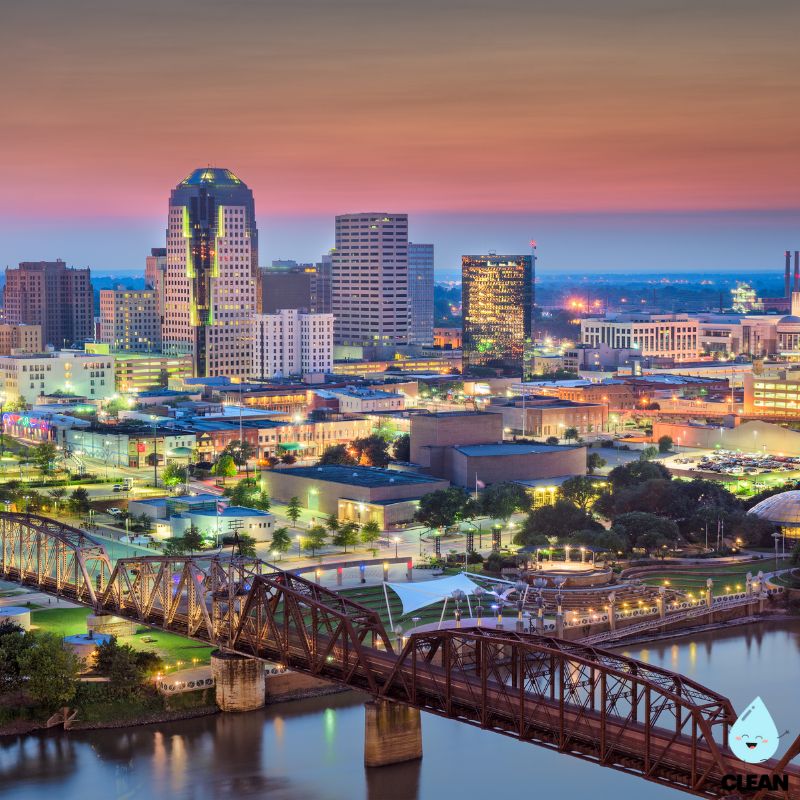
Shreveport Water & Sewerage provides water services to approximately 177,000 residents in northwest Louisiana’s largest city, serving Caddo Parish and surrounding areas through the Thomas L. Amiss Water Treatment Plant. Shreveport sources its water primarily from Cross Lake, an 8,775-acre reservoir within city limits, supplemented by Twelve Mile Bayou during dry periods. Water undergoes ozone treatment, coagulation, sedimentation, filtration and chlorine disinfection before reaching customers.
In 2026, Shreveport’s water system is under significant pressure. The city received an F grade from the Louisiana Department of Health for 2024 — the second consecutive F — and in early 2025 was placed under a formal LDH administrative order requiring urgent infrastructure repairs. Most recently, a major 42-inch transmission main broke on 1 March 2026, triggering a citywide boil advisory and forcing schools onto virtual learning. The permanent repair was completed in mid-March 2026. An $82 million voter-approved bond programme is financing long-term infrastructure replacement, though full completion is not expected until late 2026. Residents should monitor our live boil water tracker and water alert news for any active advisories.
Shreveport Water Quality: Current Status (2025–2026)
System Performance — Critical Issues
- 2024 State Grade: F (Confirmed): The Louisiana Department of Health confirmed an F grade for Shreveport for 2024 — the second consecutive F — driven by infrastructure deficiencies, federal water quality violations, and poor customer satisfaction scores. The city had previously sought a review of this grade, with a brief revision to D (65/100); however the most recently confirmed grade for 2024 as reported in May 2025 stands as F. Residents in comparable Louisiana cities can compare results via our Louisiana water quality overview.
- LDH Administrative Order (2025): In early 2025, LDH formally issued an administrative order requiring Shreveport to repair flow meters, sensors, and actuators; install dedicated standby power at pump facility sites; and complete elevated water tank repairs by April 2026. The order followed a 2021 sanitary survey and expired extension deadlines. LDH confirmed this does not constitute a public health emergency, but compliance is legally required.
- March 2026 Transmission Main Break: On 1 March 2026 a 42-inch transmission main ruptured, causing low pressure across the city, a citywide boil water advisory, closure of government offices, and schools switching to virtual learning. After around-the-clock repairs over approximately two weeks, the permanent fix was completed and the line returned to full service. The event exposed the urgency of the city’s ongoing infrastructure programme. Check our live boil water tracker for the current advisory status.
Water Sources
- Cross Lake: Primary water source covering 8,775 acres within city limits, with a watershed spanning approximately 260 square miles across Caddo Parish, Louisiana and Harrison County, Texas. The lake is subject to elevated manganese during periods of heavy rainfall and sediment disturbance.
- Twelve Mile Bayou: Secondary source used to supplement Cross Lake during dry periods, providing resilience during drought conditions.
- Watershed Monitoring: Full-time Environmental Control Officers patrol Cross Lake and surrounding watershed to monitor potential pollution threats and manage invasive species including giant Salvinia and hydrilla.
Treatment Technology
- T.L. Amiss Water Treatment Plant: The primary facility employs ozone treatment, coagulation, flocculation, sedimentation, and filtration. A $4 million project to replace a valve and repair pipes on the 24-inch transmission main at the Amiss Plant is currently in the planning stage as of late 2025.
- Ozone Treatment: Advanced ozone technology serves as the primary oxidation treatment for metals and minerals. A previous ozone failure in December 2022 necessitated increased chlorine use, which elevated disinfection byproduct levels — the ozone system has since been restored to operation.
- Manganese Treatment: The 2024 manganese crisis — with Cross Lake levels peaking at 1.29 mg/L in June 2024 (over 10x the EPA aesthetic guideline) — revealed treatment capacity limitations. Enhanced protocols are now operational to improve manganese removal, and further treatment upgrades are planned as part of the bond programme.
Infrastructure Programme
- $82 Million Bond Programme (2024): Voter-approved funding supports replacement of two major transmission lines responsible for 60% of the city’s water supply, treatment plant upgrades, and construction of a new strategically located water tower to improve pressure and reliability. Full completion is not expected until late 2026.
- Bond Refinancing (Late 2025): The city refinanced water and sewer bonds in late 2025, making additional infrastructure projects possible and supporting the response to the March 2026 main break.
- LDH-Ordered Repairs: Repair of flow meters, sensors, actuators, standby generators, and elevated storage tanks must be completed under the LDH administrative order — tank repairs were required by April 2026.
Customer Support
Shreveport Water & Sewerage customer service is available Monday–Friday, 7:30 a.m. to 5:30 p.m. The Shreveport Water Assistance Program (SWAP) supports qualifying low-income customers. For water emergencies call 318-673-7600 (24/7); customer service is at 318-673-6097. Given the system’s documented fragility, residents are strongly advised to keep bottled water on hand for emergencies and to bookmark our live boil water notices tracker and water news page for real-time updates. For filter options that address Shreveport’s contaminant profile, see our water filter solutions guide.
Recommendations for Shreveport Residents
Monitor Water Quality
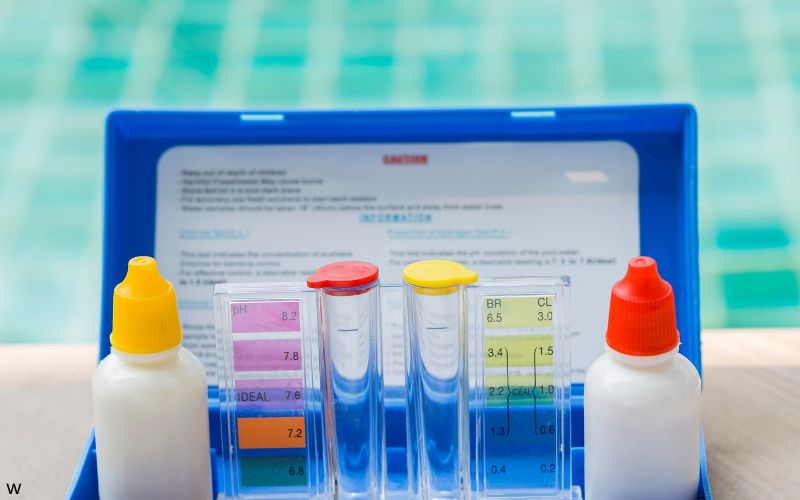
Given the March 2026 transmission main break and the active LDH administrative order, staying current on water quality alerts is essential. Bookmark shreveportlawater.gov and our live US boil water tracker for real-time advisory status. Report any taste, odour, or discoloration issues immediately to 318-673-7600. Check our water quality checker for local data.
Emergency Preparedness
The March 2026 main break demonstrated how quickly Shreveport’s system can fail. Keep at least a 3-day supply of bottled water at home. Sign up for city water alerts and follow all boil water advisories. Given the aging infrastructure, disruptions may continue until the $82 million bond programme is fully complete in late 2026.
Consider Home Filtration
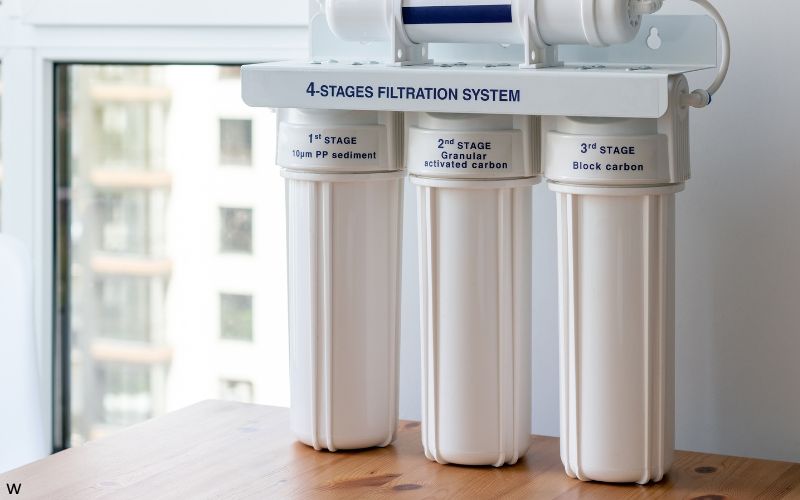
Given ongoing manganese, disinfection byproduct, and system reliability concerns, an NSF-certified filter provides valuable protection. A reverse osmosis system addresses disinfection byproducts; an activated carbon filter addresses taste and odour from manganese and chlorine. See our full filter solutions guide for recommendations suited to Shreveport’s water profile.
Support System Improvements
Stay engaged with city water improvement initiatives and the bond-funded infrastructure programme. Attend public water board meetings to hold officials accountable to the LDH-mandated repair deadlines. Practicing water conservation also reduces strain on the aging system while major upgrades are underway. See our news section for ongoing Shreveport developments.
Water Conservation
Fix household leaks promptly, use efficient fixtures, and practise smart irrigation. Every gallon saved reduces strain on a system that is already operating under state-mandated repair requirements. Conservation is especially important during the extended period of infrastructure replacement running through late 2026.
Frequently Asked Questions
Is Shreveport’s tap water safe to drink in 2026?
When no boil advisory is in effect, city officials and the Louisiana Department of Health confirm that Shreveport’s tap water is safe to drink. The water comes from Cross Lake and undergoes comprehensive treatment at the T.L. Amiss Water Treatment Plant.
However, Shreveport’s system received an F from LDH for 2024 — the second consecutive F — reflecting infrastructure deficiencies and federal water quality violations. A 42-inch transmission main broke in March 2026, requiring a citywide boil advisory that has since been lifted. Given this pattern of failures, residents should keep bottled water on hand, bookmark the live boil water tracker, and strongly consider a certified home filter for drinking and cooking water.
What caused the brown water in 2024?
The brown water discoloration across 2024 was caused by elevated manganese levels in Cross Lake reaching historic highs:
1. Heavy spring rains likely stirred up manganese-rich sediment from the lake bottom
2. Cross Lake manganese peaked at 1.29 mg/L in June 2024 — more than ten times the EPA’s aesthetic guideline of 0.05 mg/L
3. The current treatment plant was not originally designed to handle such high manganese concentrations
Manganese causes discoloration and taste issues but is not considered a health hazard at the levels detected — though the EPA has a health advisory of 0.3 mg/L for bottle-fed infants under 6 months. Enhanced treatment protocols are now in place and further manganese removal upgrades are planned. See our Louisiana water quality page for statewide context.
What is the LDH administrative order and what does it require?
In early 2025, Louisiana Department of Health issued a formal administrative order against Shreveport’s water system following deficiencies first cited in a 2021 sanitary survey and an extension that expired in June 2024. The order requires:
• Repair of flow meters, sensors, and actuators that help control water flow
• Installation of dedicated standby power at pump facility sites
• Completion of repairs to all elevated water storage tanks by April 2026
LDH confirmed the order does not constitute a public health emergency but does have legal force. The city has been providing quarterly progress updates and says it is committed to full compliance, though repairs take time given the scale and complexity of the work involved.
What improvements are being made to Shreveport’s water system?
Shreveport is implementing a major multi-year infrastructure programme:
$82 Million Bond Programme (2024 voter approved):
• Replacement of two major transmission lines carrying 60% of the city’s water supply
• Treatment plant equipment upgrades and facility improvements
• Construction of a new strategically located water tower; full completion expected late 2026
Additional Projects:
• A $4 million project to replace valves and repair the 24-inch transmission main at the Amiss Plant is in planning as of late 2025
• Bond refinancing in late 2025 has unlocked further project funding
• Water storage tank rehabilitation and emergency generator installations under the LDH order
Follow our water alert news for updates on Shreveport’s infrastructure progress.
Quality News About Your Water
Get the comprehensive water quality news coverage you need with our dedicated US Water News Service. From coast to coast, we deliver in-depth reporting and expert analysis on PFAS contamination, EPA regulatory changes, infrastructure developments, and emerging water safety issues affecting communities nationwide. While mainstream media only covers the biggest stories, we provide the detailed, ongoing coverage that helps you understand the full scope of America’s water challenges.
What’s actually in your tap water? Enter your ZIP code for a full breakdown of contaminants detected in your local supply
Drinking water from a well? Check our directory here for more information
Contaminants of Concern
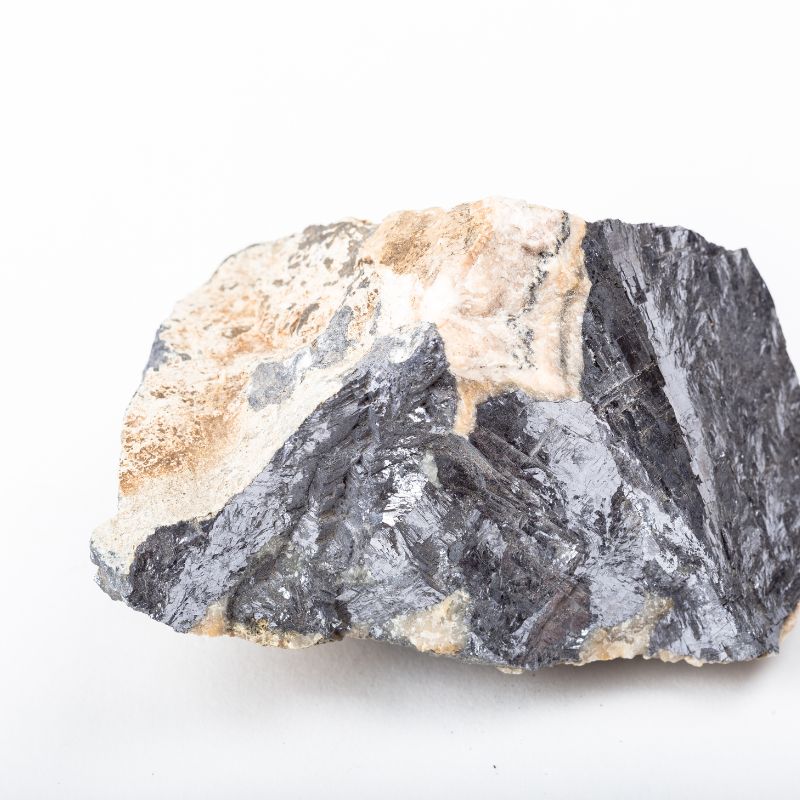
Manganese
Source: Naturally occurring mineral in Cross Lake sediment, elevated by heavy spring rains in 2024. Levels peaked at 1.29 mg/L in June 2024 — over ten times the EPA’s aesthetic guideline of 0.05 mg/L — causing widespread brown water and taste issues across the city.
Health Effects: While essential at trace levels, chronic exposure at high concentrations may cause neurological effects. The EPA has a health advisory of 0.3 mg/L specifically for bottle-fed infants under 6 months of age.
Current Status (2026): Enhanced treatment protocols have been implemented since the 2024 peak, with further manganese removal upgrades planned as part of the bond programme. EPA Guidelines: 0.05 mg/L aesthetic standard; 0.3 mg/L health advisory for infants. See our filter guide for options that remove manganese from drinking water.
Disinfection Byproducts
Source: Formed when chlorine disinfection reacts with natural organic matter in Cross Lake water. Elevated levels occurred in early 2023 when an ozone system failure in December 2022 required increased chlorine use, causing treatment technique violations.
Health Effects: Long-term exposure to elevated trihalomethanes (THMs) is associated with increased cancer risk and potential impacts on liver, kidney, and central nervous system function.
Current Status (2026): The ozone system has been restored, reducing reliance on chlorine. Residents concerned about disinfection byproducts should consider an NSF-certified reverse osmosis or activated carbon filter — see our filter solutions page. EPA Limits: 80 ppb for TTHMs; 60 ppb for haloacetic acids (HAA5). Track any future violations via our water alert news.
Please read – our information
The information presented on cleanairandwater.net is compiled from official water quality reports, trusted news sources, government websites, and public health resources. While we strive for accuracy and thoroughness in our presentations, we are not scientists, engineers, or qualified water quality professionals.
Our mission is to present water quality information in an accessible, real-world format that helps people understand what’s in their water and make informed decisions about their health and safety. We believe that complex environmental information should be available to everyone in a format that’s easy to understand.
We make every effort to ensure our content is current and accurate, but we cannot guarantee that all information is complete or error-free. This website should not replace official communications from your local water utility or health department. We always recommend consulting official sources for the most up-to-date information regarding your specific water system.
Clean Air and Water is not liable for any unintentional errors, omissions, or outdated information. The content on this site is provided for informational purposes only and should not be considered professional advice.