Cincinnati Water Quality at a Glance
some concerns
Is Cincinnati Water Safe to Drink?
Generally Yes — One of the Better-Run Systems in the Midwest — GCWW consistently meets or exceeds all federal standards and is regarded as a national leader in advanced water treatment. However, PFAS detections at the Bolton Plant now exceed the EPA’s enforceable MCLs (effective 2024, compliance by 2029), affecting around 12% of customers. Disinfection byproducts from chlorination exceed EWG health guidelines, and more than 35,000 lead service lines remain in the ground. Knowing which plant serves your address is the most important first step. See our Ohio state water quality report for statewide context.
⚠️ Key Concerns for Cincinnati Residents in 2026
- PFAS at Bolton Plant: PFOA detected up to 4.7 ppt and PFOS up to 5.7 ppt — both above the EPA’s enforceable 4 ppt MCL. GCWW is actively researching treatment upgrades for Bolton and has received a grant to pursue them; compliance deadline is 2029
- Disinfection Byproducts: Trihalomethanes and haloacetic acids from chlorination at the Richard Miller Plant exceed EWG health guidelines — an issue shared by most Ohio River-based systems
- Chromium-6: Hexavalent chromium detected at levels approximately 5.9 times EWG health guidelines, within EPA regulatory limits but above health-protective targets
- Lead Service Lines: Over 35,000 lead service lines remain in place — free testing and replacement assistance is available via GCWW
Read the full report below for detailed analysis, plant-specific data, and actionable recommendations for Cincinnati residents.
Advertisement — Report continues below
Great water report.
Here’s how to make it perfect.
Your water quality report shows strong results — and that’s genuinely good news. But even treated municipal water picks up residual chlorine, microplastics, and sediment between the treatment plant and your tap. A filter takes great water and makes it flawless.
✅ Improves taste, smell & clarity — removes residual chlorine and sediment that reach your glass after treatment
✅ NSF/ANSI 42, 58 & 372 certified — independently tested, not just manufacturer claims
✅ Installs in 30 minutes, no plumber — fills a glass in 8 seconds, smart LED filter monitor
Renting or can’t drill? The Waterdrop K19 Countertop RO — plug in, fill the tank, done. No installation, no drilling, no plumber.
Advertisement — this page contains affiliate links. If you buy through these links, we may earn a commission at no extra cost to you.

Cincinnati, Ohio — Water Quality Report 2026: PFAS at the Bolton Plant, Lead Infrastructure & Safety for Residents
Greater Cincinnati Water Works (GCWW) serves over 1.1 million customers across Hamilton County and parts of Butler, Warren, Clermont, and Boone counties, delivering an average of 132 million gallons daily through approximately 3,100 miles of water mains and two treatment plants. The Ohio EPA praises GCWW as a model for the state — and for good reason: its Richard Miller Treatment Plant, drawing from the Ohio River, uses granular activated carbon (GAC) and UV disinfection technology that most U.S. systems lack.
The more complex picture emerges at the Charles M. Bolton Treatment Plant, which serves around 12% of customers from the Great Miami Buried Valley Aquifer. Without GAC filtration, Bolton does not remove PFAS as effectively — and detections now exceed the EPA’s 2024 enforceable maximum contaminant levels. GCWW is actively pursuing treatment upgrades at Bolton with grant funding, but compliance is not required until 2029. For Cincinnati residents, understanding which plant serves their address is the single most practically important water quality question. Compare with our reports on nearby Cleveland and Columbus for an Ohio-wide perspective.
Cincinnati Water Quality: Current Status (2025–2026)
Latest Testing Results
- Lead Levels: The 2024 Consumer Confidence Report showed 90th-percentile lead levels of 1.12 ppb (first half) and 2.32 ppb (second half) — both far below the EPA action level of 15 ppb. This reflects GCWW’s industry-leading corrosion control programme and steady progress on lead service line replacement.
- Testing Scope: GCWW conducts over 600 water quality tests daily, monitoring more than 100 potential contaminants. This exceeds federal and state requirements and is one reason the utility is consistently cited as a national model for treatment excellence.
- Compliance Status: Cincinnati meets all current EPA and Ohio EPA drinking water standards. GCWW was ranked #1 by J.D. Power for water quality for two consecutive years. Note that the new EPA PFAS MCLs — now enforceable as of 2024 — require compliance by 2029, meaning Bolton Plant’s current detections are above the standard but not yet in violation of the compliance deadline.
Dual-Source Water Supply
- Ohio River (Richard Miller Plant): Approximately 88% of supply. Intake points are positioned upstream of the metro area to reduce urban impacts on source water. The Ohio EPA classifies the Ohio River as “highly susceptible to contamination” due to its surface water nature and multi-state upstream exposure.
- Great Miami Buried Valley Aquifer (Bolton Plant): Approximately 12% of supply, drawn from 13 wells in Butler County. The aquifer provides naturally filtered groundwater but is recharged by surface water and is not immune to upstream PFAS migration from industrial and agricultural sources.
- Watershed Partnerships: GCWW participates actively in the Ohio River Valley Water Sanitation Commission (ORSANCO) and the Ohio River Drinking Water Protection Network, enabling coordinated early warning for spill events and emerging contaminants across the multi-state watershed.
Advanced Treatment — The Two-Plant Divide
- Richard Miller Plant (88% of customers): Employs coagulation, flocculation, sedimentation, sand filtration, large-scale granular activated carbon (GAC) filtration, UV disinfection, and chlorine treatment. The GAC system — one of the first large-scale implementations in the U.S. — effectively adsorbs PFAS, pharmaceuticals, organic compounds, and taste/odour compounds. PFAS are non-detectable in treated water from this plant.
- Charles M. Bolton Plant (12% of customers): Treats groundwater using lime softening, coal-and-sand filtration, chlorination, and fluoridation — but does not use GAC. Without activated carbon, PFAS from the aquifer pass through treatment. PFOA detections range from non-detect to 4.7 ppt and PFOS from non-detect to 5.7 ppt — both above the EPA’s enforceable 4 ppt MCL. GCWW has secured grant funding to evaluate and install treatment upgrades and is actively researching source identification upstream of the Bolton well field.
- Enhanced Corrosion Control: An industry-leading corrosion control programme using pH optimisation prevents lead leaching from service lines and household plumbing throughout both distribution zones, contributing to the very low 90th-percentile lead results.
Infrastructure Investment
- Lead Service Line Replacement: GCWW has removed or verified as non-lead over 15,000 service connections since the programme began, but more than 35,000 remain. Free lead testing kits and replacement assistance are available by calling 513-651-LEAD.
- Smart Water Technology: Advanced metering infrastructure, predictive maintenance, and real-time distribution monitoring are deployed across the system to detect leaks early and optimise water quality from plant to tap.
- Bolton Treatment Upgrades: GCWW has received grant funding specifically to study PFAS source identification and evaluate treatment options for the Bolton Plant. Treatment modifications are being designed ahead of the 2029 MCL compliance deadline.
River Management and Climate Resilience
Cincinnati maintains a sophisticated early warning network with real-time monitoring stations upstream of the Ohio River intake, allowing the facility to adapt treatment in advance of contamination events or switch entirely to Bolton groundwater supply if needed. The dual-source architecture provides genuine resilience that single-source systems lack — a significant advantage given the Ohio River’s documented susceptibility to upstream industrial spills, algal blooms, and drought-driven quality swings. Long-range climate planning addresses projected increases in drought frequency and agricultural runoff. Residents can monitor active advisories on our live U.S. boil water advisory tracker and review our water filter guide for recommendations tailored to the specific concerns of each Cincinnati plant zone.
Recommendations for Cincinnati Residents

Find Your Treatment Plant
Call GCWW at (513) 591-7700 or use the online tool at mygcww.org to confirm whether your address is served by the Richard Miller Plant (88% of customers, PFAS non-detect) or the Charles M. Bolton Plant (12% of customers, PFAS above EPA MCL). This single piece of information determines how urgently you should consider a PFAS filter — see our water filter guide for options.
Filter If Necessary
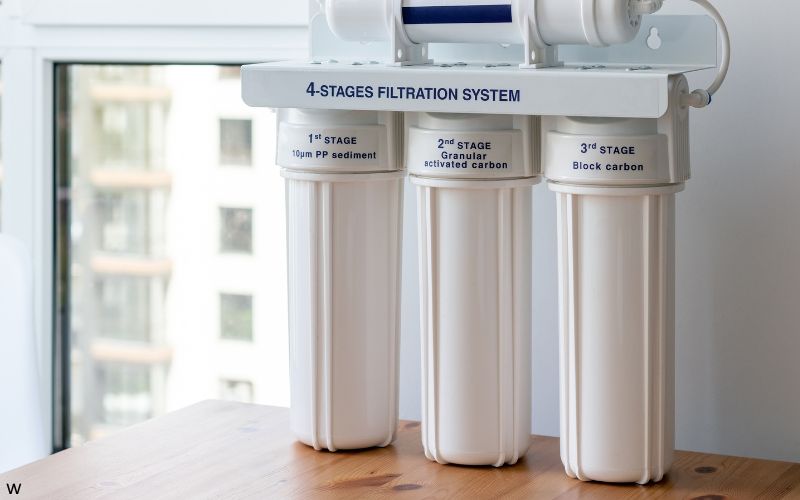
Bolton Plant customers should prioritise a reverse osmosis system or NSF/ANSI 58-certified filter to address PFAS. For Miller Plant customers, a certified carbon filter (NSF/ANSI 42 or 53) reduces disinfection byproducts and any trace chromium-6. All homes with lead service lines should use a filter certified to NSF/ANSI Standard 53 for lead removal regardless of their plant source.
Participate in Conservation
Take advantage of GCWW’s conservation incentives including rebates for water-efficient appliances and fixtures, free irrigation assessments, and rain barrel workshops. Reducing overall demand on the Ohio River system supports the long-term water quality of the source watershed — benefiting both Cincinnati and communities downstream.
Flush After Plumbing Work
After any plumbing work or extended non-use (one week or more), run cold water for 3–5 minutes to flush stagnant water. For homes with lead service lines, GCWW recommends a more thorough flushing procedure — call 513-651-LEAD for specific guidance or to request a free lead testing kit. Always use cold water for drinking and cooking.
Sign Up for Alerts
Register for GCWW’s customer notification system to receive timely alerts about main breaks, planned service disruptions, or water quality advisories in your area — available by text, email, or phone. You can also monitor our live U.S. boil water advisory tracker for any active notices affecting the Cincinnati metro area.
Quality News About Your Water
Get the comprehensive water quality news coverage you need with our dedicated US Water News Service. From coast to coast, we deliver in-depth reporting and expert analysis on PFAS contamination, EPA regulatory changes, infrastructure developments, and emerging water safety issues affecting communities nationwide. While mainstream media only covers the biggest stories, we provide the detailed, ongoing coverage that helps you understand the full scope of America’s water challenges.
What’s actually in your tap water? Enter your ZIP code for a full breakdown of contaminants detected in your local supply
Drinking water from a well? Check our directory here for more information
Frequently Asked Questions
Is Cincinnati tap water safe to drink in 2026?
For the roughly 88% of customers served by the Richard Miller Treatment Plant, Cincinnati tap water is among the safest in the Midwest — PFAS are non-detectable, lead levels are very low (90th percentile of 1.12–2.32 ppb in 2024 vs. the 15 ppb action level), and GCWW has been ranked #1 by J.D. Power for water quality. The utility conducts over 600 tests daily and maintains full compliance with all current EPA and Ohio EPA standards.
For the approximately 12% of customers served by the Charles M. Bolton Plant, the picture is more nuanced. PFOA and PFOS detections reach up to 4.7 ppt and 5.7 ppt respectively — above the EPA’s enforceable 4 ppt MCL (though the compliance deadline is 2029). GCWW has secured grant funding to develop treatment upgrades and is actively working to identify the source of PFAS in the Bolton well field. Bolton customers concerned about PFAS should consider a certified reverse osmosis filter in the interim.
How does Cincinnati manage Ohio River water quality fluctuations?
Cincinnati’s dual-source architecture provides genuine resilience. The Richard Miller Plant can switch intake timing, adjust chemical dosing in real time, or redirect demand to Bolton groundwater during river quality events. Key elements of this system include:
• Upstream monitoring network: Real-time sensors upstream of the Ohio River intake provide advance warning of spills, algal blooms, or quality fluctuations, allowing treatment adjustments before contaminated water reaches the plant
• Adaptive treatment: Automated chemical dosing and GAC filtration allow rapid response to changing raw water quality — including PFAS spikes, pesticide runoff, and industrial discharges
• Source water switching: During significant river events, GCWW can shift load to the Great Miami Buried Valley Aquifer via Bolton, though this is limited given Bolton’s 12% share of normal supply
• ORSANCO partnership: Cincinnati participates in the multi-state Ohio River Valley Water Sanitation Commission, enabling coordinated responses to upstream contamination events across the watershed
These systems have maintained safe water delivery through Ohio River floods, droughts, and industrial spills over many decades. See our Ohio state water report for broader context on river quality challenges.
What is Cincinnati doing about its remaining lead service lines?
GCWW operates one of the more proactive lead service line programmes in Ohio, though over 35,000 connections still need replacing:
• Replacement progress: More than 15,000 lead service lines have been replaced or confirmed as non-lead since the programme began, with replacement coordinated alongside street and infrastructure projects to minimise disruption
• Free testing: Customers can request a free lead testing kit by calling 513-651-LEAD — particularly important for homes built before 1986
• Current lead levels: 2024 testing showed 90th-percentile results of 1.12 ppb and 2.32 ppb — well below the 15 ppb action level, reflecting effective corrosion control
• Corrosion control: pH optimisation throughout the distribution system minimises lead leaching from remaining service lines and internal household plumbing while replacement work continues
• Federal compliance: Cincinnati is completing its lead service line inventory under the revised Lead and Copper Rule. If your home was built before 1986, verify your service line material and consider a certified lead-reducing filter as a precaution.
Why is the Richard Miller Plant considered advanced — and what about Bolton?
The Richard Miller Treatment Plant is genuinely exceptional by U.S. standards, using a treatment stack that most utilities do not have:
• Granular activated carbon (GAC): One of the first large-scale GAC installations in U.S. water treatment. Carbon adsorption removes PFAS, pharmaceuticals, taste and odour compounds, and organic precursors to disinfection byproducts — contaminants that sand filtration alone cannot address
• UV disinfection: One of the largest drinking water UV systems in North America, providing a chemical-free kill step against Cryptosporidium and Giardia that are resistant to chlorine alone
• Research partnerships: GCWW works with the EPA, Water Research Foundation, and regional universities on emerging treatment challenges, including PFAS removal technologies
The Bolton Plant uses a simpler process — lime softening, coal-and-sand filtration, chlorine, and fluoride — appropriate for groundwater but without the GAC layer that neutralises PFAS. The good news: GCWW has recognised this gap, secured grant funding, and is actively working toward a Bolton treatment upgrade ahead of the 2029 MCL compliance deadline. Check our filter guide if you are a Bolton customer and want interim protection now.
Contaminants of Concern
PFAS Compounds
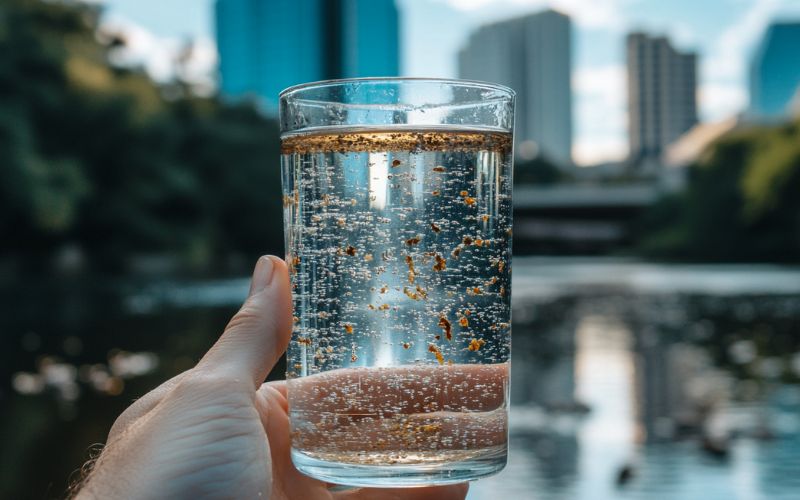
Source: Industrial processes, firefighting foams, and consumer product manufacturing upstream in the Ohio River watershed, as well as localised sources contaminating the Great Miami Buried Valley Aquifer that feeds the Bolton Plant. GCWW is actively working to identify the upstream source of Bolton’s PFAS with grant-funded monitoring.
Health Effects: Long-term PFAS exposure is linked to elevated cholesterol, liver enzyme changes, reduced vaccine efficacy in children, thyroid disruption, and increased risk of certain cancers. The EPA set enforceable MCLs in April 2024 precisely because there is no established safe level of exposure.
2026 Status: Miller Plant (88% of customers) — PFAS non-detectable in treated water, thanks to GAC. Bolton Plant (12% of customers) — PFOA detected up to 4.7 ppt and PFOS up to 5.7 ppt, both above the enforceable EPA MCL of 4 ppt. GCWW meets all current regulations; compliance with the new MCL is required by 2029. A NSF/ANSI 58-certified reverse osmosis system is the most effective at-home solution for Bolton customers.
Lead & Disinfection Byproducts
Source: Lead enters through older service lines and household plumbing in homes built before 1986 — more than 35,000 Cincinnati service connections still have lead components. Disinfection byproducts (TTHMs and HAAs) form when chlorine reacts with naturally occurring organic matter in Ohio River source water.
Health Effects: Lead causes irreversible neurological damage in children at any detectable level. Long-term TTHM and HAA exposure is linked to bladder cancer risk and reproductive effects. Chromium-6, detected at approximately 5.9 times EWG health guidelines, is a recognised carcinogen though within EPA regulatory limits.
2026 Status: Lead is well-controlled at the 90th-percentile level (1.12–2.32 ppb in 2024 vs. the 15 ppb action level) thanks to GCWW’s corrosion control programme. Disinfection byproducts exceed EWG health guidelines but remain within EPA regulatory MCLs. A carbon block or reverse osmosis filter addresses both byproducts and residual lead concerns. For statewide disinfection byproduct context, see our Ohio water quality report.
Please read – our information
The information presented on cleanairandwater.net is compiled from official water quality reports, trusted news sources, government websites, and public health resources. While we strive for accuracy and thoroughness in our presentations, we are not scientists, engineers, or qualified water quality professionals.
Our mission is to present water quality information in an accessible, real-world format that helps people understand what’s in their water and make informed decisions about their health and safety. We believe that complex environmental information should be available to everyone in a format that’s easy to understand.
We make every effort to ensure our content is current and accurate, but we cannot guarantee that all information is complete or error-free. This website should not replace official communications from your local water utility or health department. We always recommend consulting official sources for the most up-to-date information regarding your specific water system.
Clean Air and Water is not liable for any unintentional errors, omissions, or outdated information. The content on this site is provided for informational purposes only and should not be considered professional advice.