← Private Well Water Directory / Kentucky
Kentucky Private Well Water Quality 2026
Kentucky passed its so-called “Dirty Water Act” in 2025 — stripping 75 years of state groundwater protections and leaving tens of thousands of private wells without the state’s most important pollution safeguards. Combined with documented PFAS contamination near Fort Campbell, coal ash arsenic leaching at power plant sites across the state, and a karst geology that accelerates the spread of pollutants underground, Kentucky well owners face a rapidly worsening regulatory and environmental picture.
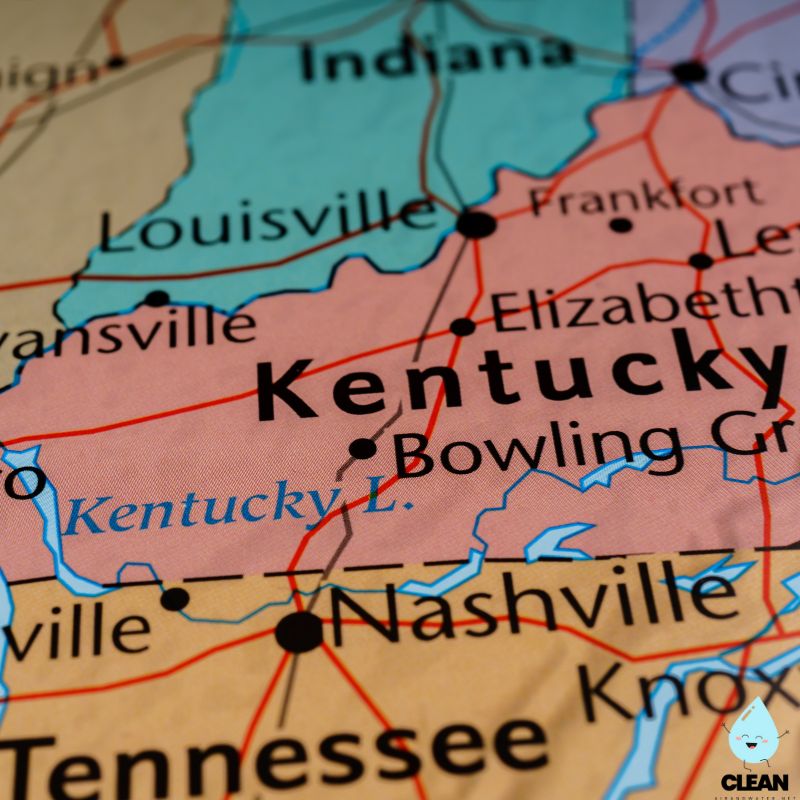
Kentucky’s “Dirty Water Act” — What SB 89 Means for Well Owners
In March 2025, the Kentucky General Assembly overrode Governor Andy Beshear’s veto to pass Senate Bill 89 into law. The legislation fundamentally narrowed the definition of “waters of the commonwealth” — removing state pollution protections from most groundwater, headwater streams, and wetlands that don’t meet the federal definition of “navigable waters.”
The consequences for private well owners are significant. Kentucky’s own Energy and Environment Cabinet stated in writing that the bill as passed would leave approximately 89,000 domestic use and agricultural wells — as well as 156 public water systems drawing from groundwater — without the state’s most important pollution safeguards. The cabinet secretary described it as a law that “applies a machete to an issue that needs a scalpel.” Environmental groups labelled it the “Dirty Water Act.” A separate cabinet letter to House members specifically cited the water quality of “more than 31,000 private use wells” as directly at risk.
Before SB 89, Kentucky law had protected “all rivers, streams, creeks, lakes, ponds, impounding reservoirs, springs, wells, marshes, and all other bodies of surface or underground water” for 75 years. That broad language is now gone. As a result, industrial polluters — including coal mining companies, a primary backer of the bill — face fewer barriers to discharging into groundwater sources that feed private wells.
For eastern and western Kentucky in particular — where private wells are most concentrated and coal mining most intensive — this legislative change compounds already documented contamination risks. The Kentucky Resources Council, which led opposition to the bill, states plainly that SB 89 “fails to protect almost all rural Kentucky’s households and farms that rely on private wells.”
PFAS Contamination Near Fort Campbell
PFAS contamination is a documented and serious concern for Kentucky well owners near military installations. Fort Campbell — the US Army base straddling the Kentucky-Tennessee border in Christian County — has been identified as the source of the highest PFAS contamination levels recorded at any Kentucky public water system. According to EPA UCMR 5 data reported in March 2026, the Fort Campbell Water System’s average PFOS levels measured 6.2 times over the federal limit of 4 parts per trillion.
A 2020 state surface water monitoring study found the highest single PFAS detection in Kentucky — 249 ppt — in Christian County, at a monitoring station in the Cumberland River Basin downstream of the base. A 2024 study by the Kentucky Department for Environmental Protection Division of Water again identified Christian County as having the highest PFAS levels in the state. Private wells in the Oak Grove community adjacent to Fort Campbell showed PFAS contamination above the EPA’s 4 ppt limit in 2023 EWG sampling.
The source of contamination is aqueous film-forming foam (AFFF), used for decades during firefighting training exercises on the base. PFAS from this foam has migrated into groundwater surrounding the installation. Nationally, nearly 3,000 private wells near 63 active and former US military bases have been found to contain PFAS above the EPA’s 4 ppt limit. As of 2026, 10 public water systems serving Kentucky customers have recorded average PFOA or PFOS levels exceeding the federal standard — private wells in those same areas face equivalent or greater risk, with no mandatory testing or treatment requirement.
PFAS exposure is linked to multiple cancers, thyroid disease, immune system disruption, and reproductive harm. The contamination is colourless, odourless and tasteless — it is undetectable without laboratory testing.
Coal Ash Arsenic — A Kentucky-Specific Risk
Kentucky is one of the nation’s largest coal-producing and coal-consuming states, and that legacy has created a documented groundwater contamination problem affecting private wells near power plants. A WFPL News and Ohio Valley ReSource investigation found contaminated groundwater at all 14 Kentucky power plants covered by EPA coal ash rules at the time. Seven of those 14 sites recorded arsenic levels exceeding federal drinking water standards in monitoring wells.
The most severe cases identified in that investigation include:
- Mill Creek Generating Station, Louisville — monitoring wells showed arsenic at up to 40 times the federal drinking water standard. The plant’s coal ash pond has been in the process of closure, but capping in place does not immediately end groundwater contamination.
- Paradise Fossil Plant, Muhlenberg County — arsenic levels more than eight times the federal standard were recorded in groundwater. The plant is owned by the Tennessee Valley Authority.
- Ghent Generating Station, Carrollton — radium levels at 33 times the drinking water standard near the ash pond, with elevated arsenic, antimony and beryllium also detected.
The contamination picture has grown since that investigation. Under the 2024 EPA Legacy Coal Ash Rule, power plant owners in Kentucky are now required to report on an additional 44 older coal ash dumps that were previously excluded from monitoring requirements — sites that Earthjustice notes have been leaking into groundwater for decades without formal oversight. For all but one Kentucky plant that has conducted groundwater monitoring, industry data shows contamination above federal drinking water standards.
Communities near coal ash disposal sites have no legal requirement to test their private wells for contamination, and there is no notification system for well owners. As Earthjustice attorney Abel Russ has stated: “There’s no legal protection for those people — they are stuck with what they are drinking.” In Eastern Kentucky’s coal mining regions, arsenic also occurs naturally in groundwater from coal-bearing shale geology, independent of the coal ash issue.
Quick Important Advertisement – Boil Water Alerts continue below
Don’t Wait for the Next Emergency to Act
Boil water alerts are a warning sign. Whether caused by pipe breaks, contamination, or natural disasters, they highlight how vulnerable our water systems can be.
The safest long-term solution? A reliable home water filtration system designed to remove bacteria, parasites, and harmful chemicals — so you’re protected even when advisories are issued.
Stay Ready with Trusted Filtration:
✅ Removes pathogens, chlorine, PFAS, and heavy metals
✅ Safer than boiling alone — no need to wait for alerts
✅ Easy options for homes, renters, and families
Prefer no installation? Check out the A2 Countertop System
Note: This advert may contain affiliate links. If you choose to buy, we may receive a small commission — thank you for supporting our work!
Nitrate, Bacteria and Karst Geology
In western and central Kentucky, agricultural nitrate contamination is a documented risk, especially in shallow wells. The state’s tobacco, corn and soybean farming generates significant fertiliser runoff that enters groundwater through soil percolation. High nitrate levels pose a serious risk to infants under six months and are associated with increased cancer risk in adults at sustained exposure.
Kentucky’s karst geology — characterised by porous limestone bedrock, sinkholes, and underground cave systems — creates a particularly fast pathway for surface contaminants to reach groundwater. Unlike aquifers in denser geology, karst systems provide minimal natural filtration. Pollutants from surface sources — fertiliser runoff, septic systems, coal ash leachate, and industrial discharge — can travel quickly and widely underground. The Pennyroyal region of south-central Kentucky, home to Mammoth Cave, sits entirely on this geology, and karst aquifers supplying drinking water to rural Kentuckians were specifically identified as unprotected under SB 89’s revised definition of waters of the commonwealth.
Bacteria contamination in Kentucky wells is common, particularly following heavy rainfall or flooding events — both increasingly frequent in the state. Older wells with damaged casings, or wells located close to septic systems, are at highest risk. A 2024 University of Kentucky watershed study identified 77 contaminants across the state’s waterways, with E. coli a widespread impairment in rivers and streams that feed the same groundwater systems private wells draw from.
Regulatory Situation for Kentucky Well Owners
Private wells in Kentucky are not regulated under the Kentucky Safe Drinking Water Act or its federal equivalent. There is no state requirement to test well water, no mandatory notification if contamination is discovered nearby, and no inspection regime for private well construction or condition. Testing and treatment are entirely the well owner’s responsibility.
The passage of SB 89 in 2025 significantly worsened this picture. By narrowing what counts as a “water of the commonwealth,” the law removed the state’s ability to regulate pollution in most groundwater — the source water for private wells. Kentucky’s Energy and Environment Cabinet is evaluating “process and program modifications” in response, but as of April 2026 no replacement protections have been established.
Kentucky has no state-level PFAS MCLs for drinking water — neither for public systems nor private wells. The state relies entirely on the federal EPA’s 4 ppt limits for PFOA and PFOS, with a compliance deadline for public water systems that the EPA has signalled may be pushed back to 2031. Private wells face no compliance requirement at any level.
For context on municipal water quality across the state, see our Kentucky municipal water quality page and our Louisville water quality page. Use our live boil water notice tracker for current active advisories across Kentucky.
Known High-Risk Areas in Kentucky
If you live near any of the following locations, well water testing is urgent — not precautionary.
Christian County / Fort Campbell Area
The highest PFAS detections in the state. Fort Campbell’s public water system averaged PFOS at 6.2× the federal limit per EPA UCMR 5 data (2026). Private wells in Oak Grove and surrounding communities have tested above the 4 ppt EPA limit. Test urgently.
Louisville — Mill Creek Area
Coal ash monitoring wells at the Mill Creek Generating Station showed arsenic at up to 40 times the federal drinking water standard. The ash pond is in the process of being closed and capped, but groundwater contamination from coal ash leachate does not end immediately upon closure.
Muhlenberg County — Green River Area
Paradise Fossil Plant (TVA) recorded arsenic more than eight times the federal standard in groundwater. This area of western Kentucky also sits within agricultural nitrate risk zones with intensive farming.
Carroll County — Ghent Area
Ghent Generating Station recorded radium at 33 times the drinking water standard near its ash pond. Arsenic, antimony and beryllium were also elevated. Private wells in this area should be comprehensively tested.
Eastern Kentucky — Coal Region
Appalachian coal counties including Harlan, Knott, Letcher, Floyd and surrounding areas face naturally occurring arsenic in shale geology plus mining drainage contamination. Iron and manganese are also common. This region has the highest concentration of private domestic wells in the state.
Pennyroyal Region — Karst Zone
The karst limestone geology of south-central Kentucky means contaminants from surface sources — agricultural runoff, septic discharge, industrial leachate — move rapidly into groundwater with minimal natural filtration. These karst aquifers were left unprotected under SB 89’s revised definitions.
How to Test Your Kentucky Well Water — and What to Do Next
Given the combination of PFAS near military installations, coal ash arsenic at power plant sites, agricultural nitrate in rural areas, and a karst geology that offers little natural filtration, every Kentucky private well owner should test their water regardless of location. The regulatory changes brought by SB 89 make self-testing more important than ever — the state now has fewer tools to protect your groundwater source, not more.
Contact your county health department for basic coliform testing, or use the Kentucky Division of Water’s certified lab list at eec.ky.gov. The Kentucky Geological Survey maintains a searchable groundwater quality database at kgs.uky.edu — useful for understanding baseline contamination levels in your county before you test.
For filter options, our well water filter guide covers reverse osmosis systems for PFAS and arsenic, UV disinfection for bacteria, and whole-house well systems for comprehensive treatment across multiple contaminants. You can also browse our full water filter solutions page or check your ZIP code for local municipal water quality context.
For neighbouring state well water risks, see our pages on Tennessee wells, Virginia wells, and Ohio wells. Return to the private well water directory to find your state.
Quality News About Your Water
Get the comprehensive water quality news coverage you need with our dedicated US Water News Service. From coast to coast, we deliver in-depth reporting and expert analysis on PFAS contamination, EPA regulatory changes, infrastructure developments, and emerging water safety issues affecting communities nationwide. While mainstream media only covers the biggest stories, we provide the detailed, ongoing coverage that helps you understand the full scope of America’s water challenges.
What’s actually in your tap water? Enter your ZIP code for a full breakdown of contaminants detected in your local supply
Drinking water from a well? Check our directory here for more information
Please read – our information
The information presented on cleanairandwater.net is compiled from official water quality reports, trusted news sources, government websites, and public health resources. While we strive for accuracy and thoroughness in our presentations, we are not scientists, engineers, or qualified water quality professionals.
Our mission is to present water quality information in an accessible, real-world format that helps people understand what’s in their water and make informed decisions about their health and safety. We believe that complex environmental information should be available to everyone in a format that’s easy to understand.
We make every effort to ensure our content is current and accurate, but we cannot guarantee that all information is complete or error-free. This website should not replace official communications from your local water utility or health department. We always recommend consulting official sources for the most up-to-date information regarding your specific water system.
Clean Air and Water is not liable for any unintentional errors, omissions, or outdated information. The content on this site is provided for informational purposes only and should not be considered professional advice.