← Private Well Water Directory / New Mexico
New Mexico Private Well Water Quality 2026
PFAS from Cannon Air Force Base has contaminated private drinking wells across Curry County — and New Mexico has among the highest naturally occurring arsenic levels in US groundwater. With no state law requiring private well testing, well owners are entirely on their own to find out what’s in their water.
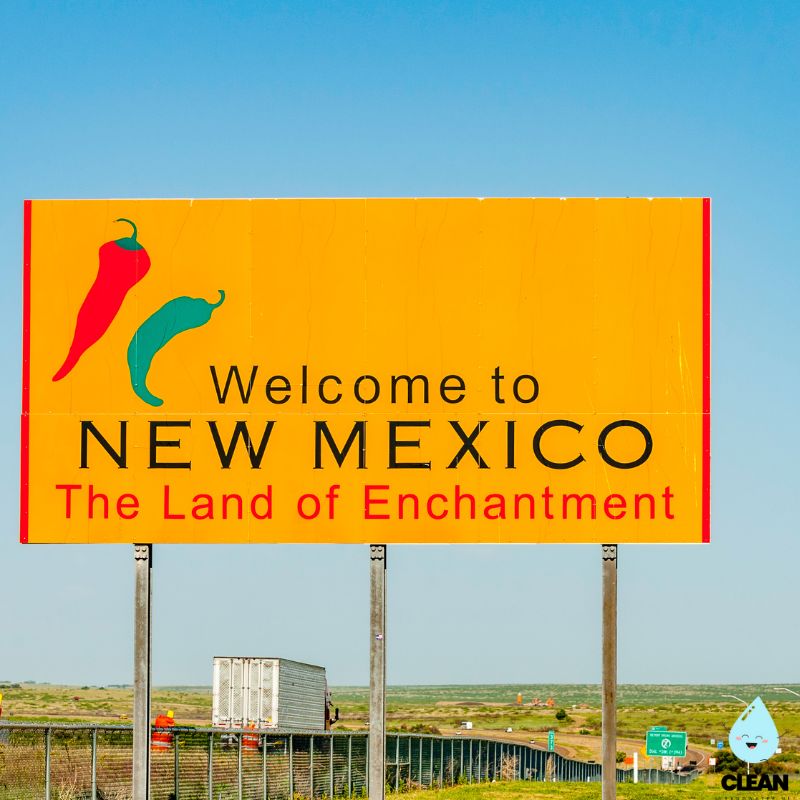
The Cannon Air Force Base PFAS Crisis
New Mexico’s most serious documented private well contamination centres on Cannon Air Force Base, near Clovis in Curry County. State officials first identified PFAS contamination near the base in 2015, traced to decades of firefighting foam (AFFF) use. By 2018, the Air Force notified the New Mexico Environment Department (NMED) that on-base monitoring wells showed PFAS concentrations more than 370 times the federal health advisory level, with a groundwater plume that has since spread roughly four miles beyond the base boundary — reaching private drinking wells and nearby dairy farms.
The human cost has been significant. PFAS have been detected in the blood of nearby residents. In 2022, Highland Dairy — one of several dairies in the contamination zone — euthanized roughly 3,600 cows after their milk tested positive for PFAS. The Air Force has said it has spent $74 million on treatment efforts to date, but litigation between the state and the federal government has dragged on for years, with the Department of Defense repeatedly disputing NMED’s authority to regulate the contamination.
There has been real progress recently. In 2025, Governor Michelle Lujan Grisham signed House Bill 140, classifying PFAS-containing firefighting foam as hazardous waste under state law — closing a legal loophole the Air Force had relied on. In May 2026, NMED and the Air Force reached a verbal agreement to expand cleanup after local dairy farmers agreed to allow well testing on their land. Separately, the state has committed a $12 million legislative appropriation, administered through utility EPCOR, to connect roughly 100 Curry County homes with contaminated private wells to Clovis’s municipal water supply — replacing contaminated wells rather than simply treating them.
Holloman Air Force Base — A Different Kind of Risk
Holloman Air Force Base, near Alamogordo in Otero County, is a second confirmed PFAS site — but the risk profile is different from Clovis. University of New Mexico researchers have documented some of the highest PFAS concentrations ever recorded in wildlife at Holloman Lake, the base’s wastewater reservoir, with contamination linked to 30 years of AFFF use. NMED issued Holloman a formal notice of violation over the groundwater discharge.
Importantly, both the base and the City of Alamogordo draw their drinking water from a separate watershed in the Sacramento Mountains, not from the contaminated groundwater beneath the base — and the city’s testing since 2013 has not detected PFAS in that supply. That said, private well owners in Otero County, particularly those closer to the base or Holloman Lake, should still treat testing as a precaution given the scale of contamination confirmed on-site.
Arsenic: New Mexico’s Statewide Geology Problem
Beyond PFAS, New Mexico’s biggest well water challenge is geological, not industrial. The state has among the highest naturally occurring arsenic levels in US groundwater — a legacy of its volcanic and sedimentary rock formations. The EPA’s Maximum Contaminant Level for arsenic is 10 µg/L, and New Mexico Department of Health tracking data shows private well samples exceeding that limit in multiple counties, with concentrations varying significantly even between neighbouring wells due to New Mexico’s complex groundwater geology.
Central New Mexico, including the Rio Grande Basin around Bernalillo and Sandoval counties, shows consistently elevated arsenic in both public and private well testing. In late 2025, NMED and the Department of Health issued a specific alert for Mora County after an independent geologic study found antimony, arsenic and uranium exceeding EPA safe drinking water limits, plus elevated manganese — prompting officials to urge residents to test their private wells directly.
Quick Important Advertisement – Boil Water Alerts continue below
Don’t Wait for the Next Emergency to Act
Boil water alerts are a warning sign. Whether caused by pipe breaks, contamination, or natural disasters, they highlight how vulnerable our water systems can be.
The safest long-term solution? A reliable home water filtration system designed to remove bacteria, parasites, and harmful chemicals — so you’re protected even when advisories are issued.
Stay Ready with Trusted Filtration:
✅ Removes pathogens, chlorine, PFAS, and heavy metals
✅ Safer than boiling alone — no need to wait for alerts
✅ Easy options for homes, renters, and families
Prefer no installation? Check out the A2 Countertop System
Note: This advert may contain affiliate links. If you choose to buy, we may receive a small commission — thank you for supporting our work!
Regulatory Situation for New Mexico Well Owners
The federal Safe Drinking Water Act does not regulate private wells serving fewer than 25 people — the vast majority of New Mexico’s private wells. New Mexico state law does not require private well water quality monitoring either. As the state’s own Department of Health puts it plainly: testing, treatment and monitoring of a private well is entirely the owner’s responsibility. Nobody tests it, treats it, or notifies you if something changes.
There is some free help available. NMED’s Water Test Fair programme periodically offers free testing for arsenic, fluoride, sulfate, nitrate, iron, electrical conductivity and pH at community events around the state. Separately, NMED’s Liquid Waste (septic) Bureau offers free nitrate, fluoride and iron testing for private well owners at local field offices. Beyond that, well owners need a certified laboratory — NMED maintains a list of state-certified providers.
For legacy contamination near abandoned uranium mining sites — concentrated in the Grants Mining District and the Navajo Nation’s New Mexico chapters — cleanup is being coordinated between EPA, the Navajo Nation EPA, and NMED, but this covers documented mine sites, not the thousands of private wells across the state that fall outside any monitored zone.
For municipal water quality context in New Mexico’s cities, see our New Mexico state water quality page and our Albuquerque water quality page. Check our live boil water notice tracker for any active advisories across the state.
Known High-Risk Areas in New Mexico
If you live near any of the following locations, well water testing is urgent — not precautionary.
Clovis & Curry County — Cannon AFB
Confirmed PFAS contamination of private wells and dairies from decades of firefighting foam use at Cannon Air Force Base. A $12 million state programme is connecting affected homes to municipal water. Testing is urgent for any well in the area.
Grants Mining District & Navajo Nation
Roughly 1,100 abandoned uranium mining, milling and exploration sites stretch from Laguna Pueblo to Gallup, with hundreds more on Navajo Nation land. Legacy uranium and radionuclide contamination affects groundwater across the region.
Mora County
A 2025 NMED and Department of Health geologic study found antimony, arsenic and uranium exceeding EPA safe drinking water limits, plus elevated manganese. Residents are being urged to test private wells directly.
Central New Mexico — Rio Grande Basin
Bernalillo and Sandoval counties show consistently elevated naturally occurring arsenic in groundwater testing, alongside notably hard water in parts of the East Mountains area.
Alamogordo & Otero County — Holloman AFB
Extreme PFAS levels documented in base groundwater and Holloman Lake wildlife. City and base drinking water draw from a separate, unaffected watershed, but nearby private well owners should still test as a precaution.
Rural & Agricultural Areas Statewide
Communities where wells and septic systems coexist, and areas near dairies and fertilised farmland, face elevated nitrate risk — particularly dangerous for infants under six months.
How to Test Your New Mexico Well Water — and What to Do Next
Given New Mexico’s contamination profile — confirmed PFAS near military bases, some of the highest naturally occurring arsenic in the country, and legacy uranium contamination near historic mining districts — every private well owner in the state should test their water. None of these contaminants can be detected by taste, smell, or appearance. The only way to know is to test, and as Curry County residents learned, contamination can go undetected for years before it’s identified.
Start with NMED’s Water Test Fair programme for free arsenic, nitrate, fluoride and pH testing, or contact the Liquid Waste Bureau’s local field office for free nitrate testing. If you’re near Cannon or Holloman Air Force Base, or in the Grants Mining District or Navajo Nation checkerboard area, prioritise a full PFAS or uranium panel through a certified laboratory rather than waiting for a free testing event.
For filter options, our well water filter guide covers reverse osmosis systems for PFAS and arsenic, radionuclide-certified filters for uranium, and whole-house well systems for comprehensive treatment. You can also browse our full water filter solutions page or check your ZIP code for local water quality context.
For other well water risks by state, see our pages on Arizona wells and Texas wells. Return to the private well water directory to find your state.
Quality News About Your Water
Get the comprehensive water quality news coverage you need with our dedicated US Water News Service. From coast to coast, we deliver in-depth reporting and expert analysis on PFAS contamination, EPA regulatory changes, infrastructure developments, and emerging water safety issues affecting communities nationwide. While mainstream media only covers the biggest stories, we provide the detailed, ongoing coverage that helps you understand the full scope of America’s water challenges.
What’s actually in your tap water? Enter your ZIP code for a full breakdown of contaminants detected in your local supply
Drinking water from a well? Check our directory here for more information
Please read – our information
The information presented on cleanairandwater.net is compiled from official water quality reports, trusted news sources, government websites, and public health resources. While we strive for accuracy and thoroughness in our presentations, we are not scientists, engineers, or qualified water quality professionals.
Our mission is to present water quality information in an accessible, real-world format that helps people understand what’s in their water and make informed decisions about their health and safety. We believe that complex environmental information should be available to everyone in a format that’s easy to understand.
We make every effort to ensure our content is current and accurate, but we cannot guarantee that all information is complete or error-free. This website should not replace official communications from your local water utility or health department. We always recommend consulting official sources for the most up-to-date information regarding your specific water system.
Clean Air and Water is not liable for any unintentional errors, omissions, or outdated information. The content on this site is provided for informational purposes only and should not be considered professional advice.