← Private Well Water Directory / Utah
Utah Private Well Water Quality 2026
Utah’s private well water faces a distinct set of risks — driven not by heavy industrial contamination but by the state’s own geology. Naturally occurring arsenic and uranium are found throughout Utah groundwater, with PFAS from military bases and ski resort communities creating targeted local risks. With no mandatory testing requirements for private wells, what’s in your water is entirely your responsibility to find out.
The Geology Problem: Arsenic and Uranium in Utah Groundwater
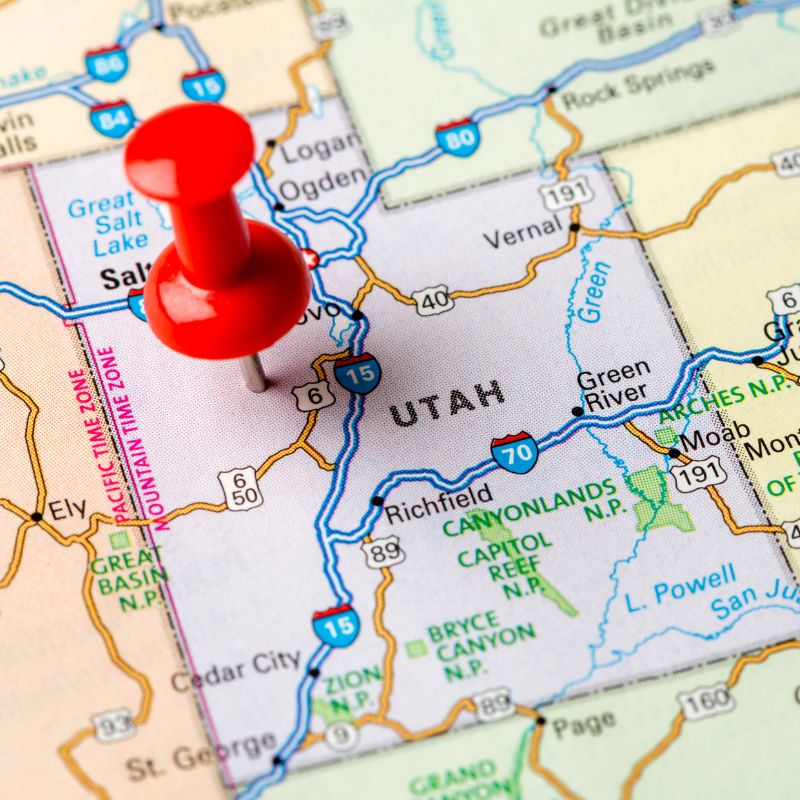
Unlike states where industrial contamination is the primary well water threat, Utah’s most widespread risk comes from the ground itself. The Utah Geological Survey identifies arsenic, uranium, lead, nitrate, and chloride as among the most common inorganic groundwater pollutants in the state — most of them naturally occurring from the volcanic rocks, volcanic-derived sediments, and valley-fill deposits that make up Utah’s aquifers.
Arsenic in Utah groundwater occurs across the state. Elevated concentrations have been documented in Sanpete County, where arsenic levels in groundwater may be associated with poultry farming operations in addition to natural geology. Isolated elevated arsenic levels elsewhere are linked to volcanic rocks or volcanic-derived sediments in valley-fill deposits. This is a statewide geological pattern — not a localised industrial problem — which means every private well in Utah should be tested for arsenic regardless of location.
Uranium follows a similar pattern. The federal MCL for uranium is 30 µg/L, and uranium from geological sources is present throughout Utah’s groundwater system. The Utah Department of Health and Human Services specifically names uranium, alongside arsenic and radon, as naturally occurring contaminants of concern for well users in the state. USGS research confirms that arsenic and uranium frequently co-occur in groundwater — wells testing high for one should be tested for both.
The USGS national study of private wells found that arsenic exceeded the MCL of 10 µg/L in about 7% of wells sampled nationally, rising to around 16% in Southwest basin-fill aquifers — the geological formation type that covers much of Utah. Utah-specific data confirms this elevated rate: research published in peer-reviewed literature found that approximately 15% of private wells in Utah’s Cache Valley Basin (northern Utah) have arsenic concentrations above the MCL. A separate Great Basin study found a greater than 50% probability of elevated arsenic for well users drawing from alluvial aquifers across western Utah. Long-term arsenic exposure is linked to cancers of the bladder, lung, and skin, as well as cardiovascular disease. Uranium at elevated levels is associated with kidney damage. Neither has any taste, colour, or odour at the concentrations found in groundwater.
PFAS in Utah: Military Bases, Airports — and Ski Wax
Utah’s overall PFAS risk in public water is relatively low. The Utah DEQ’s statewide reconnaissance programme found that most drinking water samples fall well below EPA limits, and PFAS is not manufactured in Utah. However, three sites in the state have confirmed PFAS contamination in groundwater: Hill Air Force Base in Davis County, Camp Williams (which straddles the Salt Lake / Utah County border near Bluffdale), and the Salt Lake City International Airport — all identified by the Environmental Working Group from Department of Defense records.
At Hill AFB, the Air Force is currently in the active remedial investigation phase for PFAS contamination. In May 2025, Air Force representatives briefed Layton City Council on expanding investigations into shallow groundwater near the base, with multiple areas of firefighting-foam use identified as sources. Extraction wells and interim treatment systems are in place, and the Air Force has stated no residents are currently drinking PFAS-contaminated water attributable to the base. However, private well owners in the wider Davis County area near the base boundary should be aware of the ongoing investigation and monitor updates from the Utah DEQ.
Separately, in March 2024, the Salt Lake City Department of Public Utilities announced that PFAS were detected in two of its public groundwater wells — though those wells were not contributing to the drinking water distribution system at the time.
In Park City (Summit County), a distinctly unusual contamination source has been confirmed: fluorinated ski wax. PFAS were first detected in Park City’s three groundwater wells in 2022, with levels of up to 8 ppt — above the EPA’s 4 ppt MCL for PFOA and PFOS. The city’s water quality team identified fluoro ski wax as the probable source, as the specific PFAS compounds found matched those in ski wax rather than firefighting foam or industrial sources. In September 2024, the Utah Division of Drinking Water approved Park City’s compliance plan — a blending strategy mixing PFAS-free surface-treated water with affected well water — making it the first water system in Utah to gain state PFAS compliance approval, 4.5 years ahead of the original 2029 deadline. Park City banned fluoro ski wax via a source protection ordinance in 2023 and runs an ongoing wax take-back programme. Private wells in the Park City and wider Summit County area should be tested for PFAS.
Four additional Utah military sites are suspected of PFAS contamination from historical AFFF firefighting foam use, though formal confirmation remains pending. Statewide, 26 of 85 Utah water systems tested have discovered at least trace amounts of PFAS, according to reporting by the Salt Lake Tribune. Utah DEQ continues to expand its monitoring programme.
Quick Important Advertisement – Boil Water Alerts continue below
Don’t Wait for the Next Emergency to Act
Boil water alerts are a warning sign. Whether caused by pipe breaks, contamination, or natural disasters, they highlight how vulnerable our water systems can be.
The safest long-term solution? A reliable home water filtration system designed to remove bacteria, parasites, and harmful chemicals — so you’re protected even when advisories are issued.
Stay Ready with Trusted Filtration:
✅ Removes pathogens, chlorine, PFAS, and heavy metals
✅ Safer than boiling alone — no need to wait for alerts
✅ Easy options for homes, renters, and families
Prefer no installation? Check out the A2 Countertop System
Note: This advert may contain affiliate links. If you choose to buy, we may receive a small commission — thank you for supporting our work!
Nitrate, Bacteria, and Other Risks
Nitrate contamination in Utah groundwater primarily affects areas with agricultural activity, particularly where animal waste, fertiliser runoff, and septic systems are concentrated. The Utah Geological Survey notes that some of the highest nitrate concentrations found in the shallow Salt Lake Valley aquifer occurred near animal pens. The federal MCL for nitrate is 10 mg/L; elevated levels are particularly dangerous for infants under six months, potentially causing methemoglobinemia (blue baby syndrome).
Bacterial contamination is an ongoing risk for any private well — particularly older wells with compromised casings, shallow wells near septic systems, or wells in areas prone to seasonal flooding. E. coli and total coliform bacteria testing should form the baseline of any well testing programme, repeated annually.
For properties near the Bingham Canyon Copper Mine area (southwest Salt Lake County), groundwater contamination from mine seepage — including elevated metals and high total dissolved solids — is a documented concern. Cleanup operations by the mining company are ongoing, but private well owners in affected areas should not assume remediation is complete.
Regulatory Situation for Utah Well Owners
Private residential wells in Utah are not regulated under the federal Safe Drinking Water Act, and Utah has no state law requiring mandatory testing of private wells. The Utah Division of Drinking Water regulates public water systems but has no authority over private well water quality. Testing and treatment are entirely the well owner’s responsibility.
Utah has no state-level PFAS MCLs of its own — the federal EPA limits of 4 ppt for PFOA and PFOS apply to public water systems only. Private well owners are outside that regulatory framework entirely. Utah DEQ’s PFAS programme currently prioritises assisting community water systems with initial monitoring; private well assistance may be considered in future programme phases but is not currently available.
Check our Utah municipal water quality page for city-by-city tap water data, our Salt Lake City water quality page, or use our live boil water notice tracker for active advisories across the state.
Known High-Risk Areas in Utah
If you live near any of the following locations, well water testing is urgent — not precautionary.
Hill Air Force Base, Davis County
Confirmed PFAS contamination in groundwater from historical AFFF firefighting foam use. Active remedial investigation ongoing as of 2025. Extraction wells in place; private well owners in the Layton/Clearfield area near the base boundary should monitor DEQ updates.
Park City & Summit County
Well water detected up to 8 ppt PFAS — above the EPA’s 4 ppt MCL. Fluorinated ski wax confirmed as the probable contamination source. In September 2024, Park City became the first water system in Utah to receive state PFAS compliance plan approval, 4.5 years ahead of the deadline. Private wells in the area should be tested urgently.
Camp Williams, Salt Lake / Utah County
Confirmed PFAS contamination in groundwater from military activities, including historical AFFF use. The facility straddles the Salt Lake / Utah County border, south of Bluffdale. Private well owners in the Bluffdale, Saratoga Springs, and South Jordan areas near the facility should consider PFAS testing.
Salt Lake City International Airport
Confirmed PFAS contamination in groundwater from airport firefighting operations. Surrounding private wells should be tested. Separately, in March 2024, two SLCDPU public groundwater wells returned PFAS detections of 7.8 ppt during federal UCMR5 sampling — one a seasonal peak-demand well, the other inactive since the 1990s. Neither was in the distribution system at the time.
Sanpete County
The Utah Geological Survey documents elevated arsenic in Sanpete County groundwater, potentially associated with poultry farming operations in addition to natural geology. Private well testing for arsenic — and uranium — is strongly recommended for all well owners in the county.
SW Salt Lake County — Bingham Canyon Area
Groundwater contamination from seepage associated with the Bingham Canyon Copper Mine is a documented concern, including elevated metals and high TDS concentrations. The mining company’s remediation programme is ongoing. Private well owners in southwest Salt Lake County should test for a full metals panel.
How to Test Your Utah Well Water — and What to Do Next
Given Utah’s geological contamination profile, testing for arsenic and uranium should be a first priority for every private well owner in the state — regardless of county or proximity to industrial activity. These are naturally occurring contaminants with no taste or odour, present because of what the ground is made of rather than what’s been done to it. The Utah DHHS and Utah Geological Survey both recommend testing private wells for inorganic contaminants including arsenic.
For well owners near military facilities, the Salt Lake City Airport, or in the Park City area, PFAS testing should be added as an urgent priority. Contact your local county health department to obtain a referral to a certified laboratory, or use the Utah DEQ’s Division of Drinking Water resources at deq.utah.gov to find accredited labs in your area.
For filter options, our well water filter guide covers reverse osmosis systems for arsenic, uranium, and PFAS, UV disinfection for bacteria, and whole-house well systems for comprehensive protection. You can also browse our full water filter solutions page or check your ZIP code for local water quality context.
For other Western state well water risks, see our pages on Michigan wells and Ohio wells. Return to the private well water directory to find your state.
Quick Important Advertisement – Boil Water Alerts continue below
Don’t Wait for the Next Emergency to Act
Boil water alerts are a warning sign. Whether caused by pipe breaks, contamination, or natural disasters, they highlight how vulnerable our water systems can be.
The safest long-term solution? A reliable home water filtration system designed to remove bacteria, parasites, and harmful chemicals — so you’re protected even when advisories are issued.
Stay Ready with Trusted Filtration:
✅ Removes pathogens, chlorine, PFAS, and heavy metals
✅ Safer than boiling alone — no need to wait for alerts
✅ Easy options for homes, renters, and families
Prefer no installation? Check out the A2 Countertop System
Note: This advert may contain affiliate links. If you choose to buy, we may receive a small commission — thank you for supporting our work!
Quality News About Your Water
Get the comprehensive water quality news coverage you need with our dedicated US Water News Service. From coast to coast, we deliver in-depth reporting and expert analysis on PFAS contamination, EPA regulatory changes, infrastructure developments, and emerging water safety issues affecting communities nationwide. While mainstream media only covers the biggest stories, we provide the detailed, ongoing coverage that helps you understand the full scope of America’s water challenges.
What’s actually in your tap water? Enter your ZIP code for a full breakdown of contaminants detected in your local supply
Drinking water from a well? Check our directory here for more information
Please read – our information
The information presented on cleanairandwater.net is compiled from official water quality reports, trusted news sources, government websites, and public health resources. While we strive for accuracy and thoroughness in our presentations, we are not scientists, engineers, or qualified water quality professionals.
Our mission is to present water quality information in an accessible, real-world format that helps people understand what’s in their water and make informed decisions about their health and safety. We believe that complex environmental information should be available to everyone in a format that’s easy to understand.
We make every effort to ensure our content is current and accurate, but we cannot guarantee that all information is complete or error-free. This website should not replace official communications from your local water utility or health department. We always recommend consulting official sources for the most up-to-date information regarding your specific water system.
Clean Air and Water is not liable for any unintentional errors, omissions, or outdated information. The content on this site is provided for informational purposes only and should not be considered professional advice.