← Private Well Water Directory / Wyoming
Wyoming Private Well Water Quality 2026
Wyoming’s geology makes it one of the most challenging states in the country for private well owners. Uranium, arsenic, and selenium occur naturally in Wyoming’s groundwater — and the state, home to the largest uranium ore reserves in the US, has a mining and industrial legacy that adds layers of contamination risk on top of what nature already provides. With no mandatory testing requirement for private wells, what’s in your water is entirely your responsibility to find out.
Wyoming’s Geology Is the Primary Threat to Well Water
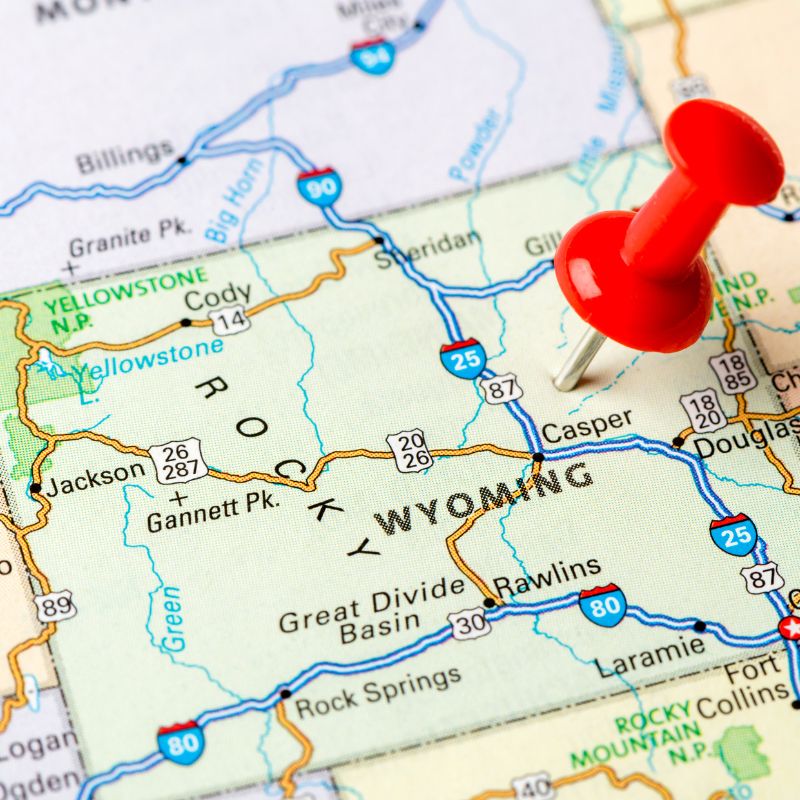
Wyoming sits atop some of the most mineralogically complex geology in the United States. The same rock formations that have made the state one of the country’s most important sources of uranium, coal, and oil and gas are also a direct source of groundwater contamination for private well owners. Uranium, arsenic, selenium, radium, and radon all occur naturally in Wyoming’s aquifers — not as the result of industrial accidents, but as a consequence of the geology through which groundwater moves.
The Wyoming Department of Environmental Quality (WDEQ) explicitly lists uranium, radium, selenium, and methane among the most common contaminants found in Wyoming groundwater — alongside the more familiar bacteria, nitrate, and arsenic. This places Wyoming in a different category from many other states, where the primary well water threat is industrial or agricultural in origin. In Wyoming, the ground itself is the hazard.
None of these naturally occurring contaminants can be seen, smelled, or tasted at dangerous concentrations. The WDEQ’s Know Your Well programme recommends that all private well owners test for arsenic, uranium, radium, and selenium — in addition to annual testing for bacteria and nitrate — because the presence of these contaminants is genuinely unpredictable. Wells located close to each other can produce water with dramatically different contamination profiles depending on the specific geology at depth.
The federal MCL for uranium in drinking water is 30 micrograms per litre (µg/L). For arsenic, the standard is 10 µg/L. Long-term exposure to uranium above the MCL is associated with kidney damage. Long-term arsenic exposure is linked to cancers of the skin, bladder, and lung, as well as cardiovascular disease and type 2 diabetes.
Uranium Mining Legacy and Groundwater
Wyoming holds the largest known uranium ore reserves in the United States and has historically ranked No. 1 in national uranium production. As of 2025, it is the No. 2 producing state (behind Utah, having recently surpassed Texas), with industry analysts projecting it will reclaim top spot as new facilities come online. The legacy of decades of conventional and in-situ recovery (ISR) uranium mining has left a documented groundwater contamination footprint across the state. The WDEQ Groundwater Section has an entire programme dedicated to developing groundwater classifications for aquifers impacted by in-situ uranium mining operations.
The Powder River Basin in northeast Wyoming and the Gas Hills area of Fremont County are among the regions with the highest historical uranium mining activity. Research published in connection with the Pavillion, Wyoming fracking contamination investigation found arsenic and uranium in domestic drinking water wells at levels higher than would be expected from natural sources alone — a reminder that industrial activity compounds an already elevated baseline risk.
In-situ uranium recovery — the dominant modern mining method — injects chemical solutions underground to dissolve uranium from ore, then pumps the uranium-bearing solution to the surface. Despite restoration requirements, restoring affected aquifers to pre-mining standards has proven technically difficult, and WDEQ actively oversees restoration monitoring at active and former ISR sites.
PFAS from Military Sites and Airports
F.E. Warren Air Force Base, located immediately west of Cheyenne in Laramie County, has been identified as a PFAS investigation site. The base’s Fire Protection Training Areas 1 and 2 are under examination for potential PFAS contamination from historical use of aqueous film-forming foam (AFFF), and WDEQ is working with federal partners on ongoing remediation. Groundwater and soil contamination at the base was first discovered in the 1980s — the PFAS investigation is the most recent chapter in a longer contamination history.
The Wyoming Air National Guard has been remedying contamination at the Cheyenne Municipal Airport since 2001. In June 2024, the Jackson Hole Airport Board joined a multiparty federal lawsuit against manufacturers of PFAS-containing aviation firefighting foam, citing trace-level PFAS detections in the Snake River Aquifer near the airport — a source of drinking water for some area residents.
WDEQ has launched a PFAS in Drinking Water Monitoring Assistance Programme, operating through contractor HydroGeoLogic (HGL), which offers free PFAS sampling and next-steps guidance to private well owners located near known or potential PFAS sources. There is no deadline for private well owners to enrol. This is one of the few proactive state programmes of its kind and represents a genuine resource for well owners in at-risk areas.
Quick Important Advertisement – Boil Water Alerts continue below
Don’t Wait for the Next Emergency to Act
Boil water alerts are a warning sign. Whether caused by pipe breaks, contamination, or natural disasters, they highlight how vulnerable our water systems can be.
The safest long-term solution? A reliable home water filtration system designed to remove bacteria, parasites, and harmful chemicals — so you’re protected even when advisories are issued.
Stay Ready with Trusted Filtration:
✅ Removes pathogens, chlorine, PFAS, and heavy metals
✅ Safer than boiling alone — no need to wait for alerts
✅ Easy options for homes, renters, and families
Prefer no installation? Check out the A2 Countertop System
Note: This advert may contain affiliate links. If you choose to buy, we may receive a small commission — thank you for supporting our work!
Oil and Gas: An Additional Risk for Rural Well Owners
Wyoming is a major oil and gas producing state, and spills, leaks, and improper disposal of produced water from drilling operations represent a documented contamination pathway for private wells. WDEQ’s Groundwater Pollution Control programme issues permits for coal bed methane produced water impoundments, with monitoring requirements specifically designed to detect potential shallow aquifer contamination — an acknowledgement that the risk is real and ongoing.
The Pavillion area of Fremont County became a flashpoint for the national debate about fracking and groundwater contamination after EPA draft findings identified compounds associated with hydraulic fracturing in domestic drinking water wells. While the final federal assessment stopped short of declaring widespread contamination, the Pavillion case established that fracking-related compounds — including arsenic and uranium at levels elevated above natural background — can be found in private drinking water wells in oil and gas country.
For well owners in or near Wyoming’s oil and gas basins — the Powder River Basin, the Wind River Basin, the Pinedale Anticline, or the Green River Basin — periodic testing for petroleum hydrocarbons, VOCs, arsenic, and uranium is prudent, particularly if drilling activity has occurred nearby.
Nitrate and Bacteria Risks
In agricultural areas and where livestock operations are concentrated, nitrate from fertiliser runoff and animal waste represents an ongoing risk to shallow wells. Bacteria contamination — including E. coli and total coliform — can occur when wellheads are improperly sealed, flood or surface water enters, or septic systems are positioned too close to well casings. WDEQ recommends annual testing for both bacteria and nitrates for all private well owners regardless of location.
Regulatory Situation for Wyoming Well Owners
Private residential wells in Wyoming are not regulated under the state’s water quality laws. There is no mandatory testing requirement, no notification system, and no requirement for periodic monitoring. The Wyoming State Engineer’s Office handles well permitting and construction oversight — contact them at 307-777-6150 — but once a well is operational, testing and treatment are entirely the well owner’s responsibility.
Wyoming has no state-level PFAS maximum contaminant limits for private wells. The federal PFAS MCLs (4 ppt for PFOA and PFOS individually) apply to public water systems only. WDEQ does offer the PFAS Monitoring Assistance Programme as a free resource for at-risk private well owners, but participation is voluntary. Contact WDEQ’s Know Your Well line at 307-777-WELL (9355) for guidance on testing and certified laboratories.
Check our Wyoming municipal water quality page for city-by-city tap water data, or use our live boil water notice tracker for active advisories statewide.
Known High-Risk Areas in Wyoming
If you live near any of the following locations, well water testing is urgent — not precautionary.
Powder River Basin, Northeast Wyoming
One of the highest-density uranium mining areas in the state. In-situ recovery operations have affected groundwater quality across a wide area. Naturally elevated uranium and arsenic are documented in well water throughout the region.
Gas Hills, Fremont County
Historical uranium milling and extraction operations have left a documented groundwater contamination legacy. The broader Wind River Basin also presents elevated arsenic and uranium risk from natural geology.
Pavillion Area, Fremont County
Domestic drinking water wells in this oil and gas production area have been found to contain arsenic, uranium, and petroleum-associated compounds above expected natural levels. The subject of federal EPA and state investigations.
F.E. Warren AFB Area, Laramie County
Located immediately west of Cheyenne. PFAS investigation active at Fire Protection Training Areas 1 and 2. Historic soil and groundwater contamination from base operations since the 1980s. Nearby residential wells should be tested.
Cheyenne Municipal Airport Area
Wyoming Air National Guard contamination remediation ongoing since 2001. Residents within a few miles of the airport should consider PFAS testing, particularly if on private well water rather than municipal supply.
Jackson Hole Area, Teton County
Jackson Hole Airport joined federal PFAS litigation in 2024 following trace PFAS detections in the Snake River Aquifer near the airport. Rural well owners in the broader Teton County area should consider PFAS testing.
How to Test Your Wyoming Well Water — and What to Do Next
The WDEQ recommends a baseline inorganic panel for all Wyoming private well owners, covering arsenic, uranium, selenium, radium, lead, copper, iron, manganese, sulfate, and total dissolved solids, in addition to annual bacteria and nitrate testing. This reflects Wyoming’s unusual contamination profile: the state’s own regulatory agency acknowledges that the geology poses a routine risk that well owners need to actively manage.
Contact WDEQ’s Know Your Well programme at 307-777-WELL (9355) to find a certified laboratory and access contamination fact sheets specific to your region. If you are near a military site, airport, or oil and gas operation, ask specifically about PFAS testing and enquire whether you are eligible for the WDEQ PFAS Monitoring Assistance Programme’s free sampling service.
For filter options, our well water filter guide covers reverse osmosis systems for uranium, arsenic and PFAS, UV disinfection for bacteria, and whole-house well systems for comprehensive multi-contaminant treatment. You can also browse our full water filter solutions page or check your ZIP code for local water quality context.
For other Rocky Mountain and Western well water risks, see our pages on Colorado wells and Montana wells. Return to the private well water directory to find your state.
Quality News About Your Water
Get the comprehensive water quality news coverage you need with our dedicated US Water News Service. From coast to coast, we deliver in-depth reporting and expert analysis on PFAS contamination, EPA regulatory changes, infrastructure developments, and emerging water safety issues affecting communities nationwide. While mainstream media only covers the biggest stories, we provide the detailed, ongoing coverage that helps you understand the full scope of America’s water challenges.
What’s actually in your tap water? Enter your ZIP code for a full breakdown of contaminants detected in your local supply
Drinking water from a well? Check our directory here for more information
Please read – our information
The information presented on cleanairandwater.net is compiled from official water quality reports, trusted news sources, government websites, and public health resources. While we strive for accuracy and thoroughness in our presentations, we are not scientists, engineers, or qualified water quality professionals.
Our mission is to present water quality information in an accessible, real-world format that helps people understand what’s in their water and make informed decisions about their health and safety. We believe that complex environmental information should be available to everyone in a format that’s easy to understand.
We make every effort to ensure our content is current and accurate, but we cannot guarantee that all information is complete or error-free. This website should not replace official communications from your local water utility or health department. We always recommend consulting official sources for the most up-to-date information regarding your specific water system.
Clean Air and Water is not liable for any unintentional errors, omissions, or outdated information. The content on this site is provided for informational purposes only and should not be considered professional advice.