Washington State Water Quality at a Glance
Is Washington State Water Safe to Drink?
Generally Compliant with Significant PFAS Concerns — Washington’s water systems largely meet federal Safe Drinking Water Act standards, but PFAS contamination is widespread and serious. DOH officials estimated approximately 200 public water systems are likely contaminated above allowable levels, with 253 systems detecting some PFAS and 57% of West Plains private wells above safe drinking water standards. The state aligned its action levels with the stricter EPA MCLs on 15 January 2026. Addressing contamination statewide is estimated to cost $1.6 billion. For affected areas, a reverse osmosis or activated carbon filter is strongly recommended. Check our live boil water notices tracker for any active advisories.
⚠️ Key Concerns for Washington Residents
- PFAS “Forever Chemicals”: ~200 systems estimated above federal limits; 253 systems with any PFAS detection; state action levels were tightened to align with EPA MCLs on 15 January 2026; routine compliance monitoring begins April 2027
- West Plains / Spokane Area: 57% of sampled private wells (236 of 411) above safe standards; areas north of Highway 2 up to 20x the drinking water standard; Spokane International Airport under active investigation; Medical Lake groundwater modelling ongoing
- Military Base Contamination: Fairchild Air Force Base and Joint Base Lewis-McChord AFFF foam identified as primary contamination sources; City of Lakewood lawsuit ongoing against U.S. government and PFAS manufacturers
- Private Wells: Thousands of private well owners are not subject to state testing requirements — if you are in an affected area, test your well using a DOH-accredited laboratory
Read the full report below for detailed analysis, city-specific data, and actionable recommendations for Washington residents.
Advertisement — Report continues below
Think Your Tap Water Is Safe? Think Again.
Even when it looks clear, tap water can carry hidden contaminants—like chlorine, heavy metals, and microplastics—that don’t always affect the taste but still reach your glass.
A professionally engineered water filtration system can help protect your household, providing cleaner, safer, and better-tasting water every day.
Smart Solutions for Safer Drinking Water:
✅ Reduces common contaminants like chlorine and microplastics
✅ NSF/ANSI certified for trusted performance
✅ Smart, space-saving tankless design
✅ Long-term investment in cleaner water
Looking for a simple, no-install option? (Check out the A2 Countertop System)
Note: This advert contains affiliate links. If you buy through these links, we may earn a commission at no extra cost to you.

Washington — The Evergreen State — Water Quality Report 2026: PFAS Testing, Infrastructure Investment & Safety across the State
Washington’s water infrastructure serves approximately 7.8 million residents through a complex network of over 2,430 Group A public water systems, ranging from large utilities such as Seattle Public Utilities — which serves over 1.4 million customers — to smaller rural systems serving remote communities. Water sources include the Columbia River system, Puget Sound watersheds, and mountain-fed rivers and groundwater aquifers supplying both urban centres and agricultural areas across the state’s diverse geography.
Washington has been a national leader in PFAS regulation since 2021, when the State Board of Health required all 2,430+ Group A systems to test for PFAS by December 2025. All initial testing is now complete. State officials estimated approximately 200 public water systems are likely contaminated above allowable levels under the stricter EPA MCLs, with a rough statewide cleanup cost of $1.6 billion. On 15 January 2026, Washington formally aligned its State Action Levels with the federal MCLs. Washington’s Drinking Water State Revolving Fund issued 47 loans totalling $184.7 million in 2025, and plans to provide a further $167 million in 2026 — the final year of Bipartisan Infrastructure Law funding. Explore our city pages for Seattle, Spokane, and Tacoma, or check for active alerts via our live U.S. boil water notices tracker.
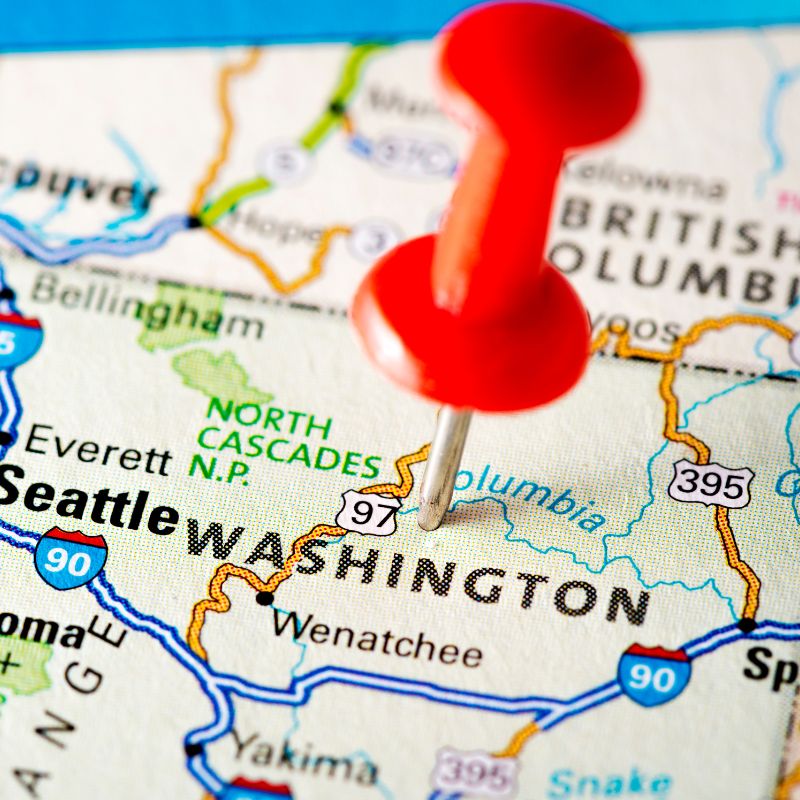
Washington Water Quality: Current Status (2025–2026)
Statewide PFAS Compliance and Testing (Completed December 2025)
- Testing Complete: All 2,430+ Group A public water systems were required to complete initial PFAS testing by December 2025. Of those tested, 253 systems detected some level of PFAS; 30 confirmed exceedances above former state action levels; and DOH officials estimate approximately 200 systems are likely above the now-stricter federal MCLs once all results are assessed against the updated thresholds.
- New State Action Levels (Effective 15 January 2026): The State Board of Health adopted rule changes on 15 December 2025, aligning Washington’s State Action Levels with the federal EPA MCLs effective 15 January 2026. Exceeding a SAL is now assessed using a running annual average (RAA) rather than a single confirmed detection, and routine compliance monitoring begins April 2027.
- Overall Compliance: Most Washington residents receive water from community systems that meet all federal Safe Drinking Water Act standards. However, DOH has emphasised that hundreds of smaller systems — particularly those near military bases, airports, and industrial sites — face significant PFAS treatment requirements ahead of the April 2029 MCL enforcement date.
West Plains and Spokane Region
- Private Well Contamination: EPA sampled 411 private wells in the West Plains eligible area in 2024; 236 wells (57%) had PFAS above safe drinking water standards. Areas north of Highway 2 showed levels up to 20 times the drinking water standard. DOH’s Alternative Drinking Water Programme is providing point-of-use filters free of charge to affected homeowners.
- Spokane International Airport Investigation: Washington Department of Ecology is requiring Spokane International Airport to complete a formal PFAS investigation to determine whether contamination is leaving airport property and affecting off-site groundwater. The investigation was formally initiated in 2023 and is ongoing.
- Medical Lake Groundwater Modelling: Eastern Washington University researchers, funded by an Ecology grant, are conducting quarterly groundwater sampling at 30 locations to model the extent of PFAS contamination in the West Plains. Low levels of PFAS have also been detected in Medical Lake, Deep Creek, and Latah Creek, though surface water is not a primary drinking water source for most residents.
Infrastructure Investment and Funding (2025–2026)
- Drinking Water State Revolving Fund: In 2025, Washington’s DWSRF programme funded 47 loans totalling $184.7 million, of which $52.9 million was provided as principal forgiveness. A further $3.6 million in pre-construction loans and $250,000 in consolidation feasibility grants were also provided. For 2026, the programme plans to issue $167 million in loans — the final year of Bipartisan Infrastructure Law supplemental funding.
- Federal PFAS and Lead Funding: Washington received $64 million in BIL water infrastructure funding for FY2025, including $17.3 million specifically for PFAS treatment and emerging contaminant removal. A separate $57 million announcement in 2024 targeted lead service line replacement. Total BIL water investment in Washington across all years exceeds $152 million.
- Statewide Cleanup Cost Estimate: A DOH official offered a rough estimate of $1.6 billion as the cost of initial infrastructure upgrades needed to bring contaminated systems into compliance with the new federal MCLs — not including ongoing maintenance or PFAS waste disposal costs.
Airports, Products, and Prevention
- Airport PFAS Elimination: Seattle-Tacoma International Airport became the first airport in the United States to fully remove PFAS from airport fire trucks. By autumn 2025, all 11 of Washington’s commercial airports were PFAS-free, following a federal FAA plan published in May 2023 requiring airports to transition away from AFFF firefighting foam.
- Product Bans: Washington has implemented broad PFAS product restrictions under the Safer Products for Washington programme, covering apparel, cosmetics, food packaging, firefighting gear, and other consumer categories. Final determinations on a further round of restrictions (Cycle 1.5) are expected by June 2028.
- Private Wells and Rural Systems: Thousands of private well owners and Group B systems (serving fewer than 25 people for fewer than 60 days per year) are not covered by state or federal PFAS testing requirements. Residents in areas near military bases, airports, or known contamination sites are strongly encouraged to test their wells using a DOH-accredited laboratory.
Looking Forward: 2026–2031
Washington faces a significant but structured path forward on water quality. Routine compliance monitoring under the new federal PFAS MCLs begins April 2027, with systems required to reduce contamination by April 2029. The state needs an estimated $11.73 billion over the next 20 years to maintain and upgrade all transmission, distribution, treatment, storage, and source infrastructure. Washington’s early investment in PFAS testing — requiring systems to test years before federal deadlines — means it is better positioned than most states to identify and address contamination efficiently. Washington residents can use the DOH PFAS Testing Dashboard to check their system’s results, and should visit our water quality checker and water alert news section for the latest updates. See also our water filter guide for effective PFAS and DBP removal options.
Recommendations for Washington Residents
Check Your System’s PFAS Results
Visit the Washington State Department of Health’s PFAS Testing Dashboard at doh.wa.gov to see whether your system has been tested and what levels were detected. All Group A public water systems have now completed initial testing. If you’re on a private well or Group B system near a military base, airport, or known contamination site, have your water tested by a DOH-accredited laboratory. See our water quality checker for additional resources.
Support Infrastructure Investment
Stay informed about local water infrastructure needs and support utility rate structures enabling necessary upgrades. Washington’s DWSRF issued $184.7 million in 2025 loans and plans a further $167 million in 2026. Attend public meetings when your utility discusses PFAS treatment plans. The state’s rough estimate for bringing contaminated systems into compliance is $1.6 billion — community engagement and legal action against responsible parties (such as the Lakewood lawsuit against PFAS manufacturers) will be key to managing costs.
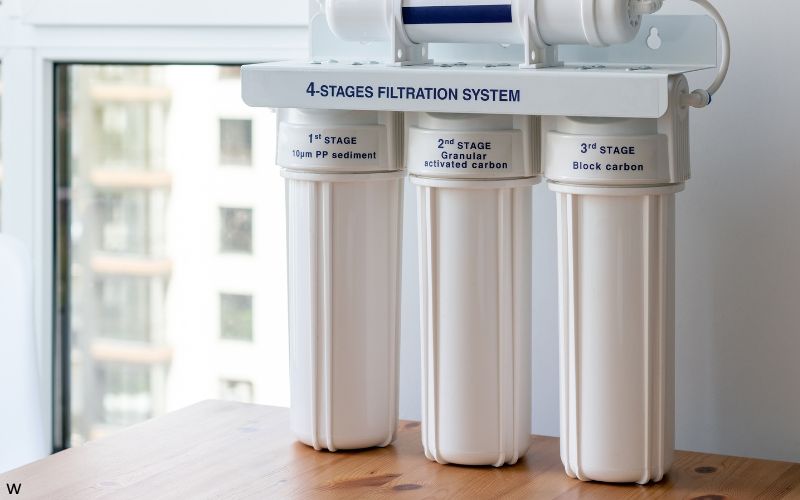
Install a PFAS-Certified Filter
For households in areas with known PFAS contamination, a reverse osmosis filter is the most effective option for removing PFAS, disinfection byproducts, and heavy metals. NSF/ANSI 58-certified reverse osmosis systems and NSF/ANSI 53-certified activated carbon filters (look for the PFAS reduction certification) both provide meaningful protection while utilities implement treatment upgrades. West Plains residents may be eligible for free point-of-use filters via DOH’s Alternative Drinking Water Programme. *Affiliate links — see our disclosure.

Report Water Quality Concerns
Contact your local water utility immediately for taste, odour, or colour concerns, or to request PFAS test results. Report suspected contamination to the Washington Department of Health’s Office of Drinking Water or the Department of Ecology. Systems that detect PFAS above a State Action Level must notify customers within 30 days. Monitor our water alert news section and boil water notices tracker for the latest statewide advisories.
Practise Water Conservation
Support Washington’s long-term water sustainability by implementing conservation measures — efficient irrigation, rainwater harvesting, and low-flow fixtures. Eastern Washington faces ongoing drought pressure with below-normal snowpack affecting summer flows. Reducing demand helps utilities maintain system reliability and affordability, preserves water for fish and ecosystems, and reduces stress on treatment systems as they prepare for PFAS compliance.
Washington Cities We Cover
Seattle Water Quality
Seattle Public Utilities is one of the Pacific Northwest’s largest water utilities, serving over 1.4 million customers from the Cedar River and South Fork Tolt River watersheds. Seattle-Tacoma International Airport became the first airport in the US to fully remove PFAS from fire trucks — a sign of the city’s proactive approach to emerging contaminants.
Spokane Water Quality
Eastern Washington’s largest city sits at the heart of the state’s most serious PFAS contamination zone. The West Plains area west of Spokane has 57% of private wells above safe limits, Spokane International Airport is under Ecology investigation, and the Fairchild Air Force Base AFFF foam contamination has affected the area since the 1970s.
Tacoma Water Quality
Tacoma Water serves South Puget Sound communities from the Green River watershed. Joint Base Lewis-McChord, located near Lakewood in Pierce County, has been a significant source of PFAS contamination — the City of Lakewood’s lawsuit against the U.S. government and PFAS manufacturers over groundwater contamination is ongoing.
Frequently Asked Questions
Is Washington’s tap water safe to drink in 2026?
For most Washington residents served by larger community public water systems, tap water meets all federal drinking water standards and is generally safe to drink. However, the picture varies significantly by location.
DOH officials estimated approximately 200 public water systems are likely contaminated above the new federal PFAS MCLs, and 253 systems detected some PFAS in initial testing completed by December 2025. The West Plains near Spokane is the most acutely affected area, where 57% of sampled private wells exceeded safe drinking water standards. Residents in areas near military bases, airports, or industrial sites should check the DOH PFAS Testing Dashboard for their system’s results, and should consider a certified reverse osmosis filter as additional protection. See our water quality checker for more resources.
What changed in Washington’s PFAS rules in 2026?
Washington made a significant regulatory update at the start of 2026. The State Board of Health adopted rule changes on 15 December 2025, effective 15 January 2026, that aligned Washington’s State Action Levels with the stricter EPA federal MCLs:
1. Tighter limits: The new SALs match the EPA’s 4 ppt MCLs for PFOA and PFOS, which are more protective than Washington’s original 2021 action levels
2. Running annual average: Exceedances are now assessed using a running annual average (RAA), not a single confirmed detection — a methodology more consistent with federal compliance
3. Monitoring timeline: Routine compliance monitoring begins April 2027, with systems required to reduce PFAS to compliant levels by April 2029
All data collected after 14 January 2026 will be used to calculate RAAs for compliance purposes.
How can I find out about my local water quality in Washington?
Washington residents have several resources available:
• DOH PFAS Testing Dashboard: Available at doh.wa.gov — shows PFAS testing results for all Group A systems, including a searchable map by location
• Annual Consumer Confidence Report: Contact your water utility or check their website for their most recent CCR, which details all regulated contaminants tested
• EWG Tap Water Database: Search by zip code to find contaminants detected in your local water system and get filter recommendations
• Department of Ecology Water Quality Atlas: Information on local watershed and water body conditions
• Private well owners: Contact a DOH-accredited laboratory to test for PFAS, especially if you live near a military base, airport, or agricultural area. Group B systems are not required to test under state or federal rules.
What are Washington’s main water infrastructure challenges?
Washington’s water infrastructure faces several compounding challenges in 2026:
PFAS Treatment Costs: An estimated $1.6 billion is needed for initial infrastructure upgrades to meet new federal MCLs, with additional ongoing costs for treatment and disposal. The final year of BIL funding ($167M DWSRF loans in 2026) will help, but significant gaps remain.
Climate and Water Supply: Changing snowpack affects summer streamflows, threatening eastern Washington’s agricultural and municipal water supplies. The state needs approximately $11.73 billion over 20 years for full infrastructure maintenance.
Rural System Capacity: Smaller systems lack the technical and financial resources of large utilities. DWSRF principal forgiveness loans and consolidation feasibility grants help, but regulatory compliance remains a challenge for systems serving remote communities.
Legal and Liability Landscape: Multiple lawsuits against PFAS manufacturers and the U.S. government are working through the courts — settlement proceeds, if successful, could offset some cleanup costs for affected communities.
Quality News About Your Water
Get the comprehensive water quality news coverage you need with our dedicated US Water News Service. From coast to coast, we deliver in-depth reporting and expert analysis on PFAS contamination, EPA regulatory changes, infrastructure developments, and emerging water safety issues affecting communities nationwide. While mainstream media only covers the biggest stories, we provide the detailed, ongoing coverage that helps you understand the full scope of America’s water challenges. Whether you’re a concerned citizen, water professional, or community leader, our daily updates and analytical insights keep you informed about the issues that matter most to public health and environmental safety.
Contaminants of Concern
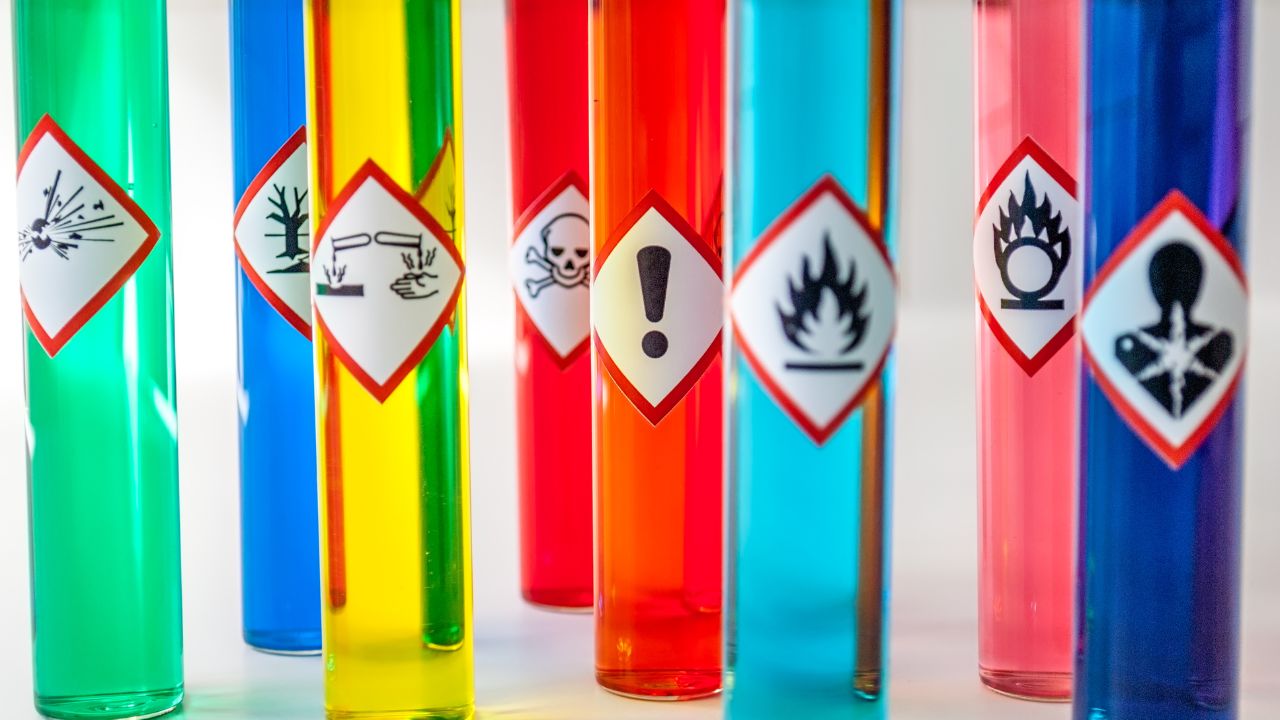
PFAS “Forever Chemicals”
Source: Firefighting foam (AFFF) at military bases including Fairchild Air Force Base and Joint Base Lewis-McChord; Spokane International Airport; industrial manufacturing sites; and consumer products including non-stick cookware and water-resistant textiles
Health Effects: Linked to kidney and testicular cancer, liver damage, immune system suppression, high cholesterol, thyroid disease, and developmental effects in children; all Americans have measurable PFAS in their blood
Current Status: 253 Washington systems with PFAS detections; ~200 estimated above new federal MCLs; 57% of West Plains private wells above safe limits; some areas showing levels up to 20x the drinking water standard. New SALs (from 15 Jan 2026): Aligned with EPA MCLs — 4 ppt for PFOA and PFOS. Best Filter: NSF/ANSI 58 reverse osmosis or NSF/ANSI 53 activated carbon certified for PFAS.

Climate-Related Water Challenges
Source: Declining mountain snowpack due to climate change reducing summer streamflows; increasing winter flood events followed by low-flow summers; rising temperatures accelerating algae bloom development in reservoirs and lakes
Health Effects: Higher pathogen concentrations during low-flow periods; increased disinfection byproduct formation as organic loads rise; algae blooms producing cyanotoxins; strain on treatment systems during extreme weather events
Current Status: Eastern Washington continues to experience drought pressure with below-normal water supply; harmful algal blooms identified in multiple lakes statewide. State Response: Enhanced monitoring, drought planning, and infrastructure investment under the $11.73B 20-year needs assessment. Check our water alert news for current advisories.
Please read – our information
The information presented on cleanairandwater.net is compiled from official water quality reports, trusted news sources, government websites, and public health resources. While we strive for accuracy and thoroughness in our presentations, we are not scientists, engineers, or qualified water quality professionals.
Our mission is to present water quality information in an accessible, real-world format that helps people understand what’s in their water and make informed decisions about their health and safety. We believe that complex environmental information should be available to everyone in a format that’s easy to understand.
We make every effort to ensure our content is current and accurate, but we cannot guarantee that all information is complete or error-free. This website should not replace official communications from your local water utility or health department. We always recommend consulting official sources for the most up-to-date information regarding your specific water system.
Clean Air and Water is not liable for any unintentional errors, omissions, or outdated information. The content on this site is provided for informational purposes only and should not be considered professional advice.