← Private Well Water Directory / West Virginia
West Virginia Private Well Water Quality 2026
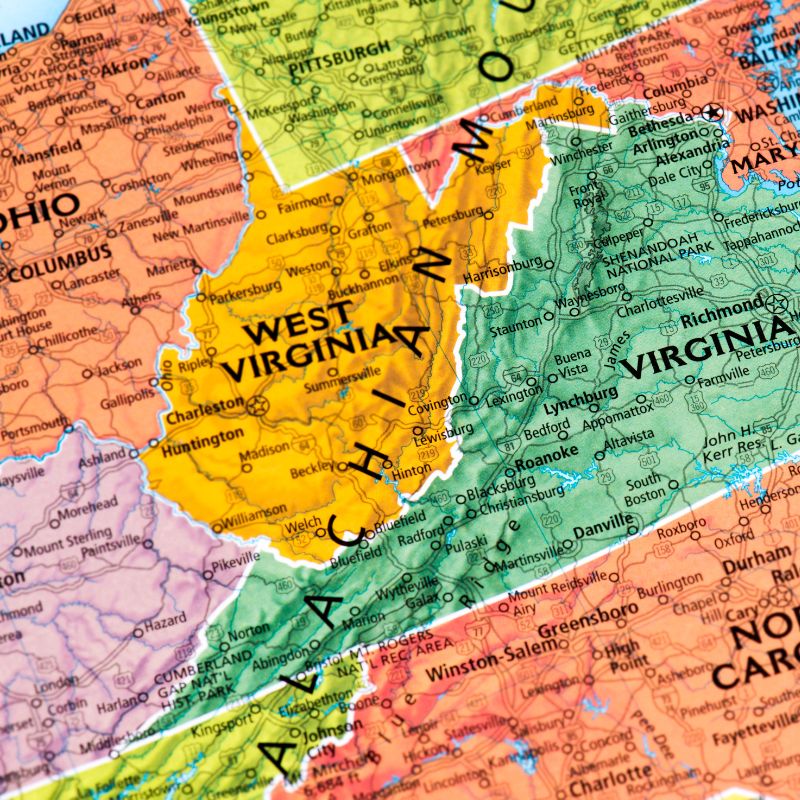
West Virginia has significantly more residents on private wells than the national average — around 23% compared to 15% nationally. The state also carries one of the most serious industrial contamination legacies in the country, including the DuPont/Chemours Washington Works PFOA crisis, widespread coal mining groundwater impacts, and documented PFAS in nearly half of all public water raw sources. Private well owners have no state protections and no mandatory testing requirements.
West Virginia’s PFAS Crisis — and What It Means for Well Owners
West Virginia’s PFAS contamination story begins with one of the most consequential industrial cover-ups in US environmental history. From 1951 onwards, DuPont’s Washington Works plant near Parkersburg discharged PFOA (perfluorooctanoic acid, known as C8) into the Ohio River and surrounding groundwater. DuPont’s own internal documents, later revealed through litigation brought by attorney Rob Bilott, showed the company knew C8 was toxic and accumulating in workers’ blood as early as the 1960s — yet continued operations and withheld the information for decades.
By the time the story broke publicly, PFOA had contaminated drinking water for over 100,000 residents across six water districts in West Virginia and Ohio. Crucially, it had also entered private well water in the surrounding Mid-Ohio Valley. Under EPA orders, DuPont and its spinoff Chemours have since sampled 835 residential drinking water wells in the area; 350 were found to have PFOA concentrations above 70 ppt — the former EPA health advisory level. Twelve public water systems in the region now receive granular activated carbon (GAC) treatment as a result. Private wells in the area may still be affected, and the PFAS contamination plume extends approximately 20 miles northeast of the Washington Works facility.
The Washington Works story is the backdrop to a wider PFAS picture across West Virginia. A 2022 USGS study — commissioned by WVDEP — sampled raw water at 279 public water systems statewide. It found that PFOA and/or PFOS was detected above EPA health advisories in 49% of raw water sources, involving 130 public water systems. Of those systems, a follow-up study of finished drinking water found that 27 had detectable PFAS after treatment, and 19 had levels above the EPA’s regulatory standards. The study sampled only public water systems — private wells were not included and remain entirely unmonitored by the state.
WVDEP has explicitly confirmed that monitoring private water supplies is outside its regulatory jurisdiction. There is currently no state-funded monitoring programme, no mandatory testing requirement, and no notification system for private well owners — even in areas directly adjacent to public systems with confirmed PFAS contamination.
Arsenic and Radon in West Virginia Well Water
West Virginia’s geology creates significant naturally occurring contamination risks for private wells. A CDC-funded study conducted in collaboration with the West Virginia Bureau of Public Health found arsenic above the EPA maximum contaminant level (10 ppb) in 7.2% of private well samples tested across ten counties. Radon — a naturally occurring radioactive gas linked to lung cancer — was found at or above the proposed EPA maximum contaminant level in 34.5% of samples. Both contaminants were found at higher concentrations in wells drawing from Permian-age aquifers.
The arsenic risk is compounded by coal mining activity. A USGS study of abandoned underground coal mine aquifers across West Virginia found arsenic exceeding the EPA MCL in 24% of samples — a figure significantly higher than in unaffected geology. Mining-influenced groundwater also showed widespread elevated levels of iron, manganese, aluminium, and sulfate. While these secondary contaminants are not acutely toxic at typical concentrations, they indicate that water from wells near former or active mining areas should be comprehensively tested rather than assumed safe.
Radon in well water is a particular concern because it can volatilise during household use — showering, running the tap — and accumulate as an airborne hazard in enclosed spaces. Wells with radon above 300 pCi/L may require indoor air testing as well as water treatment.
Quick Important Advertisement – Boil Water Alerts continue below
Don’t Wait for the Next Emergency to Act
Boil water alerts are a warning sign. Whether caused by pipe breaks, contamination, or natural disasters, they highlight how vulnerable our water systems can be.
The safest long-term solution? A reliable home water filtration system designed to remove bacteria, parasites, and harmful chemicals — so you’re protected even when advisories are issued.
Stay Ready with Trusted Filtration:
✅ Removes pathogens, chlorine, PFAS, and heavy metals
✅ Safer than boiling alone — no need to wait for alerts
✅ Easy options for homes, renters, and families
Prefer no installation? Check out the A2 Countertop System
Note: This advert may contain affiliate links. If you choose to buy, we may receive a small commission — thank you for supporting our work!
Coal Mining, Fracking, and Industrial Contamination
Coal has defined West Virginia’s economy and environment for over 150 years, and its legacy is deeply embedded in the state’s groundwater. Acid mine drainage from both active and abandoned mines can lower groundwater pH and mobilise heavy metals — including arsenic, iron, manganese, barium, and aluminium — into aquifer systems that supply private wells. Research has consistently found that domestic well contamination from mining activity is a documented problem in West Virginia’s southern coalfields, where mortality rates for certain cancers and chronic conditions are already elevated.
Coal ash is an additional hazard. Earthjustice analysis found that at every West Virginia power plant that has conducted groundwater monitoring, industry data show contamination above federal safe drinking water standards. Several older, unlined coal ash ponds are in areas where residents rely on private wells. At the Pinnacle Mining Complex in Wyoming County, a 2024 investigation found that mine water discharge had contaminated local creeks and well water — with independent testing at one property showing lead at nine times the recommended level.
Marcellus Shale natural gas development in the northern and eastern parts of the state has raised additional concerns about fracking fluid and methane migration into well water, particularly where well casing integrity has not been independently verified.
Coliform bacteria and nitrate contamination are further risks for rural well owners, particularly where septic systems are older or poorly sited, or where flooding has allowed surface water intrusion. West Virginia’s topography — with many wells on hillsides and in narrow valleys — can create unique vulnerability to surface contamination reaching well casings.
Regulatory Situation for West Virginia Well Owners
Private wells in West Virginia are not regulated under the state Safe Drinking Water Act. WVDEP has no authority to mandate testing, inspect private wells, or require remediation. County health departments maintain a registry of private wells, but registration does not include mandatory water quality testing.
West Virginia passed a PFAS Protection Act which requires WVDEP to develop PFAS action plans for the highest-risk public water systems by the end of 2025–2026. However, the legislation explicitly covers public water systems only. Private well owners are not included, and WVDEP has confirmed in its own guidance that PFAS monitoring of private water supplies falls outside its regulatory jurisdiction.
The federal EPA federal MCLs for PFAS (4 ppt for PFOA, 4 ppt for PFOS) apply to public water systems, not private wells. Testing and treatment of your own well remains entirely your responsibility.
Check our West Virginia municipal water quality page for city-by-city tap water data, or use our live boil water notice tracker for active advisories across the state.
Known High-Risk Areas in West Virginia
If you live near any of the following locations, well water testing is urgent — not precautionary.
Washington & Wood County — Mid-Ohio Valley
Ground zero for the DuPont/Chemours Washington Works PFOA crisis. The contamination plume extends up to 20 miles from the facility. Under EPA orders, 350 of 835 sampled residential wells had PFOA above 70 ppt. If you are in this area and have not been contacted, contact EPA Region 3.
Berkeley County — Eastern Panhandle
Shepherd Field Air National Guard Base contaminated the City of Martinsburg’s Big Springs well with AFFF-derived PFAS. The public supply is now treated, but private wells in the surrounding area should be tested, particularly those with historical groundwater connection to the Big Springs aquifer.
Southern Coalfields — Wyoming, Mingo, McDowell Counties
Active and abandoned coal mining has documented impacts on private well water across the southern coalfields. A 2024 investigation at the Pinnacle Mining Complex found lead, manganese, and sodium at levels many multiples above safe limits in residential well water. Testing is essential for all well owners in these counties.
Central Coalfields — Kanawha, Fayette, Raleigh Counties
Radon was found above the proposed EPA MCL most frequently in wells drawing from the Kanawha Formation. Arsenic and other mining-related contaminants are also documented risks. The Kanawha Valley’s “Chemical Valley” industrial corridor adds further contamination risk from legacy chemical manufacturing.
Northern Panhandle — Marshall, Wetzel, Tyler Counties
Active Marcellus Shale development raises concerns about methane, VOCs, and fracking fluid migration into groundwater. WVDEP is conducting PFAS action planning for affected public systems in this region following the 2022 USGS study findings. Private wells in the area carry an elevated risk profile.
Eastern Region — Grant, Hardy, Hampshire, Mineral Counties
Part of the CDC/West Virginia Bureau of Public Health multi-county well water study, this region showed elevated arsenic and radon linked to the Permian-age geology. Well owners in the eastern counties should prioritise arsenic and radon testing as a minimum.
How to Test Your West Virginia Well Water — and What to Do Next
Given West Virginia’s contamination profile — industrial PFAS, coal mining metals, naturally occurring arsenic and radon, and fracking-related risks — every private well owner in the state should test their water regardless of location. The state’s higher-than-average reliance on wells, combined with the near-total absence of state protection for well owners, makes individual testing the only reliable safeguard.
Contact your county health department for a referral to a certified laboratory, or use the WVDEP certified lab list at dep.wv.gov. If you are in the Mid-Ohio Valley near the Washington Works facility, contact EPA Region 3 to establish whether you fall within the active sampling area under the Chemours SDWA order.
For filter options, our water filter solutions page covers reverse osmosis systems for PFAS and arsenic, options for radon, UV disinfection for bacteria, and whole-house well systems for comprehensive treatment. You can also check your ZIP code for local water quality context.
For another Appalachian state with a serious well water contamination profile, see our Michigan well water page — a state with a similar story of industrial PFAS and unprotected private wells. Return to the private well water directory to find your state.
Quality News About Your Water
Get the comprehensive water quality news coverage you need with our dedicated US Water News Service. From coast to coast, we deliver in-depth reporting and expert analysis on PFAS contamination, EPA regulatory changes, infrastructure developments, and emerging water safety issues affecting communities nationwide. While mainstream media only covers the biggest stories, we provide the detailed, ongoing coverage that helps you understand the full scope of America’s water challenges.
What’s actually in your tap water? Enter your ZIP code for a full breakdown of contaminants detected in your local supply
Drinking water from a well? Check our directory here for more information
Please read – our information
The information presented on cleanairandwater.net is compiled from official water quality reports, trusted news sources, government websites, and public health resources. While we strive for accuracy and thoroughness in our presentations, we are not scientists, engineers, or qualified water quality professionals.
Our mission is to present water quality information in an accessible, real-world format that helps people understand what’s in their water and make informed decisions about their health and safety. We believe that complex environmental information should be available to everyone in a format that’s easy to understand.
We make every effort to ensure our content is current and accurate, but we cannot guarantee that all information is complete or error-free. This website should not replace official communications from your local water utility or health department. We always recommend consulting official sources for the most up-to-date information regarding your specific water system.
Clean Air and Water is not liable for any unintentional errors, omissions, or outdated information. The content on this site is provided for informational purposes only and should not be considered professional advice.