Advertisement — New Report continues below
Concerned About Your Water Quality? You’re Not Alone.
Recent headlines and viral test results have more families questioning what’s coming out of their taps. Even if your water looks clear and tastes fine, it can still carry PFAS chemicals, chlorine byproducts, heavy metals, and other contaminants — often within legal limits, but still worth a second look.
The good news? There are trusted filtration systems designed to tackle exactly these concerns — improving water safety, taste, and peace of mind.
Smart Solutions for Safer Drinking Water:
✅ Targets harmful contaminants with advanced filtration
✅ Lab-tested and trusted for household use
✅ Options for every need — from under-sink units to full-home systems
Prefer no installation? Check out the A2 Countertop System
Disclaimer:
This advert contains affiliate links. If you buy through these links, we may earn a commission at no extra cost to you.

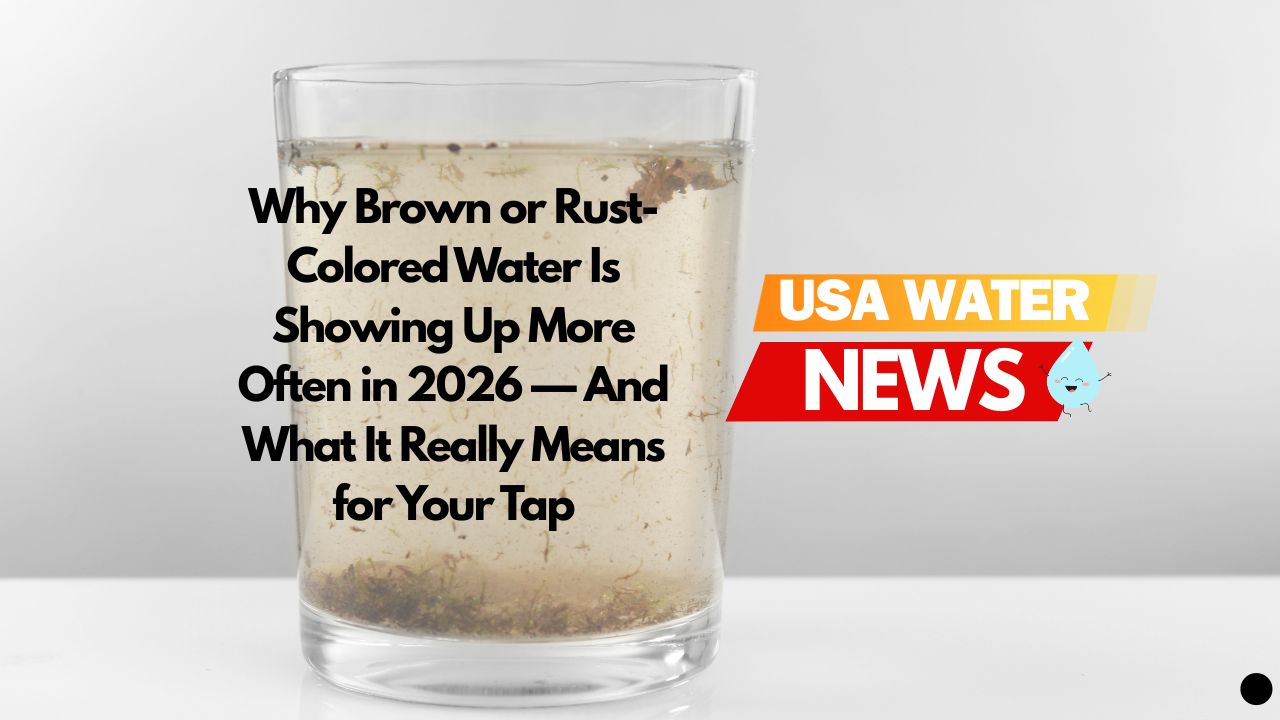
For many households, it starts the same way: you turn on the tap expecting clear water, only to watch a stream of yellow-brown or rusty-orange liquid swirl into the sink. It’s the kind of moment that makes anyone stop and wonder whether something has gone seriously wrong with the water supply.
And in 2026, it’s happening more often — not because the water has suddenly become unsafe nationwide, but because the systems that deliver it are under more stress than at any point in recent memory. What looks alarming at the tap is usually the result of something far more ordinary happening inside the vast network of pipes beneath your feet.
Across the U.S., water utilities are dealing with pressure fluctuations, rapid temperature swings, rising winter demand, and more hydrant flushing than usual — all of which can stir up harmless iron and manganese deposits that settle inside older pipes. Those minerals are naturally present in many groundwater sources; they’re not a health threat, but when they get shaken loose, they tint the water just enough to catch the eye.
Some cities are seeing the issue more frequently this winter because aging pipes expand and contract as temperatures bounce above and below freezing. Even a small pressure shift — a fire hydrant opening, a valve adjustment, or a nearby water-main repair — can dislodge sediment that’s been sitting in the system for years. The result shows up instantly: water that looks rusty, tea-colored, or briefly murky before clearing on its own.
And while the color can be startling, utilities emphasize that discoloration alone doesn’t mean contamination. In most cases, the system is still treating water properly; the minerals simply weren’t filtered out because they generally don’t pose a health concern. It’s similar to the way a glass of well water can sometimes appear tinted after heavy rain — visually unpleasant, but not inherently unsafe.
Still, it’s not something households want to ignore. Running the cold tap for a few minutes usually clears the line, especially if only iron sediment was disturbed. If the discoloration persists or appears alongside low pressure, banging pipes, or unusual taste, it’s worth checking your local utility’s alert page. Many cities now post real-time updates when hydrants are flushed or mains are repaired — the kinds of routine activities that trigger temporary water color changes.
For families who’d prefer an added layer of clarity and peace of mind at home, some choose to use filtration as a precaution, especially in older neighborhoods where pipe sediment is more common. A reverse osmosis system — like this one from Waterdrop — can help remove minerals and improve clarity, offering extra reassurance without relying solely on the city mains:
https://www.waterdropfilter.com/collections/bestsellers-water-filtration-system?ref=ulsvmyzr&utm_medium=affiliate&utm_source=goaffpro
(rel=”sponsored noopener nofollow”)
The bigger story is that America’s water infrastructure is aging faster than it’s being replaced. Many pipes laid in the mid-1900s are reaching the end of their lifespan at the same time utilities face higher demand, colder winters, and growing maintenance backlogs. All of that makes harmless discoloration events more noticeable — and more common — during winter.
The good news? In the vast majority of cases, rusty or brown water is a cosmetic issue, not a safety one. It clears on its own, it’s well understood by utilities, and it’s one of the earliest visual signs that a system needs attention long before more serious issues develop.
If you do spot unusual color at the tap this season, think of it as the system “stirring” rather than failing — and know that it’s almost always resolved quickly. And if you’re ever unsure, your local utility can confirm whether work is happening nearby or whether the change is due to routine winter fluctuations.
Sources & Notes
This article is based on publicly available national guidance and documented water system behavior, not on any single local event.
Primary References:
- EPA – Drinking Water Distribution Systems & Water Quality
https://www.epa.gov/dwsrf - American Water Works Association (AWWA) – Water Main Condition & Aging Infrastructure
https://www.awwa.org - Centers for Disease Control and Prevention – Iron & Manganese in Drinking Water
https://www.cdc.gov/healthywater/drinking/private/wells/water-quality.html - USGS – Minerals in Groundwater and Sediment Disturbance
https://www.usgs.gov - Multiple U.S. city utility advisories on seasonal discoloration events (hydrant flushing, main repairs, winter pressure shifts)
This article provides general information only and is not a substitute for guidance from your local water utility or health department.
Check your water now!
We have translated and compiled water reports on every state in the US, and covered over 100 cities. Find out how good your water is today!
Please read – our information
The information presented on cleanairandwater.net is compiled from official water quality reports, trusted news sources, government websites, and public health resources. While we strive for accuracy and thoroughness in our presentations, we are not scientists, engineers, or qualified water quality professionals.
Our mission is to present water quality information in an accessible, real-world format that helps people understand what’s in their water and make informed decisions about their health and safety. We believe that complex environmental information should be available to everyone in a format that’s easy to understand.
We make every effort to ensure our content is current and accurate, but we cannot guarantee that all information is complete or error-free. This website should not replace official communications from your local water utility or health department. We always recommend consulting official sources for the most up-to-date information regarding your specific water system.
Clean Air and Water is not liable for any unintentional errors, omissions, or outdated information. The content on this site is provided for informational purposes only and should not be considered professional advice.