← Private Well Water Directory / Washington
Washington Private Well Water Quality 2026
Washington state has some of the most severe military-sourced PFAS contamination of private wells in the country — with over 57% of wells tested in the West Plains area failing federal drinking water standards. Around 725,000 Washington residents rely on private wells, with zero state mandate to test them for PFAS.
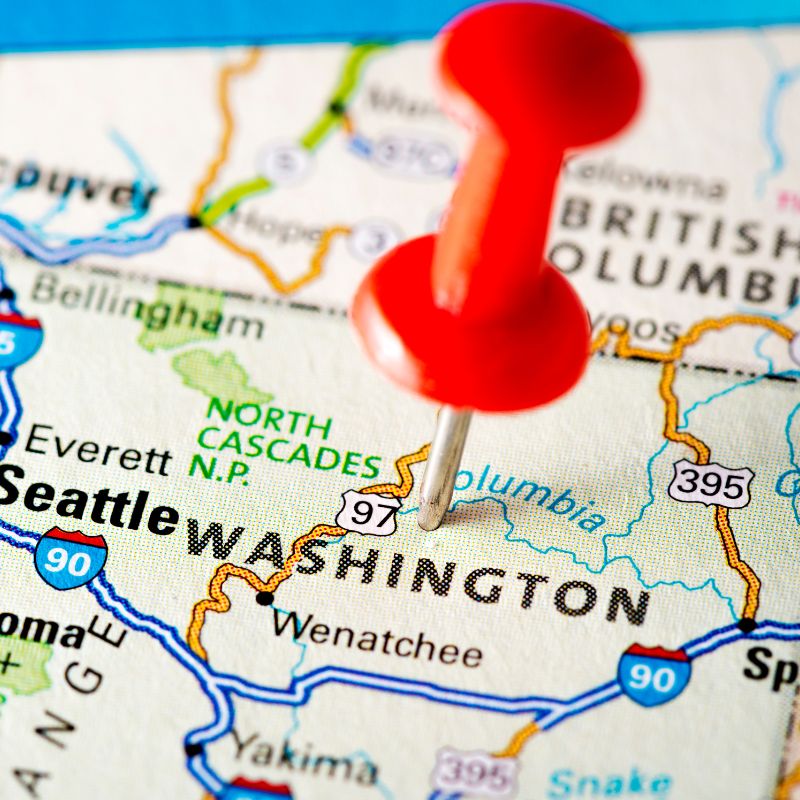
Washington’s Military PFAS Crisis in Private Wells
Washington state has more active military installations than almost any state in the country — and it shows in the well water. The US Department of Defense has confirmed the release of PFAS at ten military installations in Washington, many of them near the Salish Sea and along the I-5 corridor. Decades of AFFF firefighting foam use at these bases has left a legacy of contamination that has migrated off-base into the private wells of nearby communities.
The scale of the problem in Washington became clear from a Seattle Times analysis of Department of Defense testing data: PFAS were detected in 866 private drinking water wells tested by the military across the state, and concentrations in 551 of those wells were above the levels the EPA considers safe for human health. The worst-affected area is the West Plains region west of Spokane, where both Fairchild Air Force Base and Spokane International Airport have been identified as PFAS sources.
The West Plains situation is particularly stark: in EPA sampling in March and June 2024, 236 of 411 private wells tested — 57% — had PFAS above federal drinking water standards. A CDC study found concentrations of some PFAS in the blood of Airway Heights residents up to 56 times higher than the national average, providing direct evidence of human exposure at scale. The Washington State Department of Ecology and Department of Health have been providing point-of-use filters and bottled water while long-term remediation is investigated, but there is no mandatory testing requirement for private well owners elsewhere in the state.
Other high-profile contamination sites across Washington include:
- Joint Base Lewis-McChord (Pierce County) — the Lakewood Water District has pursued litigation against the US Army and PFAS manufacturers over contamination in its groundwater supply wells linked to firefighting foam from JBLM. Costs of filtration infrastructure and treatment have grown to nearly $9 million, and the District is seeking further damages through a lawsuit.
- Whidbey Island (Island County) — Naval Air Station Whidbey Island is one of ten Washington military installations with confirmed PFAS releases. One well near the base registered 4,720 parts per trillion for one PFAS compound — over 300 times the state action level — per Seattle Times/state DOH data.
- East Selah (Yakima County) — between May 2024 and June 2025, the Yakima Health District expanded well testing in East Selah, finding PFAS in the water at unsafe levels, with contamination linked to US Army activities. The Department of Ecology confirmed PFAS in the Yakima River below the Harrison Road bridge in the area.
- Vancouver (Clark County) — home to Washington’s third-largest public water system, Vancouver relies entirely on groundwater from three aquifers, and PFAS were detected in multiple wells before the state had finalized its action levels. The city is now implementing a three-year treatment plan using granular activated carbon and ion exchange at contaminated sites.
Beyond military sources, other PFAS contamination has been found at sites across the state — in Tumwater, Issaquah (linked to former fire training sites), Deer Park, Camas, and Moses Lake. Washington has been more proactive than most states in requiring public water system testing, but private well owners remain entirely unprotected by these requirements.
Nitrate Contamination in the Yakima Valley
Eastern Washington has a separate and long-standing well water crisis that has nothing to do with PFAS. The Lower Yakima Valley — one of the most productive agricultural regions in the US — has documented nitrate contamination in private wells, driven by decades of intensive dairy farming and irrigated crop production. The EPA’s own assessment estimates that as many as one in five domestic drinking water wells in the Yakima Valley have been contaminated by nitrates above the federal safety limit of 10 mg/L.
Washington State Department of Ecology data estimates that 21% of wells in the Lower Yakima Valley Groundwater Management Area may have elevated nitrate levels. The EPA and state agencies have been monitoring 170 wells in the area since 2021, and a 2018 state agriculture department study found that 64% of the nitrogen entering the groundwater was from irrigated agricultural crop production and 31% from animal feeding operations.
High nitrate is particularly dangerous for infants under six months — it interferes with the blood’s ability to carry oxygen (blue baby syndrome). Nitrate cannot be removed by boiling water; it requires reverse osmosis or ion exchange treatment. If you live in the Lower Yakima Valley, the Yakima Health District and Western Benton County offer free well testing for nitrate and coliform bacteria — call 509-575-4040 or use DOH’s online eligibility form.
Arsenic in Washington Well Water
Arsenic occurs naturally in Washington’s geology, particularly in areas with volcanic rock and in Central Washington. The Washington State Department of Health recommends that all private well owners test for arsenic at least twice — once in summer and once in winter, since seasonal influences can affect levels. As with PFAS, arsenic is colourless and tasteless and cannot be detected without laboratory testing.
In the Yakima Valley, legacy contamination from the widespread use of lead arsenate insecticides on orchards from the early 1900s through the 1950s has left arsenic in former orchard soils across Central Washington — a risk for wells in those areas. The federal MCL for arsenic is 10 ppb (0.010 mg/L); long-term exposure above this level is linked to cancers, cardiovascular disease, and nerve damage.
Quick Important Advertisement – Boil Water Alerts continue below
Don’t Wait for the Next Emergency to Act
Boil water alerts are a warning sign. Whether caused by pipe breaks, contamination, or natural disasters, they highlight how vulnerable our water systems can be.
The safest long-term solution? A reliable home water filtration system designed to remove bacteria, parasites, and harmful chemicals — so you’re protected even when advisories are issued.
Stay Ready with Trusted Filtration:
✅ Removes pathogens, chlorine, PFAS, and heavy metals
✅ Safer than boiling alone — no need to wait for alerts
✅ Easy options for homes, renters, and families
Prefer no installation? Check out the A2 Countertop System
Note: This advert may contain affiliate links. If you choose to buy, we may receive a small commission — thank you for supporting our work!
Regulatory Situation for Washington Well Owners
Washington has been a national leader in regulating PFAS in public water systems. In 2021, the State Board of Health adopted rules requiring over 2,400 Group A public water systems to test for PFAS — making Washington one of the first states to mandate this. Those requirements have been progressively tightened and, as of December 2025, have been updated to align with federal EPA standards.
However, these regulations do not extend to private wells. As Washington’s Department of Health states explicitly: if you are a private well owner, you are not currently required by the state to test for PFAS. Testing and treatment of your own well is entirely your responsibility. Local health jurisdictions regulate private wells, but there is no statewide testing mandate and no notification system for well owners near contamination sites.
Washington has set state action levels for five PFAS compounds — PFOA, PFOS, PFHxS, PFNA, and PFBS — and these have been updated to align with the federal MCLs. Federal PFAS standards require public water systems to comply by 2029. These standards do not apply to private wells.
Check our Washington municipal water quality page for city-by-city tap water data, including Seattle and Spokane, or use our live boil water notice tracker for active advisories across the state.
Known High-Risk Areas in Washington
If you live near any of the following locations, well water testing is urgent — not precautionary.
West Plains / Spokane Area
57% of 411 private wells tested by the EPA in 2024 had PFAS above federal standards. Contamination sources include Fairchild Air Force Base and Spokane International Airport. WA Ecology and DOH are providing free filters and bottled water to affected households.
Joint Base Lewis-McChord, Pierce County
The Lakewood Water District has pursued litigation against the US Army and PFAS manufacturers over contamination in its groundwater wells linked to AFFF foam use at JBLM. Filtration and treatment costs have grown to nearly $9 million. The Army has so far declined to provide financial assistance, with an investigation into off-base contamination still ongoing.
Whidbey Island, Island County
Naval Air Station Whidbey Island is one of ten Washington military installations with confirmed PFAS releases. A private well near the base tested at 4,720 parts per trillion for one PFAS compound — over 300 times the state action level. More than two dozen homes near the base have returned levels above EPA advisory limits.
East Selah, Yakima County
Expanded well testing between 2024 and 2025 found PFAS at unsafe levels in private wells, linked to Army activities. The Department of Ecology confirmed PFAS in the Yakima River in the area. Free under-sink filters provided to affected households.
Lower Yakima Valley
A well-documented nitrate crisis affects private wells across this major agricultural area. Up to 21% of wells in the groundwater management area have elevated nitrate, driven by dairy operations and irrigated crop production. Free testing and bottled water are available to eligible residents.
Vancouver / Clark County
Washington’s third-largest city relies entirely on groundwater. PFAS were found in multiple municipal wells before the state finalised its action levels. Private well owners in the area should test given the confirmed presence of PFAS in the local aquifer system.
How to Test Your Washington Well Water — and What to Do Next
Every private well owner in Washington should test their water. The DOH recommendation is clear: even homeowners not near a known contamination site should test precautionarily. Use the DOH’s PFAS mapping dashboard at doh.wa.gov to check whether PFAS detections have been found near public water sources in your area — this can help guide your decision on what to test for and how urgently.
Contact your local county health department to find a certified laboratory. Washington requires labs to use EPA Method 537.1 or Method 533 for PFAS testing. For properties in the West Plains, Whidbey Island, or near any of the military sites listed above, testing should be treated as urgent rather than precautionary.
For filter options, our well water filter guide covers reverse osmosis systems for PFAS, nitrate, and arsenic, UV disinfection for bacteria, and whole-house well systems for comprehensive treatment. You can also browse our full water filter solutions page or check your ZIP code for local water quality context.
For other West Coast and Pacific Northwest well water risks, see our pages on Michigan wells and Ohio wells. Return to the private well water directory to find your state.
Quality News About Your Water
Get the comprehensive water quality news coverage you need with our dedicated US Water News Service. From coast to coast, we deliver in-depth reporting and expert analysis on PFAS contamination, EPA regulatory changes, infrastructure developments, and emerging water safety issues affecting communities nationwide. While mainstream media only covers the biggest stories, we provide the detailed, ongoing coverage that helps you understand the full scope of America’s water challenges.
What’s actually in your tap water? Enter your ZIP code for a full breakdown of contaminants detected in your local supply
Drinking water from a well? Check our directory here for more information
Please read – our information
The information presented on cleanairandwater.net is compiled from official water quality reports, trusted news sources, government websites, and public health resources. While we strive for accuracy and thoroughness in our presentations, we are not scientists, engineers, or qualified water quality professionals.
Our mission is to present water quality information in an accessible, real-world format that helps people understand what’s in their water and make informed decisions about their health and safety. We believe that complex environmental information should be available to everyone in a format that’s easy to understand.
We make every effort to ensure our content is current and accurate, but we cannot guarantee that all information is complete or error-free. This website should not replace official communications from your local water utility or health department. We always recommend consulting official sources for the most up-to-date information regarding your specific water system.
Clean Air and Water is not liable for any unintentional errors, omissions, or outdated information. The content on this site is provided for informational purposes only and should not be considered professional advice.