Salt Lake City Water Quality at a Glance
Is Salt Lake City Water Safe to Drink?
Generally Safe but Room for Improvement — Salt Lake City water meets all federal standards and draws over 60% of its supply from protected Wasatch Mountain streams. However, 16 contaminants exceed EWG health guidelines, including arsenic (135x over guidelines), chromium-6 (20x over), and disinfection byproducts including TTHMs (231x) and HAA5s (340x). PFAS were detected in two groundwater wells during UCMR5 monitoring (2023–2025), with affected wells removed from service. The 2025 annual CCR confirms full regulatory compliance. See our water filter guide for solutions and Utah’s statewide water quality overview for broader context.
⚠️ Key Concerns for Salt Lake City Residents in 2026
- PFAS “Forever Chemicals”: Detected via UCMR5 in groundwater wells — PFOS up to 7.1 ppt, PFHxS up to 18.2 ppt; affected wells are not in active service. EPA’s 4 ppt MCL for PFOA/PFOS took effect April 2024; compliance deadline 2031.
- Disinfection Byproducts: TTHMs at 34.7 ppb (231x EWG guideline) and HAA5s at 34.0 ppb (340x EWG guideline) — both within federal legal limits but significantly above health benchmarks.
- Arsenic: Detected at 0.539 ppb — 135x EWG’s health guideline of 0.004 ppb; naturally occurring from geological formations. Meets the EPA legal limit of 10 ppb.
- Chromium-6: Cancer-causing contaminant found at 0.41 ppb — 20x EWG’s recommendation of 0.02 ppb; no federal legal limit for chromium-6 specifically.
- Nitrate: Detected at 1.49 ppm — 11x EWG’s health guideline; well below the federal limit of 10 ppm.
- Stage 2 Drought Advisory: Issued March 19, 2026 — first since October 2022. Snow levels and early spring runoff are significantly below average.
Read the full report below for detailed analysis, city-specific data, and actionable recommendations for Salt Lake City residents.
advertisment – report continues below
Your water passed the test.
Legal isn’t the same as safe.
Regulated contaminants like PFAS, chromium-6, and disinfection byproducts can sit inside the legal limit and still carry long-term health risks. Passing isn’t the same as clean.
✅ Removes PFAS, lead & chromium-6 — the contaminants most flagged even in passing city reports
✅ NSF/ANSI 42, 58 & 372 certified — independently tested, not just manufacturer claims
✅ Installs in 30 minutes, no plumber — fills a glass in 8 seconds, smart LED filter monitor
Renting or can’t drill? The Waterdrop K19 Countertop RO — plug in, fill the tank, done. No installation, no drilling, no plumber.
Advertisement — this page contains affiliate links. If you buy through these links, we may earn a commission at no extra cost to you.

Salt Lake City — Utah — Water Quality Report 2026: PFAS Testing, Drought Response & Safety Across Your City
Salt Lake City’s Department of Public Utilities (SLCDPU) manages a comprehensive water system serving approximately 360,654 residents across Salt Lake City and portions of surrounding communities including Cottonwood Heights, Holladay, Millcreek, Murray, South Salt Lake, and Midvale. The system encompasses over 1,300 miles of water mains and delivers billions of gallons annually to the greater Salt Lake City metropolitan area.
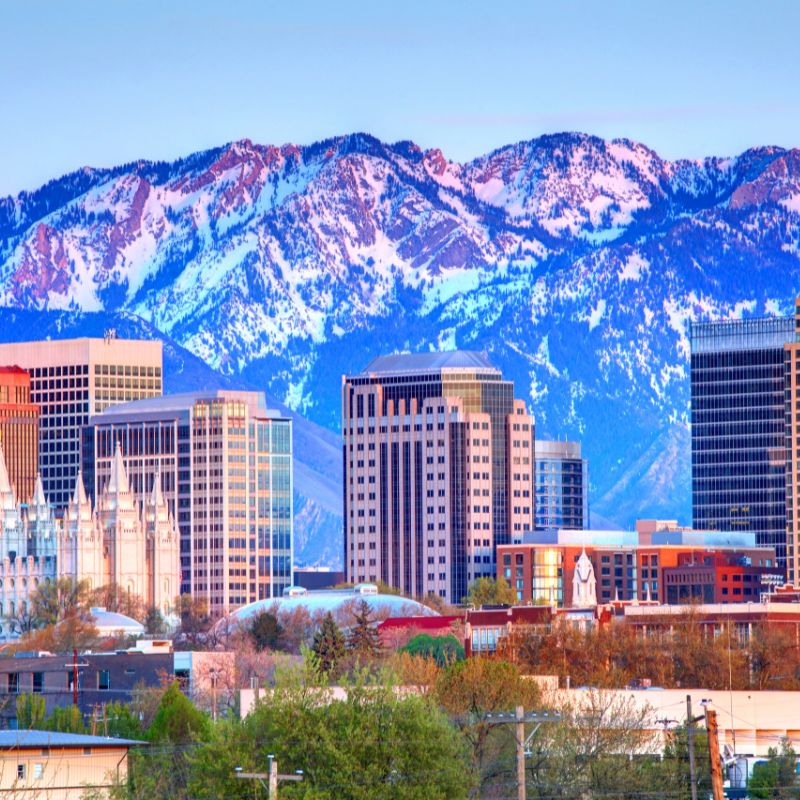
Salt Lake City draws its drinking water primarily from mountain streams in the nearby Wasatch Mountains — over 60% of supply — including City Creek, Parleys Creek, Big Cottonwood Creek, and Little Cottonwood Creek, supplemented by groundwater sources during high-demand summer months. The system maintains exceptional source water quality through a comprehensive Watershed Management Plan. In 2024, SLCDPU reached two major milestones: securing over $39 million in federal loan funding for lead service line replacement, and completing a rate study to ensure sustainable reinvestment in the water infrastructure. As of March 2026, the city has entered a Stage 2 drought advisory — the first since October 2022 — due to below-average snowpack and early spring runoff. Check our live boil water notices tracker for any active alerts affecting the Salt Lake City area, and our water alert news feed for the latest updates.
Salt Lake City Water Quality: Current Status (2025–2026)
Latest Testing Results
- Lead & Copper (2024 Triennial): The 2024 triennial testing round showed a 90th percentile lead level of 2.6 ppb (first liter) and 2.2 ppb (fifth liter) — a meaningful improvement over the 3.79 ppb recorded in the previous round. All results are well below the EPA action level of 15 ppb. One site exceeded the action level in fifth-liter sampling. SLCDPU has completed its initial lead service line inventory and is eligible for over $39 million in federal loan funding to assist residents with replacements. Check your line material at slcleadandcopper.com.
- PFAS Detection (UCMR5, 2023–2025): UCMR5 monitoring detected multiple PFAS compounds in a single groundwater well that was not in active service at the time of sampling. Levels included PFOS up to 7.1 ppt, PFHxS up to 18.2 ppt, PFHxA up to 5.7 ppt, and PFPeA up to 6.2 ppt. Over 90% of supply comes from unaffected mountain surface water sources. For background on national PFAS regulation, see our water quality testing guide.
- Regulatory Compliance: Salt Lake City’s 2025 CCR confirms full compliance with all federal and state drinking water standards. However, EWG data (2013–2024 testing period) identifies 16 contaminants exceeding health-based guidelines — none of which breach legal MCLs. Total Coliform was found in only 0.17% of distribution system samples; E. coli was detected in 0.00%.
Protected Watershed Sources
- Wasatch Mountain Sources: Primary source (over 60% of supply) includes Parleys, Big Cottonwood, Little Cottonwood, and City Creek canyons — all protected watersheds with strict recreational and development restrictions. These streams feed three surface water treatment plants that use coagulation, flocculation, sedimentation, filtration, and chlorine disinfection.
- Groundwater Sources: Used as a secondary supply during summer peak demand. Deep wells and natural springs tap Wasatch Front aquifers. Some wells have been affected by PFAS contamination and taken offline. Well water does not require additional treatment beyond the naturally high quality established through subsurface filtration, though it is harder (more minerals) than surface water.
- Partner Water Districts: SLCDPU also receives treated water from the Metropolitan Water District of Salt Lake and Sandy (sourced from the Provo, Duchesne, and Weber Rivers, stored in Jordanelle and Deer Creek Reservoirs) and from Jordan Valley Water Conservancy District, providing supply resilience during peak demand and drought.
Disinfection Byproducts: The Biggest EWG Concern
- Total Trihalomethanes (TTHMs): Averaged 34.7 ppb system-wide (range 16.4–75.6 ppb) — well within the EPA legal limit of 80 ppb, but 231x above EWG’s health guideline of 0.15 ppb. TTHMs include chloroform (16.6 ppb, 41x EWG guideline), bromodichloromethane (5.72 ppb, 95x), and dibromochloromethane (1.93 ppb, 19x).
- Haloacetic Acids (HAA5s): Averaged 34.0 ppb (range 12.3–38.6 ppb) — within the EPA legal limit of 60 ppb but 340x above EWG’s health guideline of 0.1 ppb. HAA9 averaged 34.9 ppb — 582x over EWG’s guideline. Key contributors include dichloroacetic acid (20.1 ppb, 101x EWG) and trichloroacetic acid (12.0 ppb, 120x EWG).
- Why So High? These are byproducts of the chlorine disinfection process reacting with naturally occurring organic matter in the source water. Higher organic content in mountain surface water and seasonal blending with groundwater both influence levels. The EPA legal limits were last updated over 20 years ago, which is why the gap between legal limits and EWG’s science-based health guidelines is so large.
Infrastructure Modernization & 2026 Drought Response
- Lead Service Line Program: SLCDPU secured over $39 million in federal loan funding (in partnership with the State of Utah) to assist residents with replacing private lead service lines. An initial inventory has been completed and is publicly accessible at slc.gov/utilities/servicelinematerialmap/.
- City Creek Treatment Plant: A $36.7 million FEMA grant funds major upgrades to maintain reliable, high-quality drinking water supply for the next 50+ years. This is a key resilience investment given climate-driven snowpack variability.
- Stage 2 Drought Advisory (March 2026): Mayor Erin Mendenhall announced a Stage 2 drought response on March 19, 2026 — the first since October 2022. This is driven by well-below-average snow levels and early spring runoff. Stage 2 means mandatory conservation measures are in effect. Residents should follow guidance at slc.gov/utilities. Track ongoing water supply alerts via our live tracker.
- Water Conservation Plan: A new 2025 Water Conservation Plan is moving through City Council for adoption, following public input via town halls and open houses. The plan targets significant reductions in per-capita water use — critical given the city’s arid climate and growing population.
Customer Protection Initiatives
Salt Lake City provides extensive customer support including free water quality testing (contact lead@slc.gov or call 844-SLC-LEAD for lead testing), conservation rebate programmes for high-efficiency fixtures and smart irrigation, and payment assistance through Project Water Assist in partnership with the Salvation Army. The 2025 Annual Report confirms SLCDPU’s commitment to reinvesting in infrastructure while keeping rates equitable and transparent. For a broader picture of water quality across the Mountain West, see our Utah water quality overview and compare with nearby Las Vegas and Denver. If you’re concerned about what’s in your water, visit our water filter solutions page for NSF-certified filter recommendations tailored to Salt Lake City’s detected contaminants.
Recommendations for Salt Lake City Residents
Test Your Water
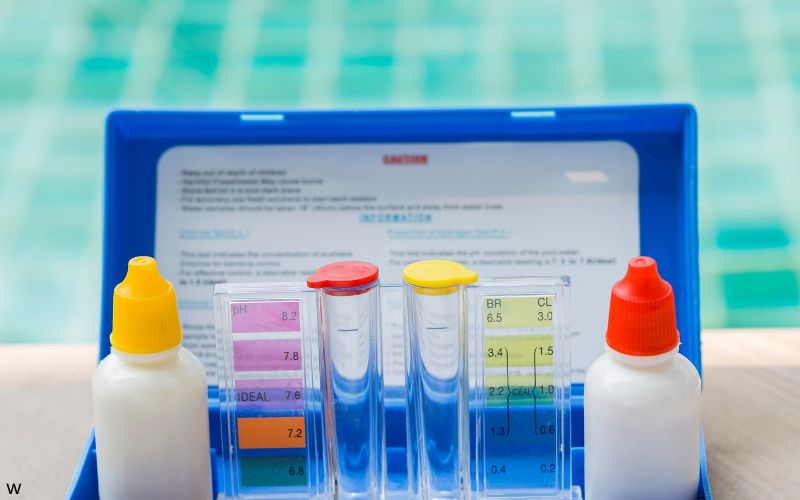
Request free lead water quality testing by emailing lead@slc.gov or calling 844-SLC-LEAD. Check your service line material at slcleadandcopper.com. Testing is especially important for homes built before 1986. For independent testing of a wider range of contaminants, visit our water quality testing guide.
Respond to the Drought Advisory
Salt Lake City is under a Stage 2 drought advisory as of March 2026. Water outdoor landscapes before 10 AM or after 8 PM, follow your address-based watering schedule, and consider applying for conservation rebates through the Water Conservation Program for high-efficiency fixtures and smart irrigation controllers. Visit slc.gov/utilities/conservation.
Consider Filtration
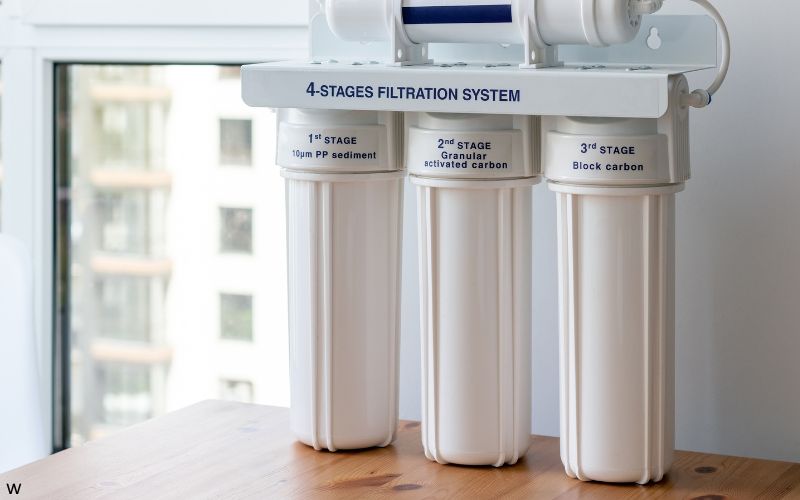
Given 16 contaminants exceeding EWG guidelines — including PFAS, arsenic, chromium-6, and disinfection byproducts — NSF-certified filtration is worth considering. A reverse osmosis system addresses the broadest range of Salt Lake City’s detected contaminants. See our water filter solutions guide for options suited to this system’s specific contaminant profile. Disclosure: We may earn a commission on qualifying purchases.
Conserve Water
With a Stage 2 drought advisory active and a long-term conservation plan under development, every gallon counts. Use water-efficient fixtures, adjust sprinkler schedules seasonally, water before 10 AM or after 8 PM, and consider xeriscaping for significant outdoor water savings. Salt Lake City’s arid climate makes conservation a year-round responsibility.

Report Issues & Stay Informed
Contact (801) 483-6900 for water main breaks, pressure issues, or quality concerns. For after-hours emergencies call (801) 483-6700. Stay up to date with water quality news and boil water alerts via our live boil water notices tracker and water alert news feed.
Quality News About Your Water
Get the comprehensive water quality news coverage you need with our dedicated US Water News Service. From coast to coast, we deliver in-depth reporting and expert analysis on PFAS contamination, EPA regulatory changes, infrastructure developments, and emerging water safety issues affecting communities nationwide. While mainstream media only covers the biggest stories, we provide the detailed, ongoing coverage that helps you understand the full scope of America’s water challenges.
What’s actually in your tap water? Enter your ZIP code for a full breakdown of contaminants detected in your local supply
Drinking water from a well? Check our directory here for more information
Frequently Asked Questions
Is Salt Lake City tap water safe to drink in 2026?
Yes — Salt Lake City’s tap water meets or exceeds all federal and state drinking water standards as confirmed in the 2025 Consumer Confidence Report. The 2024 triennial lead testing showed a 90th percentile of 2.6 ppb, well below the EPA action level of 15 ppb. E. coli was detected in 0.00% of distribution samples.
However, EWG data shows 16 contaminants exceed science-based health guidelines — primarily disinfection byproducts (TTHMs at 231x EWG guideline; HAA5s at 340x EWG guideline), arsenic (135x), and chromium-6 (20x). None of these breach EPA legal limits, but if you have health sensitivities, filtration is worth considering. Check our filter guide for tailored options.
What is Salt Lake City’s Stage 2 drought advisory?
Mayor Erin Mendenhall issued a Stage 2 drought advisory on March 19, 2026 — the first since October 2022. It was triggered by well-below-average snowpack and early spring runoff in the Wasatch watershed.
What Stage 2 means for residents:
• Mandatory watering restrictions: outdoor watering limited to before 10 AM or after 8 PM
• Even/odd schedule applies based on street address
• No watering during or after rain events
• Conservation rebates available for qualifying fixtures and irrigation upgrades
Current drought status and Stage 3 thresholds are published at slc.gov/utilities. Monitor our water alert news feed for updates.
What is Salt Lake City doing about PFAS contamination?
UCMR5 monitoring (2023–2025) detected PFAS in a single groundwater well that was not in active service at the time of detection. Key findings include PFOS up to 7.1 ppt, PFHxS up to 18.2 ppt, and two other PFAS compounds. Over 90% of Salt Lake City’s supply comes from unaffected mountain surface water.
• Immediate Action: The affected well was already offline; it remains out of active service
• EPA Regulation: The EPA’s final PFAS rule (April 2024) sets MCLs of 4 ppt for PFOA and PFOS. The compliance deadline for water utilities is 2031
• Source Protection: Mountain watershed sources are unaffected and continue to provide excellent baseline quality
Residents concerned about PFAS can use reverse osmosis filtration, which is highly effective at removing these compounds. See our filter solutions guide for certified options.
How is Salt Lake City preparing for future water needs?
Salt Lake City is investing heavily in long-term water resilience despite the immediate drought challenge:
Supply Resilience:
• Diversified sourcing from Wasatch mountain streams, groundwater wells, Metropolitan Water District, and Jordan Valley Water Conservancy District
• New 2025 Water Conservation Plan targeting reduced per-capita consumption
• Drought response framework with staged advisory levels (Stage 1–3)
Infrastructure Investment:
• $36.7 million FEMA grant for City Creek Water Treatment Plant upgrades
• $39 million federal loan for lead service line inventory and replacement
• Advanced metering and system monitoring improvements
Climate Adaptation:
• Partnerships with academic institutions to model future snowpack and runoff scenarios
• Infrastructure upgrades designed for increased temperature scenarios under climate projections
Contaminants of Concern
PFAS & Disinfection Byproducts
Source: PFAS from industrial activities, firefighting foams, and consumer products — detected in a groundwater well not currently in active service. Disinfection byproducts (TTHMs, HAAs) form when chlorine reacts with naturally occurring organic matter in the source water.
Health Effects: PFAS linked to cancer, immune system effects, and developmental impacts. TTHMs and HAAs are associated with increased cancer risk and adverse pregnancy outcomes. None of these are detected at levels exceeding EPA legal limits.
Current Levels (EWG data, 2021–2023 for DBPs; UCMR5 2023–2025 for PFAS): TTHMs 34.7 ppb (231x EWG); HAA5s 34.0 ppb (340x EWG); PFOS detected up to 7.1 ppt in offline well. Filter recommendation: Reverse osmosis or activated carbon — see our filter guide.
Arsenic, Chromium-6 & Nitrate
Source: Arsenic and chromium-6 occur naturally in groundwater from geological formations. Nitrate enters via agricultural and urban runoff and naturally occurring organic material. All three are present at levels exceeding EWG health guidelines but below EPA MCLs.
Health Effects: Arsenic is a known carcinogen; chromium-6 is linked to stomach cancer; nitrate can cause oxygen deprivation in infants and increase cancer risk. Long-term exposure at even sub-legal levels warrants attention for sensitive populations.
Current Levels: Arsenic 0.539 ppb (135x EWG guideline; legal limit 10 ppb); chromium-6 0.41 ppb (20x EWG guideline; no federal MCL); nitrate 1.49 ppm (11x EWG guideline; legal limit 10 ppm). Reverse osmosis and ion exchange filters are effective. Compare with statewide data on our Utah water quality page.
Please read – our information
The information presented on cleanairandwater.net is compiled from official water quality reports, trusted news sources, government websites, and public health resources. While we strive for accuracy and thoroughness in our presentations, we are not scientists, engineers, or qualified water quality professionals.
Our mission is to present water quality information in an accessible, real-world format that helps people understand what’s in their water and make informed decisions about their health and safety. We believe that complex environmental information should be available to everyone in a format that’s easy to understand.
We make every effort to ensure our content is current and accurate, but we cannot guarantee that all information is complete or error-free. This website should not replace official communications from your local water utility or health department. We always recommend consulting official sources for the most up-to-date information regarding your specific water system.
Clean Air and Water is not liable for any unintentional errors, omissions, or outdated information. The content on this site is provided for informational purposes only and should not be considered professional advice.