Illinois Water Quality at a Glance
moderate concerns
Is Illinois Water Safe to Drink?
Generally Yes, With Moderate Concerns — Most Illinois water systems meet federal drinking water standards. However, 47 community water systems serving over 400,000 residents have been notified of PFAS exceedances under Illinois’ new state groundwater quality standards, adopted in April 2025. In January 2026, Illinois adopted the federal PFAS MCLs into state drinking water regulations, with initial monitoring required by April 2027 and full compliance by April 2029. Additional concerns include lead infrastructure — particularly in Chicago where the majority of service lines are lead — and elevated disinfection byproducts in some systems. Check our live boil water notices tracker for any current alerts in Illinois.
⚠️ Key Concerns for Illinois Residents in 2026
- PFAS “Forever Chemicals”: 47 community water systems notified of exceedances in April 2025; additional systems notified through early 2026 including Dupo (January) and Elburn (February). Crest Hill found PFOA at 13.7 ppt — over three times the 4 ppt limit. Illinois adopted federal PFAS MCLs as enforceable state standards in January 2026.
- Lead Infrastructure: Illinois has among the most lead service lines per capita of any state; Chicago alone has an estimated 400,000+ lines requiring replacement, and a Johns Hopkins study found the majority of children under 6 in affected areas may face exposure risk.
- Disinfection Byproducts: Elevated levels of chloroform, haloacetic acids, and trihalomethanes detected in multiple systems, increasing long-term cancer risk.
- Chromium-6: Detected across the state; Chicago levels are roughly half the national average but still present at levels of concern to some health researchers.
Read the full report below for detailed analysis, city-specific data, and actionable recommendations for Illinois residents.
Advertisement — Report continues below
Think Your Tap Water Is Safe? Think Again.
Even when it looks clear, tap water can carry hidden contaminants—like chlorine, heavy metals, and microplastics—that don’t always affect the taste but still reach your glass.
A professionally engineered water filtration system can help protect your household, providing cleaner, safer, and better-tasting water every day.
Smart Solutions for Safer Drinking Water:
✅ Reduces common contaminants like chlorine and microplastics
✅ NSF/ANSI certified for trusted performance
✅ Smart, space-saving tankless design
✅ Long-term investment in cleaner water
Looking for a simple, no-install option? (Check out the A2 Countertop System)
Note: This advert contains affiliate links. If you buy through these links, we may earn a commission at no extra cost to you.

Illinois – The Prairie State – Water Quality Report 2026: PFAS Standards, Lead Infrastructure & Safety Across the State
Illinois’ water infrastructure serves approximately 12.8 million residents across diverse geographical regions, from the shores of Lake Michigan in the northeast to the Mississippi River in the west. The state operates through a complex network of over 1,749 community water systems, ranging from Chicago’s James W. Jardine Water Purification Plant — the world’s largest water treatment facility, serving over 5 million people — to smaller groundwater-dependent systems throughout rural Illinois. Illinois’ water sources include the Great Lakes system, the Mississippi, Illinois, and Ohio river systems, and deep sandstone aquifers supplying groundwater to communities across the state. Compare Illinois with neighbouring states in our Indiana, Iowa, Missouri, and Michigan water quality reports.
Despite abundant water resources, Illinois faces significant infrastructure challenges. An estimated $32 billion is needed for drinking, stormwater, and wastewater infrastructure over the next 20 years. The state has received over $332 million in federal funding through the Bipartisan Infrastructure Law for drinking water upgrades, with additional dedicated funding for lead service line replacement. 2026 marks a pivotal regulatory year for Illinois: in January the Illinois Pollution Control Board adopted the federal PFAS MCLs as enforceable state drinking water standards, published in the Illinois Register in February 2026. See our national water quality overview to understand how Illinois compares across the US.
Illinois Water Quality: Current Status (2025–2026)
Statewide Compliance and Testing
- Overall Compliance: The majority of Illinois’ 1,749 community water systems meet federal Safe Drinking Water Act standards. However, 47 systems were notified in April 2025 of PFAS concentrations exceeding Illinois’ new Part 620 groundwater quality standards, affecting over 400,000 residents. Additional notifications continued through early 2026, with Dupo CWS notified in January 2026 and Elburn CWS in February 2026.
- Illinois PFAS Regulatory Leadership: Illinois has been among the most proactive states in developing PFAS health standards. In April 2025, the Illinois Pollution Control Board published final amendments establishing Part 620 groundwater quality standards for six PFAS chemicals. In January 2026, the Board adopted identical-in-substance amendments to Illinois drinking water regulations, formally incorporating the federal PFAS MCLs as enforceable state standards — published in the Illinois Register in February 2026. Monitor our water alert news section for ongoing Illinois PFAS notifications.
- Infrastructure Investment: Over $332 million in federal Bipartisan Infrastructure Law funding has been allocated to Illinois for drinking water infrastructure improvements, with additional dedicated funding for lead service line replacement and clean water infrastructure upgrades.
Major Water Sources and Challenges
- Lake Michigan System: Serves over 5 million residents in northeastern Illinois through the Jardine Water Purification Plant, operating under strict U.S. Supreme Court decree governing Great Lakes diversions. Crest Hill and neighbouring communities, among those with PFAS exceedances, have agreed to transition to Lake Michigan water as their long-term solution.
- Groundwater Aquifer Depletion: Deep sandstone aquifers face unsustainable depletion, with some high-capacity wells potentially unusable within 15 years if current usage patterns continue. The Grand Prairie Water Commission exemplifies regional cooperation to extend Lake Michigan access to groundwater-dependent suburban communities.
- System Fragmentation: Illinois’ over 1,700 independently operating water systems create inefficiencies in service delivery, infrastructure investment, and coordinated PFAS response — a challenge compounded by the scale of remediation now required. For a city-level breakdown, read our Chicago water quality report.
PFAS and Emerging Contaminant Response in 2026
- New Enforceable State MCLs: On January 22, 2026, the Illinois Pollution Control Board issued its final order adding the federal PFAS MCLs to Illinois drinking water regulations (Case R2025-001/R2025-009). These cover PFOA (4 ppt), PFOS (4 ppt), PFHxS (10 ppt), PFNA (10 ppt), HFPO-DA (10 ppt), and a hazard index MCL for mixtures. Initial monitoring must be completed by April 25, 2027; ongoing compliance monitoring begins April 26, 2027. Full compliance with treatment requirements is required by April 2029.
- Ongoing PFAS Notifications: The 47 community water systems notified in April 2025 face continuing monitoring obligations through 2027. Crest Hill found PFOA at 13.7 ppt (over 3× the 4 ppt limit) and PFHxS at 12.2 ppt. New notifications in early 2026 show the issue extending beyond the initial cohort. Private well owners near affected systems are advised by Illinois Department of Public Health to test their wells. See our water filter solutions guide for NSF-certified PFAS removal options.
- PFAS Reduction Act: Illinois’ 2021 PFAS Reduction Act — initially addressing Class B firefighting foams — has been extended to firefighting clothing and equipment, and consumer products with intentionally added PFAS, reducing future contamination sources.
Lead and Legacy Contaminants
- Lead Service Line Scale: Illinois has among the most lead service lines per capita of any state. Chicago alone has an estimated 400,000+ lead service lines — approximately 70% of its total — requiring replacement to achieve lead-free water service. A Johns Hopkins study estimated that the majority of children under 6 in affected areas may face lead exposure risk.
- Federal Funding for Replacement: Over $240 million in dedicated federal funding has been allocated for lead service line replacement under the Lead Service Line Replacement and Notification Act, targeting systematic removal across Illinois utilities.
- Disinfection Byproducts: Elevated levels of trihalomethanes and haloacetic acids have been detected in multiple Illinois systems, linked to chlorine treatment of surface water. These represent an ongoing concern for long-term cancer risk that is separate from — and additional to — the PFAS issue. A certified filter can address both DBPs and PFAS simultaneously.
Rural and Disadvantaged Communities
- Infrastructure Disparities: Rural water systems face compounding challenges — aging infrastructure, groundwater depletion, and higher per-capita compliance costs — that make PFAS treatment upgrades particularly burdensome without targeted financial support.
- Equitable Access: Federal rules require 49% of drinking water infrastructure funds to be provided as grants or principal forgiveness loans to ensure disadvantaged communities can access safe drinking water. Illinois EPA’s Emerging Contaminant programme actively targets small and rural systems.
Looking Forward: 2026–2030
Illinois enters 2026 in a critical regulatory transition. With enforceable state PFAS MCLs now formally adopted, community water systems face binding monitoring deadlines (April 2027) and compliance deadlines (April 2029). The scale of work ahead — PFAS treatment installations, lead service line replacement, aquifer sustainability planning — is substantial. Illinois’ proactive regulatory history, substantial federal funding, and regional water-sharing initiatives position it well, but the ongoing stream of Right-to-Know notifications in early 2026 underscores that the situation remains fluid. Residents should review their utility’s Consumer Confidence Report, use the national water quality checker, and check our live boil water notices tracker for current alerts.
Recommendations for Illinois Residents

Know Your Water Source
Contact your water utility to request annual water quality reports and ask about PFAS testing results. Use the Illinois EPA’s Drinking Water Watch system or PFAS Investigation Interactive Dashboard to access your local system’s data. You can also check our national water quality tool and water alert news section for the latest Illinois-specific updates.
Support Infrastructure Investment
Stay informed about local water infrastructure needs and support utility rate structures that enable necessary improvements. Attend public meetings on PFAS treatment upgrades and lead service line replacement projects. Illinois’ new enforceable PFAS standards mean most affected utilities must now begin treatment installation programmes on a firm deadline of April 2029.
Consider PFAS-Certified Filtration
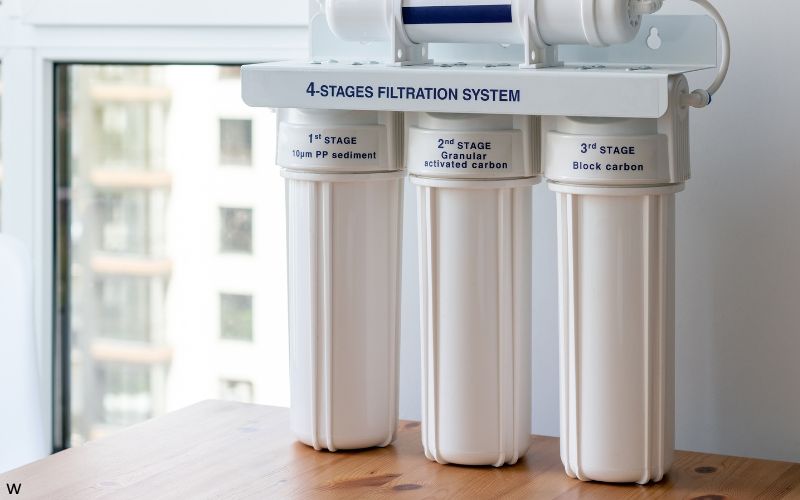
For areas with known PFAS contamination — and for Chicago residents on lead service lines — NSF-certified activated carbon or reverse osmosis filters provide additional protection while utilities implement required treatment upgrades. Illinois EPA and IDPH both advise that boiling water does not remove PFAS. See our water filter solutions guide for certified options.

Report Water Quality Concerns
Contact your local water utility immediately for taste, odour, or colour concerns. For PFAS-related concerns, contact Illinois EPA’s Bureau of Water at (217) 782-3362 or email epa.pfas@illinois.gov. You can also monitor our live boil water notices tracker for emergency alerts across Illinois. Private well owners near affected systems should contact IDPH at (217) 782-5830.
Practice Water Conservation
Support Illinois’ water sustainability by implementing conservation measures, especially in groundwater-dependent communities. Reducing demand helps protect aquifers from depletion and maintains system reliability while supporting Great Lakes conservation goals. For household-level protection, explore our water filter solutions.
Illinois Cities We Cover
Chicago Water Quality
Comprehensive analysis of Chicago’s massive water system, home to the world’s largest water treatment plant serving over 5 million people. Includes Lake Michigan intake, treatment processes, Chicago’s 400,000+ lead service lines, PFAS monitoring data, chromium-6 levels, and infrastructure investment in America’s third-largest city.
Frequently Asked Questions
Is Illinois’ tap water safe to drink in 2026?
Most of Illinois’ public water systems meet federal drinking water standards and are generally safe for consumption. However, the state is in an active period of PFAS regulatory enforcement, and conditions vary significantly by location.
In April 2025, 47 community water systems serving over 400,000 residents were formally notified of PFAS exceedances under Illinois’ new Part 620 groundwater quality standards. Further notifications followed in early 2026. In January 2026, Illinois adopted the federal PFAS MCLs as enforceable state drinking water standards, with monitoring required by April 2027 and compliance by April 2029. Residents in affected areas should review their utility’s Consumer Confidence Report, consider NSF-certified filtration, and use the national water quality checker for broader context.
Why is Illinois leading on PFAS regulation?
Illinois has been among the most proactive states in the country in developing PFAS health standards, driven by the scale of contamination found in its 2021 statewide investigation and its commitment to protecting the Great Lakes ecosystem.
Illinois was the first state to test every one of its 1,749 community water systems for PFAS (2021). By April 2025, the state had established enforceable Part 620 groundwater quality standards for six PFAS chemicals — in many cases ahead of federal regulation. In January 2026, Illinois went further by formally adopting the federal PFAS MCLs as state drinking water standards (effective February 2026), binding community water systems to mandatory monitoring by April 2027. Illinois also enacted the PFAS Reduction Act in 2021, now extended to firefighting equipment and consumer products, and banned PFAS-containing firefighting foam for training. Monitor our water alert news section for ongoing developments.
How can I find out about my local water quality in Illinois?
Illinois residents have several resources to access comprehensive water quality information:
• Annual Water Quality Reports: Contact your water utility directly for their Consumer Confidence Report, which details all testing results, any violations, and source information.
• Illinois EPA Drinking Water Watch: Access testing results and compliance information for your local system at the Illinois EPA’s online database.
• PFAS Investigation Dashboard: The Illinois EPA provides an interactive dashboard showing PFAS testing results from the statewide investigation, including all confirmed detections across all 1,749 community water systems.
• Right-to-Know Notices: Check the Illinois EPA’s Right-to-Know webpage for any notifications issued to your water system, including the growing list of PFAS exceedance notices issued in 2025 and 2026.
• National Tools: Use our water quality checker and monitor our live boil water notices tracker for emergency alerts across Illinois.
What are Illinois’ main water challenges in 2026?
Illinois faces multiple interconnected water challenges requiring coordinated solutions across a fragmented system of over 1,700 utilities:
PFAS Compliance Race: With state MCLs now in force and monitoring required by April 2027, utilities that have exceeded limits — including Crest Hill (PFOA at 3× the limit) and the Dupo and Elburn systems — must implement treatment plans ahead of the April 2029 compliance deadline.
Lead Service Line Replacement: Illinois has among the most lead service lines per capita of any state. Chicago’s estimated 400,000+ lines represent a decades-long replacement project, with over $240 million in federal funding now deployed.
Groundwater Depletion: Deep sandstone aquifers are being depleted unsustainably, with some wells potentially unusable within 15 years without regional water-sharing solutions.
System Fragmentation: Over 1,700 independently operating systems create inefficiencies in both infrastructure investment and PFAS response. Regional consolidation and water-sharing agreements are increasingly important. Compare with our Indiana and Michigan state reports to see how neighbouring Great Lakes states are managing similar pressures.
Quality News About Your Water
Get the comprehensive water quality news coverage you need with our dedicated US Water News Service. From coast to coast, we deliver in-depth reporting and expert analysis on PFAS contamination, EPA regulatory changes, infrastructure developments, and emerging water safety issues affecting communities nationwide. While mainstream media only covers the biggest stories, we provide the detailed, ongoing coverage that helps you understand the full scope of America’s water challenges. Whether you’re a concerned citizen, water professional, or community leader, our daily updates and analytical insights keep you informed about the issues that matter most to public health and environmental safety.
Contaminants of Concern
PFAS “Forever Chemicals”
Source: Firefighting foam at airports and military installations, industrial manufacturing (including historical industrial belts across northern Illinois), consumer products, and atmospheric deposition from global PFAS cycling.
Health Effects: Linked to kidney and testicular cancer, liver damage, immune system suppression, thyroid disease, elevated cholesterol, and developmental effects in children and foetuses.
Current Status (2026): 47 community water systems notified of exceedances in April 2025; additional notifications issued in January and February 2026. Crest Hill: PFOA at 13.7 ppt (3× limit); Dupo: PFOS at 4.5 ppt; Elburn: PFOA at 7.5 ppt. Illinois adopted federal PFAS MCLs as enforceable state drinking water standards in January 2026. Monitoring deadline: April 2027. Compliance deadline: April 2029. Illinois Standards: PFOA 4 ppt, PFOS 4 ppt, PFHxS 10 ppt, PFNA 10 ppt, HFPO-DA 10 ppt, plus hazard index MCL for mixtures. Consider a certified PFAS filter while utilities implement treatment upgrades.
Lead and Legacy Contaminants
Source: Lead service lines (Illinois has among the most per capita of any state), aging distribution infrastructure, historical industrial activity, and agricultural runoff contributing to nutrient loading in the Great Lakes system.
Health Effects: Lead exposure causes irreversible developmental damage in children — including reduced IQ and cognitive impairment — with no safe level of exposure. Disinfection byproducts (trihalomethanes, haloacetic acids) are linked to increased long-term cancer risk.
Current Status: Over $240 million in federal funding is being deployed for lead service line replacement, targeting systematic removal under the Lead Service Line Replacement and Notification Act. Chicago’s estimated 400,000+ lead lines represent a decades-long programme. Disinfection byproducts remain elevated in some Lake Michigan-sourced systems where high organic content requires more intensive chlorination. Regulatory Response: Illinois EPA and Chicago’s Department of Water Management are both running accelerated service line replacement programmes. For households with lead lines, a certified point-of-use filter rated for lead removal is strongly advisable. For comparison, see how neighbouring Michigan — home to the Flint lead crisis — has approached similar infrastructure challenges, and read our Flint city report.
Please read – our information
The information presented on cleanairandwater.net is compiled from official water quality reports, trusted news sources, government websites, and public health resources. While we strive for accuracy and thoroughness in our presentations, we are not scientists, engineers, or qualified water quality professionals.
Our mission is to present water quality information in an accessible, real-world format that helps people understand what’s in their water and make informed decisions about their health and safety. We believe that complex environmental information should be available to everyone in a format that’s easy to understand.
We make every effort to ensure our content is current and accurate, but we cannot guarantee that all information is complete or error-free. This website should not replace official communications from your local water utility or health department. We always recommend consulting official sources for the most up-to-date information regarding your specific water system.
Clean Air and Water is not liable for any unintentional errors, omissions, or outdated information. The content on this site is provided for informational purposes only and should not be considered professional advice.