← Private Well Water Directory / Louisiana
Louisiana Private Well Water Quality 2026
Louisiana well owners face a uniquely complex set of risks — PFAS contamination from one of the most concentrated industrial corridors in the United States, a critically over-pumped aquifer facing saltwater intrusion, and recurring post-hurricane bacterial contamination. With approximately 500,000 people on private wells and zero mandatory testing requirements, what is in your water is entirely your responsibility to find out.
PFAS in Louisiana Well Water: The Cancer Alley Factor
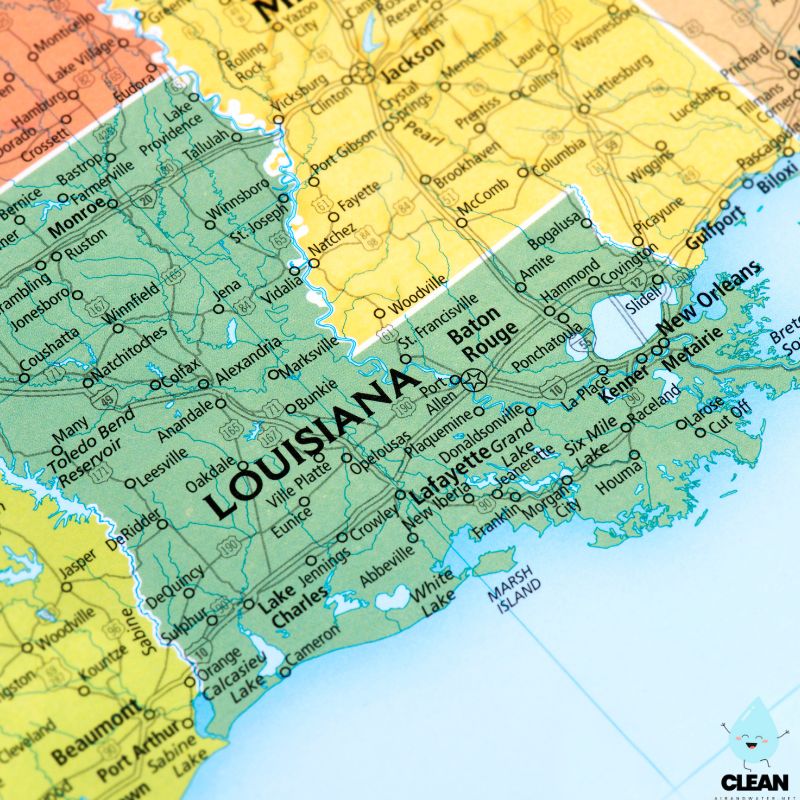
Louisiana hosts one of the most concentrated stretches of petrochemical industry in the United States. The 85-mile corridor between Baton Rouge and New Orleans — widely known as Cancer Alley — contains more than 200 petroleum chemical plants, oil refineries, and industrial facilities. These facilities are a significant potential source of PFAS contamination in the surrounding groundwater, and private wells in the region face real and documented risks.
A study conducted by the Water Collaborative of Greater New Orleans, with samples collected from 107 homes across seven parishes between October 2024 and March 2025, found that 105 of those homes — 98% — had at least one detectable PFAS compound. Arsenic was found in 70% of samples, and lead was present in 67%. Crucially, the study covered both parishes drawing from the Mississippi River and those drawing from aquifers (St. James and St. John the Baptist), and found no meaningful difference in PFAS detection rates between the two. This is directly relevant to private well owners: groundwater-fed homes showed the same contamination profile as river-fed homes. Most detections were below federal limits, but the study’s authors emphasise that even trace PFAS accumulate in the body over time and no safe level has been established.
A separate 2023 Water Collaborative investigation tested water directly from the Mississippi River near Cancer Alley and found PFAS levels at some points 200 to 268 times the EPA safe level — reflecting the direct industrial discharge into the river that ultimately recharges the region’s groundwater. These are surface-water readings, not household tap figures, but they illustrate the scale of industrial contamination that private well owners in the corridor are drawing from the same underlying water table.
Louisiana has no state-level enforceable PFAS MCLs for private wells. The LDH’s health advisory levels for PFAS were in place before the EPA’s April 2024 federal rule, but neither those advisories nor the federal MCLs apply to private residential wells — which remain entirely outside the Safe Drinking Water Act’s jurisdiction.
The Chicot Aquifer Crisis: Saltwater Intrusion
Louisiana faces a groundwater crisis that is largely invisible to residents. The Chicot Aquifer System — the EPA classifies it as a sole-source aquifer, meaning there is no alternative water source for the communities between Lake Charles and Lafayette that depend on it — is being overdrawn by approximately 348 million gallons per day, far beyond the rate at which it can naturally replenish.
Overpumping reduces the water pressure that holds back seawater from the Gulf of Mexico, allowing saltwater to encroach into previously freshwater zones. Over the past 100 years, groundwater levels in the highest rice-producing areas of the Chicot have declined by as much as 50 feet in some locations. Deep groundwater wells in the cone of depression at the aquifer’s centre have already been inundated by salt water. The Chicot currently has no dedicated regional regulatory oversight body.
For private well owners in southwestern Louisiana drawing from the Chicot, this is not a future risk — it is an active and ongoing one. A well functioning normally today may become saline with little warning, and once saltwater contamination reaches a freshwater aquifer, that resource is effectively gone.
Hurricane Contamination: A Recurring Louisiana Risk
Louisiana’s low-lying topography and regular exposure to major hurricanes creates a contamination risk specific to this state: storm surge inundation of private wells. USGS research following Hurricanes Katrina and Rita documented how wells along the north shore of Lake Pontchartrain were submerged by between 0.6 and 4.5 metres of saltwater, with saltwater entering the well casing and the screened aquifer directly. Bacterial contamination, elevated chloride levels, and structural damage to casing all followed.
This risk is not historical — Louisiana continues to experience major hurricane landfalls and significant flooding events. Any private well in a flood-prone area should be tested after a flooding event before resuming use, regardless of visible damage to the wellhead. Bacteria, in particular, can be introduced rapidly and pose immediate health risks.
Quick Important Advertisement – Boil Water Alerts continue below
Don’t Wait for the Next Emergency to Act
Boil water alerts are a warning sign. Whether caused by pipe breaks, contamination, or natural disasters, they highlight how vulnerable our water systems can be.
The safest long-term solution? A reliable home water filtration system designed to remove bacteria, parasites, and harmful chemicals — so you’re protected even when advisories are issued.
Stay Ready with Trusted Filtration:
✅ Removes pathogens, chlorine, PFAS, and heavy metals
✅ Safer than boiling alone — no need to wait for alerts
✅ Easy options for homes, renters, and families
Prefer no installation? Check out the A2 Countertop System
Note: This advert may contain affiliate links. If you choose to buy, we may receive a small commission — thank you for supporting our work!
Nitrate and Bacteria in Louisiana Wells
Nitrate contamination is a documented risk in Louisiana’s agricultural parishes, particularly in shallow wells near sugarcane and rice-producing areas in the river parishes and the southwest. High nitrate levels are especially dangerous for infants under six months old. LDH advises annual testing for coliform bacteria and nitrate for all private well owners.
Coliform bacteria contamination is a persistent risk in Louisiana, elevated by the frequency of flooding events and the prevalence of older, shallower wells in rural parishes. Septic system proximity to well casings is a known pathway. Unlike many states, Louisiana does not have a unified statewide septic code — standards vary by parish.
Regulatory Situation for Louisiana Well Owners
Private residential wells in Louisiana are not regulated under the Safe Drinking Water Act. As the Louisiana Department of Health states clearly on its Private Well Owner Network (PWON): no federal reporting requirements exist for private wells, and LDH is only required to test public water systems. Testing is voluntary, and the responsibility for water quality lies entirely with the well owner.
The LDH PWON provides interactive web-mapping tools to help Louisiana well owners understand the contamination risks in their aquifer zone. LDH recommends that well owners contact their parish sanitarian — usually located at the parish health unit — for advice on certified local testing laboratories and any known local contamination issues.
Check our Louisiana municipal water quality page for city-by-city tap water data, or use our live boil water notice tracker for active advisories — Louisiana is one of the most frequently affected states.
Known High-Risk Areas in Louisiana
If you live near any of the following locations, well water testing is urgent — not precautionary.
Cancer Alley River Parishes
The industrial corridor spanning St. James, St. John the Baptist, St. Charles, Ascension and Iberville parishes contains more than 200 petrochemical plants. Groundwater contamination from industrial discharge is a documented and ongoing risk for well owners throughout this corridor.
LaPlace, St. John the Baptist Parish
The Denka Performance Elastomer plant (formerly DuPont, acquired 2015) operated in LaPlace near the Reserve community. The EPA identified chloroprene emissions as creating cancer risk levels far above acceptable federal limits. Denka suspended operations indefinitely in May 2025, but groundwater contamination from decades of industrial activity may persist.
SW Louisiana — Chicot Aquifer Zone
The sole-source Chicot Aquifer serving the Lake Charles to Lafayette region is overdrawn by ~348 million gallons per day. Saltwater intrusion is active in the deepest parts of the aquifer. Well owners here face a growing risk of saltwater contamination with no alternative water source available.
Southeast Louisiana Coastal Parishes
St. Tammany, Jefferson, Orleans and surrounding parishes face heightened PFAS levels, arsenic and lead detections in groundwater, plus recurring post-hurricane bacterial contamination in shallow wells. The Water Collaborative’s 2024–2025 study found 98% PFAS detection across the region.
Geismar & Plaquemine, Iberville/Ascension
Home to the BASF Chemical Complex and Dow Chemical Plaquemine facility, these parishes sit within the densest part of Cancer Alley. Groundwater in the surrounding area is at elevated risk from industrial discharge, and well owners should treat PFAS testing as a priority.
Rural Agricultural Parishes — Statewide
Shallow wells in rice and sugarcane parishes across southern Louisiana face elevated nitrate risk from fertiliser and agricultural runoff. Bacterial contamination from flood events and ageing septic systems adds additional risk. LDH advises annual coliform testing for all rural well owners.
How to Test Your Louisiana Well Water — and What to Do Next
Given Louisiana’s contamination profile — PFAS from industrial sources, bacterial risk from flooding, saltwater intrusion in the southwest, and documented arsenic levels across the state — every private well owner should test their water regardless of location. Testing is voluntary but the LDH makes the case clearly: well owners are fully responsible for their water quality, and the state will not test it for you.
Contact your local parish health unit to speak with the parish sanitarian, who can refer you to certified local laboratories and advise on any known contamination issues in your area. Alternatively, use the LDH Private Well Owner Network at ldh.la.gov, which includes interactive aquifer mapping tools to help understand what is in the ground beneath your property.
For filter options, our well water filter guide covers reverse osmosis systems for PFAS and arsenic, UV disinfection for bacteria, and whole-house well systems for comprehensive treatment. You can also browse our full water filter solutions page or check your ZIP code for local water quality context.
For city-specific water quality data in Louisiana, see our pages on New Orleans, Baton Rouge, and Shreveport. For regional well water comparisons, see our page on Michigan well water or check the Mississippi state water quality page. Return to the private well water directory to find your state.
Quality News About Your Water
Get the comprehensive water quality news coverage you need with our dedicated US Water News Service. From coast to coast, we deliver in-depth reporting and expert analysis on PFAS contamination, EPA regulatory changes, infrastructure developments, and emerging water safety issues affecting communities nationwide. While mainstream media only covers the biggest stories, we provide the detailed, ongoing coverage that helps you understand the full scope of America’s water challenges.
What’s actually in your tap water? Enter your ZIP code for a full breakdown of contaminants detected in your local supply
Drinking water from a well? Check our directory here for more information
Please read – our information
The information presented on cleanairandwater.net is compiled from official water quality reports, trusted news sources, government websites, and public health resources. While we strive for accuracy and thoroughness in our presentations, we are not scientists, engineers, or qualified water quality professionals.
Our mission is to present water quality information in an accessible, real-world format that helps people understand what’s in their water and make informed decisions about their health and safety. We believe that complex environmental information should be available to everyone in a format that’s easy to understand.
We make every effort to ensure our content is current and accurate, but we cannot guarantee that all information is complete or error-free. This website should not replace official communications from your local water utility or health department. We always recommend consulting official sources for the most up-to-date information regarding your specific water system.
Clean Air and Water is not liable for any unintentional errors, omissions, or outdated information. The content on this site is provided for informational purposes only and should not be considered professional advice.