← Private Well Water Directory / Massachusetts
Massachusetts Private Well Water Quality 2026
Over 500,000 Massachusetts residents drink from private wells that receive zero state regulatory protection. Massachusetts was one of the first states in the nation to set enforceable PFAS limits for public water systems — but those rules do not apply to private wells. A 2020–2022 study of 502 wells found nearly one-third exceeded state health standards. And on Cape Cod, nearly half of tested wells showed some level of PFAS detection — a direct consequence of decades of military firefighting foam use at Joint Base Cape Cod.
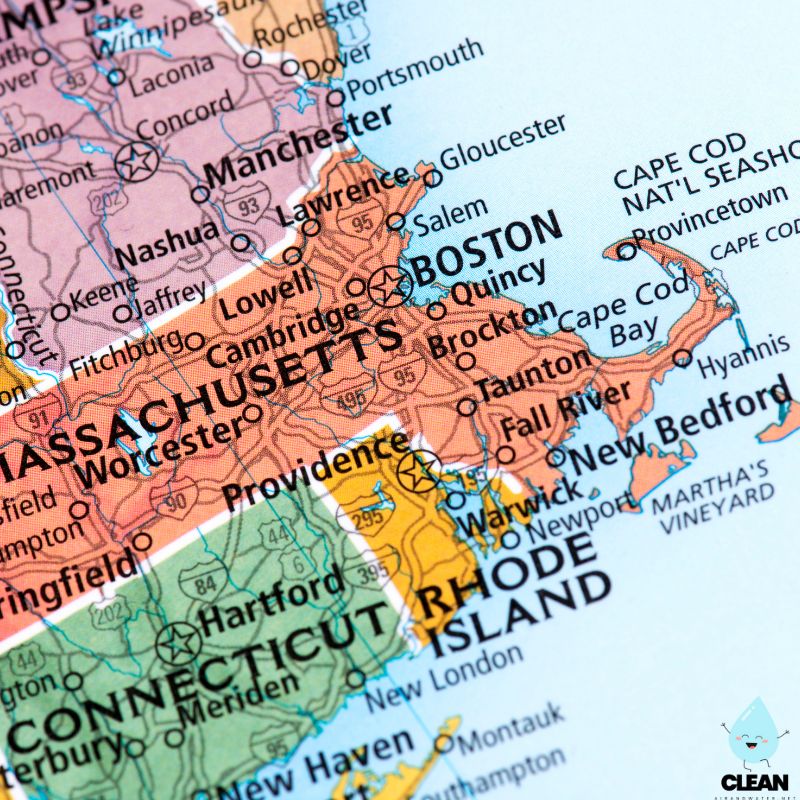
PFAS in Massachusetts Private Wells — The Cape Cod Crisis
Massachusetts was a national leader in regulating PFAS for public water systems — MassDEP set an enforceable state limit of 20 parts per trillion for six PFAS compounds combined (PFAS6) in October 2020, one of the earliest such standards in the country. The federal limit of 4 ppt for PFOA and PFOS, established in April 2024, now takes precedence for public water systems. But none of these protections apply to private wells, which remain entirely unregulated at both state and federal level.
The most acute PFAS risk to private wells in Massachusetts is concentrated on Cape Cod. Joint Base Cape Cod — a 22,000-acre property that has been used for military training since 1911, incorporating the former Otis Air National Guard Base — has been a federal Superfund site since 1989. Decades of AFFF firefighting foam use at on-base fire training areas released PFAS into the sandy, highly permeable soils overlying the Cape Cod Aquifer, which is designated as the sole source of drinking water for approximately 200,000 year-round and 500,000 seasonal Cape Cod residents. A Harvard study published in 2023 found that only about a quarter of the PFAS from the fire training site has so far moved into groundwater — and that leaching will likely continue for centuries without active remediation.
A study by the STEEP Superfund Research Program at the University of Rhode Island — a collaborative effort with Harvard and the Silent Spring Institute — tested 101 private wells across 12 Cape Cod towns and found that 46% had at least one PFAS compound detected. However, it is important to understand what that figure means: only 3% of the tested wells had PFAS levels that exceeded the Massachusetts state groundwater standard of 20 ppt for PFAS6. Many detections were at very low concentrations. That said, the federal limit of 4 ppt for PFOA and PFOS — now the most stringent enforceable standard — would capture a wider proportion of wells, and the study tested for 25 PFAS compounds, detecting 9, including compounds not regulated under Massachusetts’s current standard. The EPA’s confirmed source of contamination in Falmouth and Mashpee includes a 6,200-acre PFAS plume originating from the base’s former fire training area.
Beyond Cape Cod, PFAS contamination in private wells is documented across the state from multiple military and industrial sources:
- Westover Air Reserve Base (Chicopee) — environmental testing between 2015 and 2021 revealed PFAS concentrations significantly above EPA advisory levels in groundwater. Nearby private wells were sampled and filtration systems installed where needed. ATSDR is conducting an ongoing exposure assessment.
- Former Naval Air Station South Weymouth — undergoing active CERCLA remediation for PFAS contamination, with a Basewide PFAS Operable Unit now investigating contamination across the site.
- Hanscom Air Force Base (Bedford) — identified as a site with known or suspected PFAS contamination requiring assessment.
- Statewide landfill leachate — municipal landfills accepting PFAS-containing products are a documented contamination pathway. In August 2025, MassDEP required additional testing after PFAS was discovered in monitoring wells near a closed landfill in West Tisbury (Martha’s Vineyard), with bottled water provision for affected residents if contamination is confirmed.
MassDEP conducted a free PFAS testing programme for a limited number of private wells, focusing on the 84 Massachusetts towns where 60% or more of residents rely on private wells. On Nantucket, 41 wells were sampled in 2021 and 5 exceeded the state PFAS6 standard of 20 ppt. The voluntary programme provides only a partial picture — the vast majority of Massachusetts private wells have never been tested for PFAS.
Arsenic, Uranium and Radon in Massachusetts Bedrock Wells
Massachusetts has a well-documented naturally occurring arsenic problem in its bedrock aquifers. A USGS study jointly funded by MassDEP and the Massachusetts Department of Public Health (MDPH) analysed water from 478 private bedrock wells across 116 communities in central and northeastern Massachusetts and found that 13% exceeded the federal drinking water standard for arsenic of 10 ppb (0.010 mg/L). Based on the study data and the area’s known bedrock geology, USGS estimated that approximately 5,700 bedrock wells in the study area may exceed the arsenic standard — with around 3,800 of those being used for drinking without any treatment at the time of the study.
The highest-risk areas for arsenic are central and northeastern Massachusetts, including the Merrimack Valley. MassDEP has developed an online Well Locator Tool that allows residents to enter their address and receive probability estimates for their specific location. Arsenic is colourless and tasteless — it cannot be detected without laboratory testing — and long-term exposure is linked to cancers of the skin, bladder and lungs, as well as cardiovascular disease.
The same USGS study found that 3% of the tested bedrock wells exceeded the uranium standard of 30 micrograms per litre — with an estimated 3,300 wells in the study area potentially affected. Areas mapped as granite or pegmatite bedrock carry the highest probability of uranium and other radionuclide contamination. Radon is also a significant naturally occurring risk in Massachusetts bedrock wells statewide. MassDEP has established a guideline of 10,000 pCi/L for radon in drinking water, though no federal standard exists. The primary health concern from radon in well water is inhalation — radon gas is released during showering and can accumulate to harmful concentrations in indoor air.
Quick Important Advertisement – Boil Water Alerts continue below
Don’t Wait for the Next Emergency to Act
Boil water alerts are a warning sign. Whether caused by pipe breaks, contamination, or natural disasters, they highlight how vulnerable our water systems can be.
The safest long-term solution? A reliable home water filtration system designed to remove bacteria, parasites, and harmful chemicals — so you’re protected even when advisories are issued.
Stay Ready with Trusted Filtration:
✅ Removes pathogens, chlorine, PFAS, and heavy metals
✅ Safer than boiling alone — no need to wait for alerts
✅ Easy options for homes, renters, and families
Prefer no installation? Check out the A2 Countertop System
Note: This advert may contain affiliate links. If you choose to buy, we may receive a small commission — thank you for supporting our work!
The Regulatory Gap: No Protection for Private Well Owners
Private wells in Massachusetts are not regulated by MassDEP. Under Massachusetts General Law (MGL Ch.111 s.122), local Boards of Health have primary jurisdiction over private wells — meaning standards vary from town to town, are often outdated, and in some communities are nonexistent. There are no minimum statewide testing requirements, no mandate to test before property sale (legislation to change this is pending), and no statewide notification system for well owners near contamination sites. MassDEP does become involved when contamination from an identifiable spill or release of oils or hazardous materials — including PFAS — is detected in a well, but that mechanism only applies where a responsible party can be identified.
RCAP Solutions, a Massachusetts nonprofit, tested 502 private wells across several communities from 2020 to 2022 and found that nearly one-third either exceeded state health standards or presented potential health risks. The most prevalent contaminants were naturally occurring: coliform bacteria, radon, arsenic, and manganese. RCAP has since led advocacy for statewide minimum well standards. Legislation introduced in January 2025 (S.585) would give MassDEP authority to establish minimum standards and require testing at the time of property transfer — similar to existing requirements for radon and lead. A 2023 poll found that 92% of Massachusetts residents believe state government should play a role in ensuring safe drinking water for private well users.
The state budget allocated $100,000 to MassDEP in 2024 to study and make recommendations for a statewide private well programme — that study was ongoing as of early 2026. Until legislation passes, testing, treatment and any remediation costs fall entirely to the homeowner. Nantucket is currently the only community in Massachusetts to require PFAS testing as part of private well testing at the point of property transfer, effective January 1, 2024.
Check our Massachusetts municipal water quality page for city-by-city tap water data, our dedicated Cape Cod water quality page for detailed PFAS information on the Cape, or use our live boil water notice tracker for active advisories statewide.
Known High-Risk Areas in Massachusetts
If you live near any of the following locations, well water testing is urgent — not precautionary.
Falmouth & Mashpee — Cape Cod
A confirmed 6,200-acre PFAS plume from the former fire training area at Joint Base Cape Cod originates here, contaminating groundwater in both towns including Ashumet and Johns Pond. Bottled water and in-home filtration have been provided to affected residents. Testing is urgent.
All Cape Cod Towns — 12 Affected
The URI/STEEP study tested 101 wells across 12 Cape Cod towns and found PFAS detected in 46% — with 3% exceeding the state 20 ppt standard. No Cape Cod well owner should assume they are unaffected without testing, especially as the stricter 4 ppt federal standard for PFOA/PFOS now applies.
Nantucket Island
MassDEP’s 2021 targeted sampling found 5 of 41 wells exceeded the state PFAS6 standard. Subsequent MassDEP investigation data has found some properties with PFAS levels well above the 20 ppt threshold. Nantucket now requires PFAS testing at property transfer — effective January 1, 2024.
Chicopee — Westover Air Reserve Base
Testing between 2015 and 2021 revealed PFAS concentrations significantly above EPA advisory levels in groundwater. Nearby private wells were sampled and filtration systems installed where needed. ATSDR is conducting an ongoing exposure assessment for the surrounding community.
South Weymouth — Former NAS
The former Naval Air Station South Weymouth is undergoing active CERCLA remediation for PFAS. A Basewide PFAS Operable Unit is now investigating contamination across the site. Private wells in the surrounding area should be tested.
Central & NE Massachusetts — Arsenic Zone
The Merrimack Valley and central MA bedrock areas have documented arsenic and uranium in private wells. The USGS found 13% of tested bedrock wells in the region exceeded the arsenic standard. Use MassDEP’s Well Locator Tool at mass.gov/dep to check the probability for your specific address.
How to Test Your Massachusetts Well Water — and What to Do Next
Given Massachusetts’s contamination profile — PFAS from military bases and landfills, naturally occurring arsenic and uranium in bedrock wells, and radon statewide — MassDEP recommends that all private well owners test, particularly if within one to two miles of a known PFAS source. The RCAP finding that nearly one in three tested wells had a problem should be taken seriously regardless of location.
Start with your local Board of Health — regulations and available resources vary significantly by town, and some communities offer testing subsidies or programmes. MassDEP’s website at mass.gov/private-wells provides a certified laboratory list plus the Well Locator Tool for arsenic and uranium probability by address. For Cape Cod residents, Barnstable County Health Department has historically offered PFAS screening; check current programme availability. For PFAS specifically, testing costs approximately $200–400 through a certified laboratory using EPA Method 537.1 or 533.
If testing identifies PFAS or arsenic, our well water filter guide covers reverse osmosis systems for both contaminants, aeration systems for radon, and UV disinfection for bacteria. For whole-house protection where multiple contaminants are present, a dedicated well water system is the most comprehensive solution. You can also browse our full water filter solutions page or check your ZIP code for local water quality context.
For other Northeast well water risks, see our pages on New Hampshire wells, Maine wells, and Michigan wells — or return to the private well water directory to find your state.
Quality News About Your Water
Get the comprehensive water quality news coverage you need with our dedicated US Water News Service. From coast to coast, we deliver in-depth reporting and expert analysis on PFAS contamination, EPA regulatory changes, infrastructure developments, and emerging water safety issues affecting communities nationwide. While mainstream media only covers the biggest stories, we provide the detailed, ongoing coverage that helps you understand the full scope of America’s water challenges.
What’s actually in your tap water? Enter your ZIP code for a full breakdown of contaminants detected in your local supply
Drinking water from a well? Check our directory here for more information
Please read – our information
The information presented on cleanairandwater.net is compiled from official water quality reports, trusted news sources, government websites, and public health resources. While we strive for accuracy and thoroughness in our presentations, we are not scientists, engineers, or qualified water quality professionals.
Our mission is to present water quality information in an accessible, real-world format that helps people understand what’s in their water and make informed decisions about their health and safety. We believe that complex environmental information should be available to everyone in a format that’s easy to understand.
We make every effort to ensure our content is current and accurate, but we cannot guarantee that all information is complete or error-free. This website should not replace official communications from your local water utility or health department. We always recommend consulting official sources for the most up-to-date information regarding your specific water system.
Clean Air and Water is not liable for any unintentional errors, omissions, or outdated information. The content on this site is provided for informational purposes only and should not be considered professional advice.