Nevada Water Quality at a Glance
Is Nevada Water Safe to Drink?
Generally Safe with Important Regional Risks — Nevada’s municipal water systems generally meet federal standards. The Southern Nevada Water Authority confirmed drinking water is below detectable limits for PFAS compounds through UCMR5 monitoring (2023–2025). However, 22% of private wells in Northern Nevada exceed EPA arsenic limits, some at levels far above safe thresholds. Southern Nevada enters 2026 under a Tier 1 Colorado River shortage, with Lake Mead around 160 feet below full pool — and projections suggest a Tier 2 shortage could follow in 2027 if snowpack and runoff remain below average. Rural private well users face the highest risks, particularly around Reno, Carson City, and the Fallon area.
⚠️ Key Concerns for Nevada Residents in 2026
- Private Well Contamination: 22% of Northern Nevada domestic wells exceed the EPA arsenic limit of 10 µg/L; some samples tested as high as 2,408 µg/L in USGS groundwater surveys — this is not a minor exceedance
- Colorado River Supply Risk: Lake Mead remains under Tier 1 shortage with its elevation approximately 160 feet below full pool; Tier 2 shortage (triggering steeper cuts) projected as possible by July 2026; post-2026 operating guidelines yet to be finalised
- Heavy Metal Contamination: Naturally occurring arsenic, uranium, chromium-6, and cadmium found across Nevada’s groundwater — a function of the state’s volcanic geology and basin-fill aquifers
- PFAS in Surface Waters: While treated drinking water is below detectable limits, PFAS has been found in surface waters around the Las Vegas Wash, Lake Mead, the Truckee River, and Lake Tahoe — warranting continued monitoring
Read the full 2026 report below for detailed analysis, city-specific data, and actionable recommendations for Nevada residents.
advertisment – report continues below
Your water passed the test.
Legal isn’t the same as safe.
Regulated contaminants like PFAS, chromium-6, and disinfection byproducts can sit inside the legal limit and still carry long-term health risks. Passing isn’t the same as clean.
✅ Removes PFAS, lead & chromium-6 — the contaminants most flagged even in passing city reports
✅ NSF/ANSI 42, 58 & 372 certified — independently tested, not just manufacturer claims
✅ Installs in 30 minutes, no plumber — fills a glass in 8 seconds, smart LED filter monitor
Renting or can’t drill? The Waterdrop K19 Countertop RO — plug in, fill the tank, done. No installation, no drilling, no plumber.
Advertisement — this page contains affiliate links. If you buy through these links, we may earn a commission at no extra cost to you.

Nevada – The Silver State – Water Quality Report 2026: Colorado River Crisis, Arsenic Risk & Safety Across the State
Nevada’s water infrastructure serves approximately 3.2 million residents across a vast desert landscape — from the Colorado River-dependent south to the Truckee River watershed in the north. The state operates through a network of around 600 public water systems, ranging from the Southern Nevada Water Authority serving over 2.2 million customers in the greater Las Vegas metro to smaller rural systems providing essential services to remote communities. Nevada’s primary water sources include the Colorado River (Lake Mead), which supplies 90% of Southern Nevada’s water, the Truckee River system serving Reno-Sparks, and numerous groundwater aquifers supporting both urban areas and rural communities. Check our live U.S. boil water notices tracker for any active Nevada alerts.
Nevada enters 2026 under Tier 1 shortage conditions on the Colorado River — the fifth consecutive year of federally mandated cuts — with Lake Mead sitting approximately 160 feet below full pool. Current Bureau of Reclamation projections suggest the reservoir could fall below 1,050 feet by July 2026, which would trigger a more severe Tier 2 shortage. The urgency of finalising post-2026 Colorado River operating guidelines (the current framework expires at year-end) is shaping Nevada’s water planning more than any other issue. At the same time, private well users in Northern Nevada continue to face serious arsenic contamination risks that remain largely unaddressed.
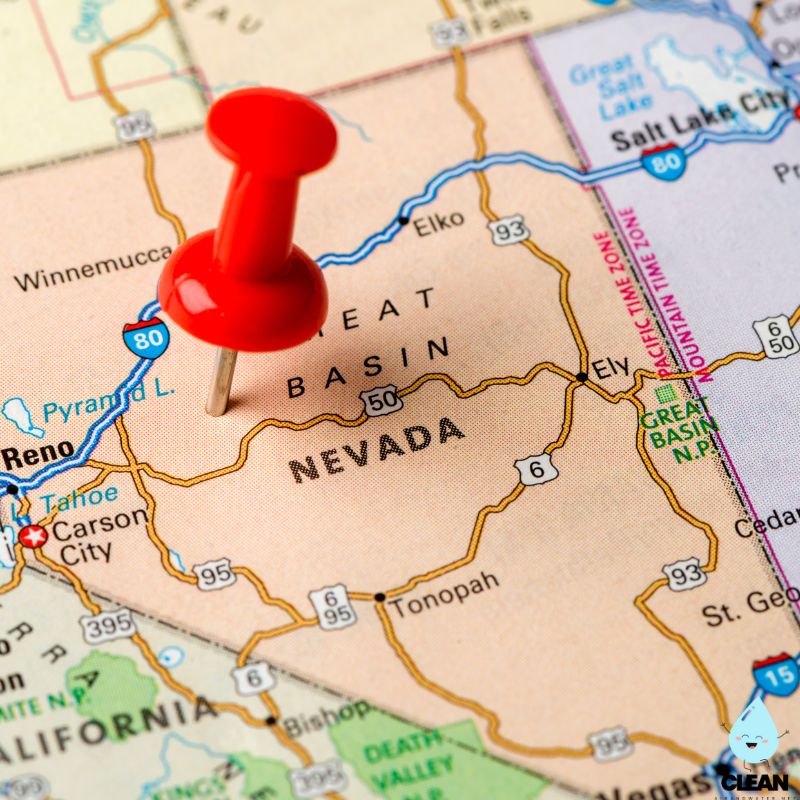
Nevada Water Quality: Current Status (2025–2026)
Statewide Compliance and Testing
- Overall Compliance: Nevada has approximately 22 public water systems non-compliant with health-based primary drinking water standards and 12 non-compliant with secondary standards, out of around 600 total systems — one of the better compliance rates in the western United States. The Nevada Division of Environmental Protection (NDEP) monitors quality across all public systems.
- PFAS Monitoring: UCMR5 monitoring (2023–2025) by the Southern Nevada Water Authority confirmed that Las Vegas Valley drinking water is below detectable limits for PFAS compounds. Prior to August 2023 there had been no detections of PFAS in any Nevada public utility drinking water. PFAS has been detected in surface waters around Las Vegas Wash, Lake Mead, the Truckee River, and Lake Tahoe — but at levels below those triggering drinking water concern. Visit our water alert news page for ongoing Nevada updates.
- Infrastructure Need: The EPA estimates Nevada requires $6.4 billion for water system improvements over the next twenty years, with nearly two-thirds of that needed for distribution and transmission projects serving growing urban areas — particularly in the Las Vegas and Reno-Sparks corridors.
Colorado River and Lake Mead — 2026 Status
- Tier 1 Shortage Continues: Southern Nevada enters 2026 under Tier 1 shortage conditions for the fifth consecutive year. Nevada’s full Colorado River allocation is 300,000 acre-feet annually; under Tier 1, only 279,000 acre-feet are available — a 7% reduction. SNWA reports this does not currently affect customer supply due to conservation achievements.
- Tier 2 Shortage Risk: Bureau of Reclamation projections from August 2025 show Lake Mead could fall below 1,050 feet by July 2026, which would trigger a Tier 2 shortage — cutting Nevada’s allocation by an additional 4,000 acre-feet. The reservoir is currently approximately 160 feet below full pool, at around 1,062 feet.
- Post-2026 Guidelines Critical: The current framework governing Colorado River operations expires at end of 2026, and the seven Basin states have yet to finalise a replacement agreement. Federal officials have stressed the urgency of reaching a deal, warning they may step in if states cannot agree. Nevada’s long-term water security depends heavily on the outcome of these negotiations.
Emerging Contaminant Response
- PFAS Regulation Update: EPA retained the 4 ppt MCLs for PFOA and PFOS in May 2025, while extending the compliance deadline from 2029 to 2031. MCLs for PFHxS, PFNA, and HFPO-DA (GenX) are under reconsideration. Nevada is monitoring the evolving federal framework before adopting state-level rules. Mandatory monitoring and public reporting for all systems is required by April 2027. For filter options, see our water filter solutions guide.
- Research Focus on Lake Mead PFAS: A 2026 peer-reviewed study by SNWA scientists found that declining Lake Mead levels may increase the proportional impact of PFAS inputs from the Las Vegas Wash — as the same mass of contaminants becomes more concentrated in a smaller water body. This is an emerging concern as drought continues.
- Treatment Technology Preparation: Water utilities are preparing advanced treatment including activated carbon filtration and reverse osmosis for PFAS removal, particularly for scenarios where surface water PFAS concentrations may rise with falling reservoir levels.
Conservation and Sustainability
- Conservation Leadership: Southern Nevada has reduced per capita water use by 55% since 2002 despite adding over 829,000 residents — making it a global model for water efficiency in an arid environment. The SNWA’s Water Smart Landscapes rebate programme has removed over 200 million square feet of turf.
- Reservoir Protection Conservation: SNWA contributed 233,000 acre-feet toward the Lower Basin’s 3 million acre-feet Reservoir Protection Conservation commitment through 2024. These conservation volumes are in addition to mandatory shortage reductions.
- Private Well Arsenic Risk: A USGS study of 190 groundwater samples across Nevada (2007–2021) found arsenic concentrations ranging from below 1.6 to as high as 2,408 µg/L — 240 times the EPA limit. A 2022 study found 22% of Northern Nevada domestic well samples exceeded the EPA arsenic MCL of 10 µg/L. This remains a critical unregulated risk.
Looking Forward: 2026 and Beyond
Nevada’s water quality in 2026 is defined by two distinct challenges: an accelerating drought crisis on the Colorado River, and persistent arsenic contamination in Northern Nevada’s private wells. The SNWA’s water quality record for treated municipal supply is genuinely strong — PFAS is below detectable limits, and the system is built for extreme drought resilience with three Lake Mead intake structures and a low-level pumping station. But the drought trajectory is worsening, post-2026 operating guidelines remain unresolved, and private well users face risks that the regulatory system largely ignores. If you are on a private well in Northern Nevada, testing for arsenic annually is essential — see our water filter solutions guide for effective treatment options. You can also compare Nevada to other states on our national water quality database.
Recommendations for Nevada Residents
Know Your Water Source
Contact your water utility to request annual water quality reports and ask specifically about PFAS testing results. Visit the NDEP website to access your local system’s testing data. Private well users in Northern Nevada should test annually for arsenic and heavy metals — 22% of wells exceed EPA limits. Check our live boil water tracker for any active Nevada advisories.
Support Water Conservation
Follow mandatory seasonal water restrictions — outdoor use accounts for roughly 60% of Southern Nevada’s total water consumption. Consider converting non-functional grass to drought-tolerant landscaping through the SNWA’s Water Smart Landscapes rebate programme. Nevada’s record-setting conservation success is what keeps the taps running under shortage conditions.
Consider Certified Filtration
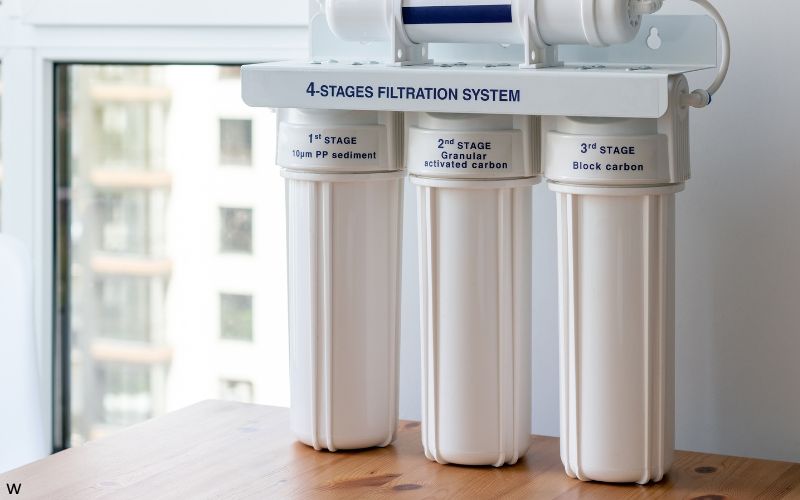
For private well users with elevated arsenic, reverse osmosis systems certified to NSF/ANSI 58 are the most effective treatment. For PFAS protection in public water supplies, NSF/ANSI 58 or NSF/ANSI 42 certified activated carbon systems add an extra layer of security. See our full filter guide for certified options matched to Nevada’s specific contaminants.

Report Water Quality Concerns
Contact your local water utility immediately for taste, odour, or colour concerns. Report suspected contamination to NDEP’s Bureau of Safe Drinking Water at (775) 687-9521. For the latest alerts across Nevada and the U.S., see our water alert news page.
Monitor Drought and Shortage Conditions
Stay informed about Lake Mead water levels and Colorado River shortage status through SNWA and Bureau of Reclamation updates. Lake Mead’s projected drop toward 1,050 feet by mid-2026 could trigger a Tier 2 shortage with steeper cuts. Understanding how shortage tiers affect outdoor watering rules and long-term supply planning helps all Nevada households plan ahead.
Nevada Cities We Cover
Las Vegas Water Quality
Comprehensive analysis of Southern Nevada Water Authority systems serving the greater Las Vegas metropolitan area. Includes Colorado River sourcing, treatment processes, PFAS monitoring results, disinfection byproducts, chromium-6 levels, and the SNWA’s world-leading conservation and drought resilience programmes.
North Las Vegas Water Quality
Detailed assessment of North Las Vegas water systems, covering water quality testing, Colorado River dependency, drought shortage impacts, and compliance with emerging contaminant regulations in this rapidly growing community adjacent to the Las Vegas Valley.
Reno Water Quality
Complete evaluation of Truckee Meadows Water Authority serving the Reno-Sparks region. Covers Truckee River sourcing, groundwater systems, water quality monitoring, arsenic risk in surrounding private wells, and infrastructure modernisation efforts in Northern Nevada — a very different water picture from the Colorado River-dependent south.
Frequently Asked Questions
Is Nevada’s tap water safe to drink?
Nevada’s public water systems generally provide safe drinking water that meets federal standards. The Southern Nevada Water Authority — which serves over 2.2 million residents — confirmed PFAS levels below detectable limits through UCMR5 monitoring completed in 2025.
NDEP monitors approximately 600 public water systems, with only around 22 currently non-compliant with health-based primary standards. Las Vegas Valley water meets or exceeds all federal and state drinking water standards, though it contains naturally occurring arsenic, chromium-6, and disinfection byproducts at levels within legal limits. The main concern for safety is private well users in Northern Nevada, where 22% of sampled wells exceed the EPA arsenic MCL of 10 µg/L. If you are on a private well, annual testing is critical — and reverse osmosis filtration is the most effective treatment for arsenic.
How does the Colorado River drought affect Nevada’s water in 2026?
Nevada enters 2026 under Tier 1 shortage conditions on the Colorado River — the fifth consecutive year of mandated cuts. The full annual allocation is 300,000 acre-feet, reduced to 279,000 under Tier 1.
Lake Mead currently sits approximately 160 feet below full pool. Bureau of Reclamation projections from August 2025 suggest the reservoir could fall below 1,050 feet by July 2026 — the threshold for a more severe Tier 2 shortage. Post-2026 operating guidelines for the entire Colorado River system are urgently being negotiated between the seven Basin states; without a deal, the federal government may step in. SNWA is confident current shortage levels do not affect customer supply, thanks to Nevada’s conservation success and infrastructure investment — but the long-term trajectory requires ongoing vigilance.
How can I find out about my local water quality in Nevada?
Nevada residents can access comprehensive water quality information through several state and local resources:
• Annual Water Quality Reports: Contact your water utility for their Consumer Confidence Report, which details all testing results and any current violations or areas of concern for the previous year
• NDEP Database: Visit the Nevada Division of Environmental Protection’s website to access testing results and compliance information for your local water system
• PFAS Testing Data: NDEP maintains a dedicated PFAS in Nevada page with UCMR5 results and downloadable datasets updated as monitoring is completed
• Drought and Shortage Status: Check the Southern Nevada Water Authority and Colorado River Commission of Nevada for current Lake Mead levels, shortage tier status, and outdoor watering restrictions
• Clean Air and Water: Use our live boil water tracker and water alert news for real-time Nevada updates
What are Nevada’s main water infrastructure challenges?
Nevada faces unique infrastructure challenges stemming from extreme aridity, rapid population growth, and geological conditions that affect groundwater quality:
Drought Resilience: Managing water security under persistent Colorado River shortage conditions — now entering its fifth consecutive year — requires both infrastructure investment and continued community conservation
Post-2026 Framework: The Colorado River operating guidelines expire at end of 2026; new rules will shape Nevada’s water future for decades. Negotiations between Basin states are ongoing and unresolved as of early 2026
Growth Management: The EPA estimates Nevada needs $6.4 billion in water system improvements over twenty years, with the bulk serving growing urban areas — Las Vegas and Reno-Sparks are both expanding rapidly
Private Well Contamination: Smaller rural systems and private well users face higher per-capita costs, limited technical support, and serious contamination risks — particularly arsenic in Northern Nevada — that fall outside regulatory oversight
Quality News About Your Water
Get the comprehensive water quality news coverage you need with our dedicated US Water News Service. From coast to coast, we deliver in-depth reporting and expert analysis on PFAS contamination, EPA regulatory changes, infrastructure developments, and emerging water safety issues affecting communities nationwide. While mainstream media only covers the biggest stories, we provide the detailed, ongoing coverage that helps you understand the full scope of America’s water challenges.
What’s actually in your tap water? Enter your ZIP code for a full breakdown of contaminants detected in your local supply
Drinking water from a well? Check our directory here for more information
Contaminants of Concern
PFAS “Forever Chemicals”
Source: Limited industrial manufacturing in Nevada, but potential contamination from firefighting foam (AFFF) at airports and military bases; PFAS has also been found in surface waters via atmospheric deposition — reaching rivers and lakes through rain and cloud systems
Health Effects: Linked to kidney and testicular cancer, liver damage, immune system suppression, high cholesterol, thyroid disruption, and developmental effects in children
Current Status (2025–2026): SNWA confirmed Southern Nevada drinking water is below detectable limits for PFAS through UCMR5 monitoring completed in 2025. No detections have been found in Nevada public utility drinking water since monitoring began. However, PFAS has been detected in surface waters including Las Vegas Wash, Lake Mead, the Truckee River, and Lake Tahoe. A 2026 study found that declining Lake Mead levels may increase the PFAS concentration impact from Las Vegas Wash inputs — an emerging risk to monitor. EPA Limits: 4 ppt for PFOA and PFOS (retained May 2025; compliance deadline extended to 2031). MCLs for PFHxS, PFNA and GenX under reconsideration. Monitoring mandatory by April 2027. See our filter guide for certified PFAS removal options

Arsenic and Heavy Metal Contamination
Source: Naturally occurring in Nevada’s volcanic geology and basin-fill aquifers. A USGS study collected 190 groundwater samples across Nevada and found arsenic concentrations ranging from below 1.6 µg/L to as high as 2,408 µg/L — reflecting highly variable geological conditions across the state
Health Effects: Arsenic linked to bladder, lung, and skin cancers, cardiovascular disease, and developmental harm to children. Other naturally occurring metals including uranium, chromium-6, lead, and cadmium pose additional cancer and organ damage risks
Current Status (2025–2026): A 2022 study found 22% of Northern Nevada domestic well samples exceeded the EPA arsenic MCL of 10 µg/L. The risk is concentrated in the Carson Desert, Carson Valley, and Truckee Meadows areas. Municipal systems generally meet standards through treatment, but private wells are entirely unregulated and untested unless owners take action. 182,000 people statewide rely on private wells. EPA Limit: 10 µg/L (ppb) for arsenic in public water supplies. Action: If on a private well, test annually and consider an NSF/ANSI 58-certified reverse osmosis system — see our water filter solutions guide
Please read – our information
The information presented on cleanairandwater.net is compiled from official water quality reports, trusted news sources, government websites, and public health resources. While we strive for accuracy and thoroughness in our presentations, we are not scientists, engineers, or qualified water quality professionals.
Our mission is to present water quality information in an accessible, real-world format that helps people understand what’s in their water and make informed decisions about their health and safety. We believe that complex environmental information should be available to everyone in a format that’s easy to understand.
We make every effort to ensure our content is current and accurate, but we cannot guarantee that all information is complete or error-free. This website should not replace official communications from your local water utility or health department. We always recommend consulting official sources for the most up-to-date information regarding your specific water system.
Clean Air and Water is not liable for any unintentional errors, omissions, or outdated information. The content on this site is provided for informational purposes only and should not be considered professional advice.