Newark Water Quality at a Glance
Is Newark Water Safe to Drink?
Major Progress Made — Vigilance Still Required — Newark has dramatically transformed its water system since the 2017–2019 lead crisis. Current lead testing shows 0 ppb following the replacement of over 23,000 lead service lines — one of the fastest such programmes in US history. The Pequannock Water Treatment Plant completed a landmark $20.5 million upgrade in September 2025, restoring capacity to 60 million gallons per day. However, PFAS “forever chemicals” remain detectable in Newark water, and 6 contaminants continue to exceed EPA health benchmarks. New Jersey secured $2.3 billion in PFAS settlements in 2025 to fund long-term remediation.
⚠️ Key Concerns for Newark Residents — 2026
- PFAS “Forever Chemicals”: PFAS detected in Newark water; New Jersey secured $285M from 3M (May 2025) and $2B from DuPont/Chemours/Corteva (August 2025) to fund statewide PFAS cleanup — the largest clean-water settlements in NJ history
- Lead Contractor Fraud: JAS Group Enterprise charged in October 2024 with falsifying reports for ~1,500 properties; comprehensive audits found 30 remaining lead components which have since been replaced
- Building Plumbing Risk: While service lines are replaced, lead may still leach from older interior fixtures and solder in homes built before 1986 — particularly relevant in Newark’s large pre-war housing stock
- Disinfection Byproducts: HAA5 levels averaging 32–38 ppb across the two supply systems — within EPA limits but above EWG health guidelines; carbon filtration recommended
Read the full report below for detailed analysis, city-specific data, and actionable recommendations for Newark residents.
advertisment – report continues below
Your water passed the test.
Legal isn’t the same as safe.
Regulated contaminants like PFAS, chromium-6, and disinfection byproducts can sit inside the legal limit and still carry long-term health risks. Passing isn’t the same as clean.
✅ Removes PFAS, lead & chromium-6 — the contaminants most flagged even in passing city reports
✅ NSF/ANSI 42, 58 & 372 certified — independently tested, not just manufacturer claims
✅ Installs in 30 minutes, no plumber — fills a glass in 8 seconds, smart LED filter monitor
Renting or can’t drill? The Waterdrop K19 Countertop RO — plug in, fill the tank, done. No installation, no drilling, no plumber.
Advertisement — this page contains affiliate links. If you buy through these links, we may earn a commission at no extra cost to you.

Newark – New Jersey – Water Quality Report 2026: PFAS Testing, Infrastructure Progress & Safety across your city
Newark’s Department of Water and Sewer Utilities serves approximately 300,000 residents across Newark and sells water to surrounding communities including Belleville, Bloomfield, East Orange, Nutley, and South Orange. The utility manages over 500 miles of water mains, operates the Pequannock and Wanaque Water Treatment Plants, and delivers roughly 80 million gallons daily across this historic northeastern urban centre. Newark draws its drinking water from two primary sources: the Pequannock Watershed, a protected 35,000-acre forest reservoir system in northern New Jersey that has served the city since the 1890s, and the Wanaque Reservoir, operated by the North Jersey District Water Supply Commission. In September 2025, Newark celebrated the completion of a landmark $20.5 million upgrade to the Pequannock plant — the facility’s most significant investment since 1989. Newark’s transformation from a lead crisis city to a national model for infrastructure renewal is covered in depth in our New Jersey water quality overview and our US water quality database.
The city has undertaken unprecedented water system modernisation since 2019, replacing over 23,000 lead service lines in under three years at no cost to residents — completing in record time what would typically take a decade. Newark’s programme has been cited nationally as a blueprint for addressing lead in drinking water, with Vice President Harris calling it “a national role model” in 2022. Since 2014, the Baraka administration has invested over $350 million in water infrastructure improvements, with additional investment continuing through 2026.
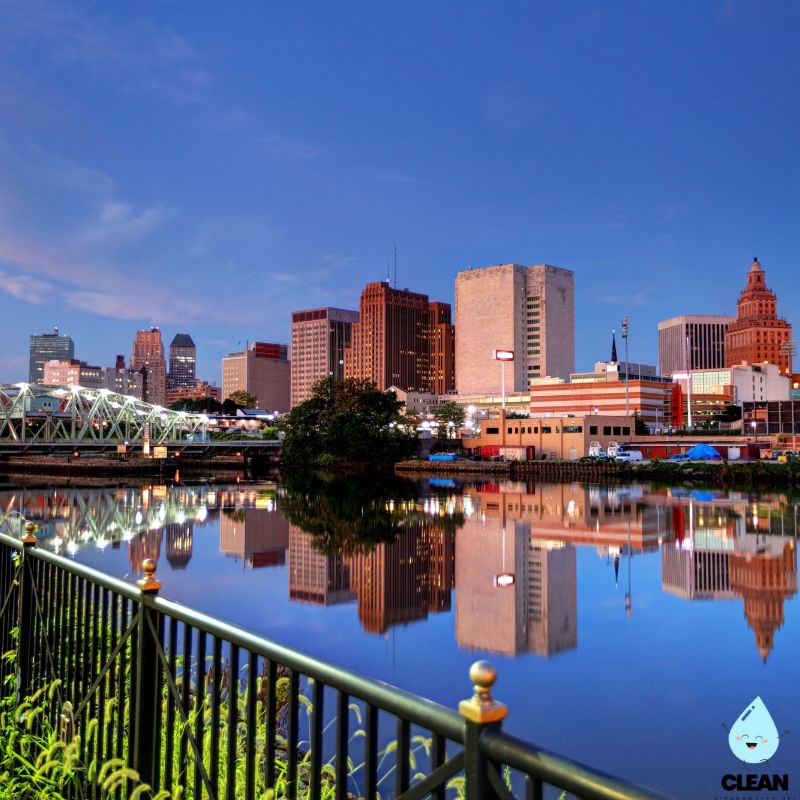
Newark Water Quality: Current Status (2025–2026)
Latest Testing Results
- Lead Levels: Current testing results show 0 ppb — well below the EPA action level of 15 ppb (reducing to 10 ppb by 2027 under the Lead and Copper Rule Improvements). This reflects the success of Newark’s comprehensive lead service line replacement programme completed in 2022, plus post-fraud audit remediation work. Residents in older buildings should still use an NSF-certified water filter as internal plumbing may contain lead solder or fixtures.
- PFAS Status: Newark water contains detectable PFAS levels. New Jersey maintains some of the strictest PFAS standards in the country, and the state has secured landmark settlements totalling over $2.3 billion from 3M, DuPont, Chemours, and Corteva in 2025 to fund remediation. Newark joined class-action lawsuits against PFAS manufacturers in November 2023.
- Compliance Status: Newark’s water meets all federal and New Jersey drinking water standards, with annual Consumer Confidence Reports published at water.newarknj.gov. Semi-annual lead and copper monitoring continues through NJDEP’s Drinking Water Watch programme.
Reservoir-Based Water Supply
- Pequannock Watershed: Primary source for western and central Newark, consisting of five interconnected reservoirs in a protected 35,000-acre forest watershed in Morris and Passaic Counties. The watershed feeds the recently upgraded Pequannock Water Treatment Plant.
- Wanaque Reservoir: Primary source for northern and eastern Newark, part of the North Jersey District Water Supply Commission system serving multiple municipalities. Generally produces slightly harder water than the Pequannock supply.
- Watershed Protection: Comprehensive source water protection programmes including forest management, wildlife monitoring, and development restrictions in watershed areas help maintain the high quality of Newark’s reservoir supply.
Pequannock Plant Upgrade — Completed September 2025
- $20.5M Transformation Complete: Newark completed the most significant upgrade to the Pequannock Water Treatment Plant since it opened in 1989. The ribbon-cutting ceremony in September 2025 featured Mayor Ras Baraka and Water Director Kareem Adeem. The plant can now treat up to 60 million gallons per day — restored from a reduced capacity of ~35–40 MGD — serving nearly 400,000 residents across Newark and North Jersey.
- What Was Upgraded: The project included replacement of filter media with granular activated carbon (GAC), new filter underdrains, over 50 large valve replacements, nine new pumps, a new air scour system, and a state-of-the-art SCADA computer control system for real-time monitoring. GAC media specifically improves removal of taste and odour compounds and organic contaminants.
- Financing: The upgrade was financed with approximately $22 million in low-interest NJ Water Bank loans, saving an estimated $7.5 million compared to conventional financing over the 30-year loan term. A further $22 million in Water Bank Loans was awarded in March 2025 for additional plant improvements.
Lead Service Line Programme & Contractor Fraud
- Programme Success: Newark’s landmark lead service line replacement programme replaced over 23,000 lead service lines throughout the city in under three years at no cost to residents — funded by a $120 million loan from Essex County Improvement Authority and supported by innovative New Jersey legislation allowing access to private property without owner consent. New Jersey law now requires all lead service lines statewide to be replaced by 2031.
- JAS Group Fraud (October 2024): Federal prosecutors charged JAS Group Enterprise Inc. and its executives with conspiracy to commit wire fraud, alleging they left lead pipes in place at approximately 1,500 Newark properties while falsely claiming completion and collecting over $10 million in payments. Following discovery, Newark and NJDEP launched comprehensive audits — targeted inspections of 388 sites found 30 properties with remaining lead components, which were immediately replaced.
- Ongoing Oversight: Newark continues verification inspections and has enhanced contractor oversight protocols. Residents can verify their service line status and request free testing through the city’s water department at (973) 733-6303. Compare Newark’s approach to lead remediation with the ongoing struggles in cities like Flint, Michigan to understand what successful programme delivery looks like.
PFAS & New Jersey Settlements
New Jersey leads the nation in PFAS enforcement and in 2025 secured two historic settlements. In May 2025, 3M agreed to pay $285 million over contamination linked to the Chambers Works facility in Salem County. In August 2025, DuPont, Chemours, and Corteva reached a $2 billion settlement with New Jersey — the largest clean-water settlement in the state’s history — covering four contaminated industrial sites. These funds will be used to remediate PFAS-contaminated land and water supplies across the state, including systems serving Newark. Newark joined the wider class-action litigation in November 2023. For ongoing PFAS regulatory developments, see our US water alert news section. Residents concerned about PFAS should consider NSF 58-certified reverse osmosis filtration — our water filter guide covers the best options for Newark’s specific contamination profile.
Recommendations for Newark Residents
Request Free Water Testing
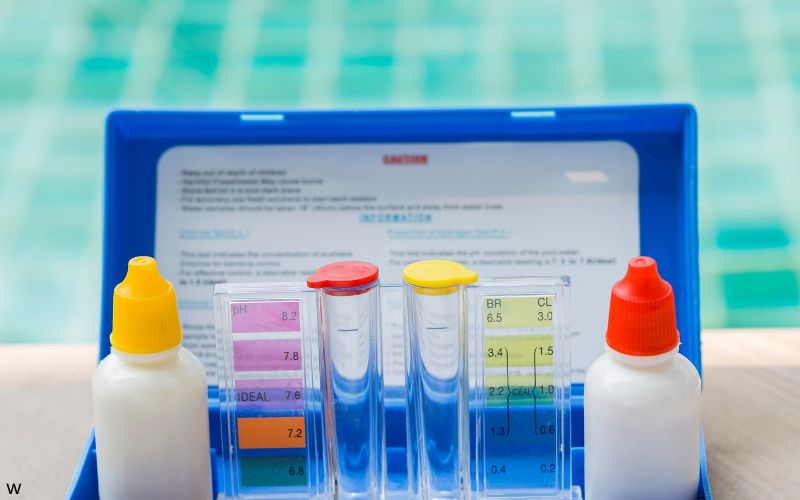
Newark residents can request free water quality testing by calling (973) 733-6303 or emailing waterandsewer@ci.newark.nj.us. Following the JAS Group contractor fraud case and subsequent audits, testing is strongly recommended for homes built before 1986. Verify your service line status at water.newarknj.gov — particularly if your address was among the ~1,500 properties flagged during the 2024 investigation. NJDEP also operates a free lead testing programme for schools and childcare facilities.
Filter for PFAS Protection
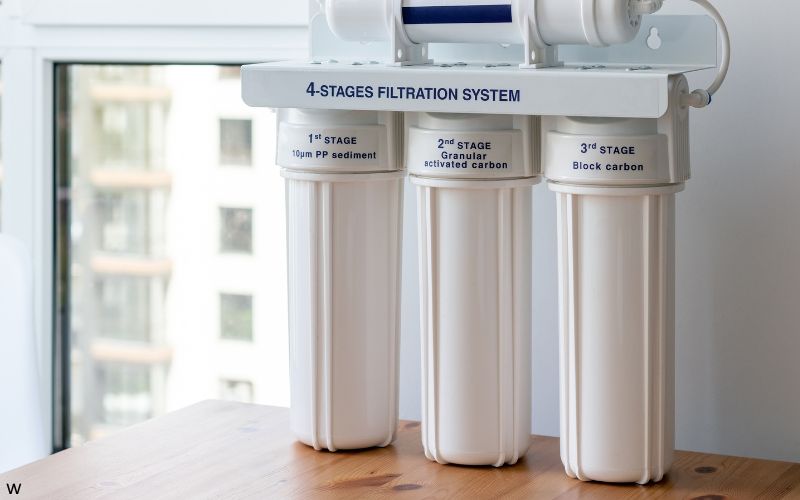
While Newark’s lead situation has improved dramatically, PFAS contamination remains a concern. An NSF Standard 58-certified reverse osmosis system provides the most comprehensive protection — removing PFAS, lead residuals, and disinfection byproducts in one unit. At minimum use NSF 53 (lead) and NSF 58 (PFAS) certified filters for drinking and cooking water. Browse verified options at our water filter solutions page.
Practise Conservation
Participate in Newark’s water conservation initiatives including free water-saving fixtures and leak detection assistance. Even in water-rich New Jersey, conservation reduces energy use, treatment costs, and utility bills. The newly upgraded Pequannock plant’s SCADA system helps identify distribution losses in real time — resident reporting of leaks and unusual pressure changes at (973) 733-3654 or the Newark Connect app accelerates repairs.
Flush After Extended Absence
If your home has been unoccupied for more than six hours, run cold water for 3–5 minutes before using for drinking or cooking. This is especially important in buildings with older internal plumbing — even where the service line has been replaced, lead solder and brass fixtures inside pre-1986 buildings can still contribute trace amounts. Always use cold water for consumption; hot water systems mobilise metals from plumbing more readily.
Report Water Issues
Report water main breaks, water quality concerns, or pressure problems immediately through the Newark Connect app or by calling (973) 733-3654. The new SCADA system at the Pequannock plant feeds into real-time distribution monitoring, making resident reports even more valuable for identifying system anomalies quickly. You can also track any boil water advisories affecting Newark via our live US boil water notices tracker.
Quality News About Your Water
Get the comprehensive water quality news coverage you need with our dedicated US Water News Service. From coast to coast, we deliver in-depth reporting and expert analysis on PFAS contamination, EPA regulatory changes, infrastructure developments, and emerging water safety issues affecting communities nationwide. While mainstream media only covers the biggest stories, we provide the detailed, ongoing coverage that helps you understand the full scope of America’s water challenges.
What’s actually in your tap water? Enter your ZIP code for a full breakdown of contaminants detected in your local supply
Drinking water from a well? Check our directory here for more information
Frequently Asked Questions
Is Newark’s tap water safe to drink?
Yes, Newark’s tap water meets all federal and New Jersey state drinking water standards as of 2026. Following the 2017–2019 lead crisis, the city implemented one of the most aggressive lead service line replacement programmes in US history, replacing over 23,000 lead service lines at no cost to residents.
Current lead testing shows 0 ppb, and the Pequannock Water Treatment Plant’s $20.5 million upgrade — completed September 2025 — has restored treatment capacity to 60 million gallons per day with new GAC filtration and advanced SCADA monitoring. However, PFAS “forever chemicals” remain detectable, and residents in older buildings should consider NSF-certified filtration as internal plumbing may still contain lead solder or brass fixtures. Free testing is available by calling (973) 733-6303. Current quality reports are at water.newarknj.gov. See our filter guide for options suited to Newark’s water.
How did Newark replace all its lead service lines so quickly?
Newark’s unprecedented lead service line replacement programme succeeded through several innovative approaches:
• Landmark legislation: New Jersey passed a law allowing Newark to replace lead service lines on private property without owner consent, removing a major barrier that stalls similar programmes elsewhere
• Innovative financing: The programme secured $120 million through the Essex County Improvement Authority at no cost to residents — no tax increases or rate hikes
• Community outreach: Extensive multilingual engagement built trust and facilitated access to properties across a diverse urban population
• Efficient implementation: Multiple contractors working simultaneously completed up to 120 replacements daily
• Data-driven approach: Comprehensive mapping and inventory of service lines guided efficient deployment of resources
This coordinated effort allowed Newark to complete what would typically be a 10-year programme in under three years, setting a national model cited by Vice President Harris as “a national role model.” The October 2024 discovery of contractor fraud by JAS Group Enterprise — leaving lead pipes in place at ~1,500 sites while billing over $10 million — highlighted the importance of ongoing verification. Subsequent audits found 30 remaining lead components, which were immediately replaced. Compare this experience to the ongoing challenges in Jersey City, where lead infrastructure work continues.
What is the difference between the Pequannock and Wanaque water systems?
Newark receives water from two distinct supply systems with different characteristics:
Pequannock Water Supply
• Source: Five interconnected reservoirs in a 35,000-acre protected watershed in Morris and Passaic Counties
• Treatment: Newark-owned Pequannock Water Treatment Plant — now upgraded to 60 MGD capacity with new GAC media filters and SCADA system (completed September 2025)
• Service Area: Western and central sections of Newark (~60% of the city)
• Characteristics: Typically softer water with lower mineral content; improved taste and clarity following GAC filter installation
Wanaque Water Supply
• Source: Wanaque Reservoir and Monksville Reservoir operated by the North Jersey District Water Supply Commission
• Treatment: Processed at regional facilities before delivery to Newark
• Service Area: Northern and eastern sections of Newark (~40% of the city)
• Characteristics: Generally harder water with higher mineral content
Both systems deliver water meeting all regulatory standards, though residents may notice slight differences in taste and hardness. HAA5 disinfection byproducts average 32 ppb in the Pequannock system and 38 ppb in the Wanaque system — both within EPA limits (60 ppb) but above EWG health guidelines. An NSF Standard 53 carbon filter effectively reduces DBPs in both supplies.
What water system improvements has Newark completed in 2025?
Newark has made significant infrastructure progress through 2025 and continues to invest in modernisation:
• Pequannock Plant Upgrade (Completed September 2025): $20.5M transformation including new GAC filter media, 50+ valve replacements, nine new pumps, new air scour system, and state-of-the-art SCADA real-time monitoring — capacity restored to 60 MGD
• NJ Water Bank Loans (March 2025): Newark awarded $22 million in additional low-interest loans for further Water Treatment Plant improvements
• Peddie Ditch CSO Facility (September 2025): New facility completed to mitigate flooding and keep waterways free of combined sewer overflow
• Lead Service Line Verification: Comprehensive audit programme continues following JAS Group contractor fraud discovery; enhanced oversight protocols for all infrastructure contractors now in place
• Smart Water Network: Advanced metering infrastructure, pressure sensors, and the new SCADA system provide real-time quality monitoring across the distribution system
• PFAS Litigation: Newark is party to class-action lawsuits against PFAS manufacturers; New Jersey’s 2025 settlements with 3M ($285M) and DuPont/Chemours/Corteva ($2B) will fund statewide PFAS remediation
These investments, funded through NJ Water Bank loans, county bonds, and federal grants, position Newark as a continued model for urban water system transformation. See our New Jersey state water quality page for broader context on PFAS across the state.
Contaminants of Concern
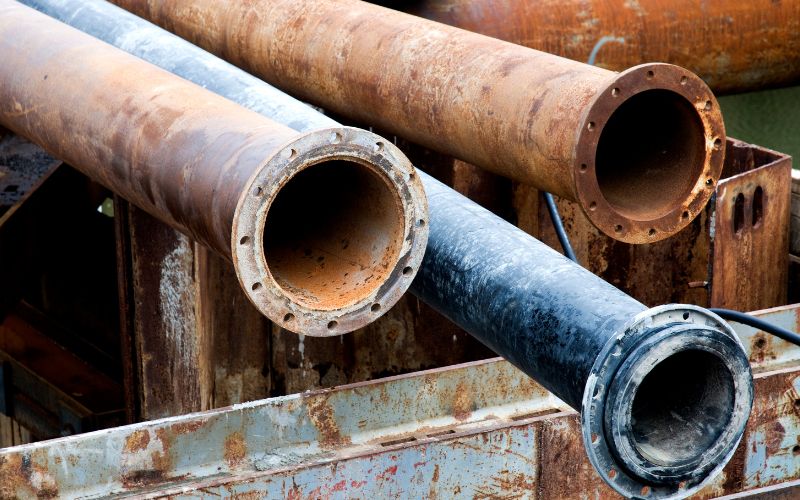
Lead
Source: Previously from lead service lines — now largely replaced. Residual risk from older interior plumbing components including fixtures, solder, and internal pipes in homes built before 1986. The JAS Group fraud case revealed ~1,500 properties where line replacement was falsely claimed; 30 remaining lead components were found and replaced during post-fraud audits.
Health Effects: No safe level of lead exposure exists. Effects include developmental delays, reduced IQ, and learning difficulties in children; kidney and cardiovascular effects in adults. Particularly concerning for pregnant women and children under six. See our comparison with Flint, Michigan for context on what lead crises look like at their worst.
Current Status (2026): 0 ppb in latest testing — well below EPA action level of 15 ppb (reducing to 10 ppb effective 2027 under the LCRI). New Jersey law requires all remaining lead service lines statewide to be replaced by 2031. Ongoing verification inspections and enhanced contractor oversight are in place following the 2024 fraud case.
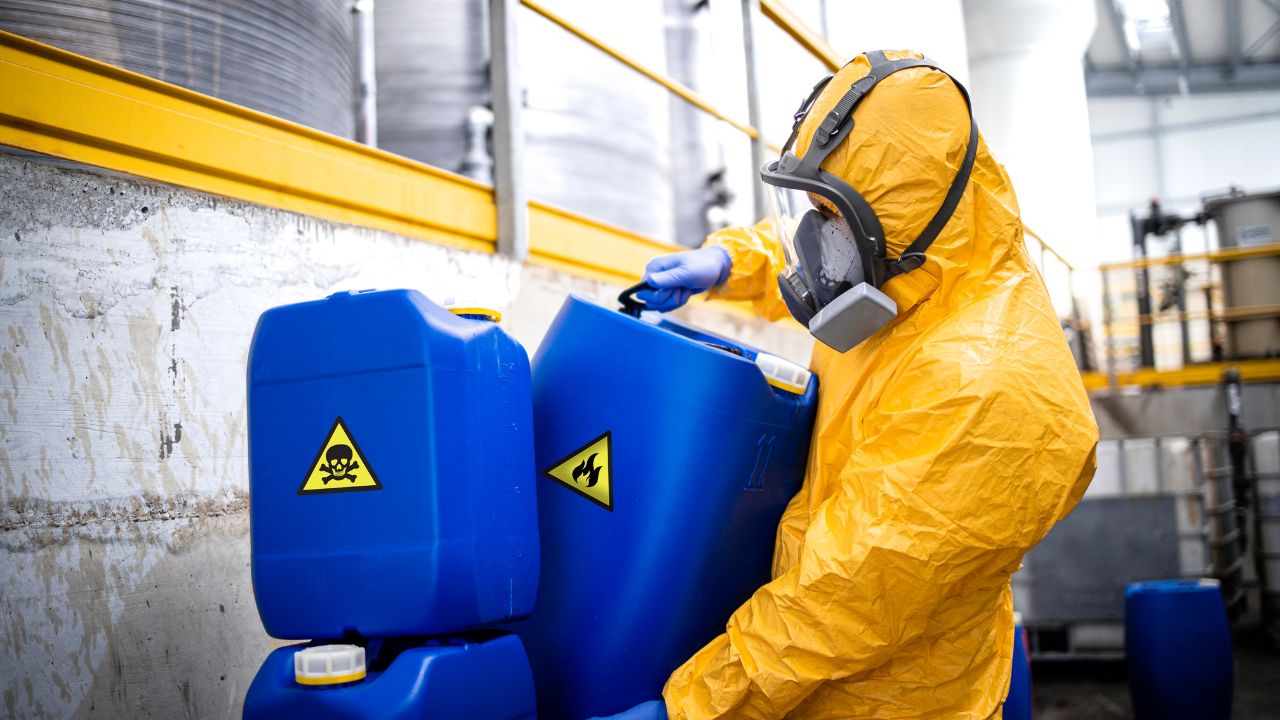
PFAS (Forever Chemicals) & HAA5
PFAS Source: Per- and polyfluoroalkyl substances from industrial activities, firefighting foams at military installations including Dover Air Force Base, and consumer products that have contaminated groundwater throughout the Newark Basin. New Jersey has stricter PFAS standards than the federal EPA.
Health Effects: PFAS linked to increased cancer risk, liver disease, thyroid dysfunction, high cholesterol, reduced fertility, weakened immune system, and developmental effects in infants. HAA5 disinfection byproducts linked to bladder cancer and reproductive effects with long-term exposure. Crucially, these are EWG health guideline concerns — see our guide to MCLs vs health guidelines.
Current Status (2026): PFAS detected in Newark water; New Jersey’s 2025 settlements with 3M ($285M) and DuPont/Chemours/Corteva ($2B) fund statewide PFAS remediation. HAA5 levels average 32 ppb (Pequannock) and 38 ppb (Wanaque) — within EPA limit of 60 ppb but above EWG guidelines. The Pequannock plant’s new GAC filter media installed in 2025 will assist with organic contaminant and taste/odour removal. A reverse osmosis system addresses both PFAS and DBPs — see our filter solutions page.
Please read – our information
The information presented on cleanairandwater.net is compiled from official water quality reports, trusted news sources, government websites, and public health resources. While we strive for accuracy and thoroughness in our presentations, we are not scientists, engineers, or qualified water quality professionals.
Our mission is to present water quality information in an accessible, real-world format that helps people understand what’s in their water and make informed decisions about their health and safety. We believe that complex environmental information should be available to everyone in a format that’s easy to understand.
We make every effort to ensure our content is current and accurate, but we cannot guarantee that all information is complete or error-free. This website should not replace official communications from your local water utility or health department. We always recommend consulting official sources for the most up-to-date information regarding your specific water system.
Clean Air and Water is not liable for any unintentional errors, omissions, or outdated information. The content on this site is provided for informational purposes only and should not be considered professional advice.