Plano Water Quality at a Glance
Is Plano Water Safe to Drink?
Generally Safe but Room for Improvement — Plano water meets all federal and state drinking water standards and is sourced from multiple lakes via the North Texas Municipal Water District (NTMWD). However, chromium-6 is detected at approximately 120 ppt — around 6× higher than levels associated with negligible cancer risk. Additional concerns include chloramine disinfection at an average of 3.05 ppm (causing taste and odour issues), disinfection byproducts (TTHMs + HAAs), and detectable arsenic and atrazine. NTMWD is investing an estimated $1.7 billion in infrastructure improvements during fiscal year 2026. The city serves around 289,000 residents with purchased surface water from Lavon Lake, Lake Texoma, Lake Tawakoni, Jim Chapman Lake, and the East Fork Water Reuse Project. Check our water filter recommendations or use our Texas water quality checker for more detail.
⚠️ Key Concerns for Plano Residents in 2026
- Chromium-6 (Hexavalent Chromium): Detected at approximately 120 parts per trillion — roughly 6× higher than the 20 ppt level associated with negligible cancer risk, though below the current EPA regulatory limit
- Chloramine Disinfection: Used at an average of 3.05 ppm; causes persistent taste and odour issues that, unlike free chlorine, won’t dissipate overnight. Annual switchover to free chlorine ran March 2–30, 2026
- Disinfection Byproducts (DBPs): TTHMs and HAAs detected at up to 62.1 ppb combined; long-term exposure is linked to increased bladder cancer risk and potential organ damage
- Agricultural Contaminants: Atrazine herbicide detected from surface water sources; acts as an endocrine disruptor affecting reproductive health
- Heavy Metals: Arsenic detected at trace levels; 90th percentile lead level at 3 ppb exceeds the 1 ppb level recommended by the American Academy of Pediatrics, though it is below the EPA action level of 15 ppb
- PFAS Monitoring: NTMWD is actively monitoring per- and polyfluoroalkyl substances under EPA’s new PFAS rules (April 2024); compliance required by 2031, with monitoring deadlines from April 2027
Read the full report below for detailed analysis, city-specific data, and actionable recommendations for Plano residents. You can also track any live boil water notices for Plano on our tracker.
advertisment – report continues below
Your water passed the test.
Legal isn’t the same as safe.
Regulated contaminants like PFAS, chromium-6, and disinfection byproducts can sit inside the legal limit and still carry long-term health risks. Passing isn’t the same as clean.
✅ Removes PFAS, lead & chromium-6 — the contaminants most flagged even in passing city reports
✅ NSF/ANSI 42, 58 & 372 certified — independently tested, not just manufacturer claims
✅ Installs in 30 minutes, no plumber — fills a glass in 8 seconds, smart LED filter monitor
Renting or can’t drill? The Waterdrop K19 Countertop RO — plug in, fill the tank, done. No installation, no drilling, no plumber.
Advertisement — this page contains affiliate links. If you buy through these links, we may earn a commission at no extra cost to you.

Plano — Texas — Water Quality Report 2026: PFAS Testing, Infrastructure Concerns & Safety Across Your City
Plano Water provides comprehensive water services to approximately 289,000 residents across the city of Plano and surrounding areas. The City of Plano purchases treated surface water from the North Texas Municipal Water District (NTMWD), which serves over two million people throughout communities in North Texas. The system encompasses approximately 1,500 miles of water distribution lines, numerous pumping stations, and benefits from advanced treatment facilities that deliver tens of millions of gallons of drinking water daily to this thriving Dallas suburb. For a broader view of water quality across the Lone Star State, see our Texas water quality overview.
Plano sources its drinking water primarily from Lavon Lake, treated at the Wylie Water Treatment Plant — the largest facility of its kind in Texas. NTMWD also holds water rights in Lake Texoma on the Texas–Oklahoma border, the East Fork Water Reuse Project along the East Fork of the Trinity River, Jim Chapman Lake (Cooper Lake) on the South Sulphur River, and Lake Tawakoni on the Sabine River. In 2026, NTMWD is investing an estimated $1.7 billion in capital improvements to support reliable water service across its fast-growing service area, following around $1.2 billion in capital investment in 2025. Plano’s water consistently meets all federal and state quality standards, though the metropolitan area faces ongoing challenges with emerging contaminants including chromium-6 and disinfection byproducts, and infrastructure modernisation as the population continues to grow rapidly.

Plano Water Quality: Current Status (2025–2026)
Latest Testing Results
- Regulatory Compliance: Plano Water continues to meet or exceed all federal and state drinking water standards as monitored by the EPA and the Texas Commission on Environmental Quality (TCEQ). NTMWD has recorded zero MCL violations in its most recent reporting cycle.
- Testing Scope: NTMWD and the City of Plano conduct hundreds of water quality tests daily in a state-certified laboratory, in addition to thousands of annual compliance samples across the treatment and distribution system. Results are published in monthly and annual reports online at ntmwd.com.
- PFAS Monitoring: Under the EPA’s April 2024 PFAS regulations — which set enforceable MCLs of 4 ppt for PFOA and PFOS — Plano and NTMWD are actively monitoring per- and polyfluoroalkyl substances. Monitoring deadlines begin in April 2027, with full compliance required by 2031. See our national water quality news feed for the latest PFAS regulatory updates.
Water Sources
- Lavon Lake: Primary source located in Collin County, treated at the Wylie Water Treatment Plant — the largest water treatment facility in Texas.
- Multiple Secondary Sources: NTMWD also draws water from Lake Texoma, the East Fork Water Reuse Project, Jim Chapman Lake (Cooper Lake), and Lake Tawakoni, providing system redundancy and supply resilience.
- Regional Infrastructure: NTMWD operates six water treatment plants, hundreds of miles of water transmission pipelines, and multiple pump stations to serve its member cities including Plano, Allen, Frisco, and McKinney.
Advanced Treatment Technology
- Wylie Water Treatment Plant: The primary treatment facility uses a multi-barrier approach including coagulation, flocculation, sedimentation, filtration, and disinfection to protect public health. NTMWD holds TCEQ recognition as a Superior Public Water System.
- Disinfection Process: Plano’s water is disinfected with chloramine (chlorine + ammonia), providing long-lasting protection against bacteria throughout the distribution network. However, average chloramine levels of 3.05 ppm cause persistent taste and odour concerns that will not dissipate overnight the way free chlorine would.
- 2026 Annual Maintenance: NTMWD switched from chloramine to free chlorine disinfection from 2 to 30 March 2026 to clean the regional system and prevent biofilm formation. Residents served by Plano Water may have noticed a stronger chlorine smell during this period.
Infrastructure Investment 2026
- $1.7 Billion Capital Programme: NTMWD is investing an estimated $1.7 billion in fiscal year 2026 — its largest-ever capital improvement programme — focused on increasing use of existing water supplies, including the “Texoma Two-Step” initiative to maximise Lake Texoma capacity. This follows $1.2 billion in capital investment in 2025.
- Service Line Inventory: NTMWD has completed its service line inventory and confirmed through field investigations that no lead service lines, galvanised-requiring-replacement lines, or unknown-status lines are present in the regional system. The City of Plano has similarly inventoried its 81,000+ service lines, though 90th percentile lead levels in the distribution system remain at 3 ppb — above the 1 ppb level recommended by the American Academy of Pediatrics.
- Smart Water Management: Advanced real-time monitoring systems throughout the distribution network improve water quality management, reduce losses, and enhance system reliability across the Dallas–Fort Worth metro.
Customer Protection Initiatives
Plano Water provides extensive customer support through conservation programmes, educational resources, and transparent annual reporting. Key water quality concerns for 2026 include chromium-6 at approximately 120 ppt (around 6× the level associated with negligible cancer risk, though below the current EPA regulatory limit), disinfection byproducts reaching up to 62.1 ppb (TTHMs + HAAs), and the agricultural herbicide atrazine detected from surface water sources. PFAS compliance planning is underway, with NTMWD and member cities including Plano coordinating to achieve compliance with the EPA’s 2024 PFAS MCLs by the 2031 deadline. Wholesale water rates for member cities have increased to $4.14 per 1,000 gallons in 2026 (up 7.5% from 2025), reflecting the scale of ongoing capital investment. For nearby city comparisons, see our reports for Dallas, Fort Worth, and Arlington.
Recommendations for Plano Residents
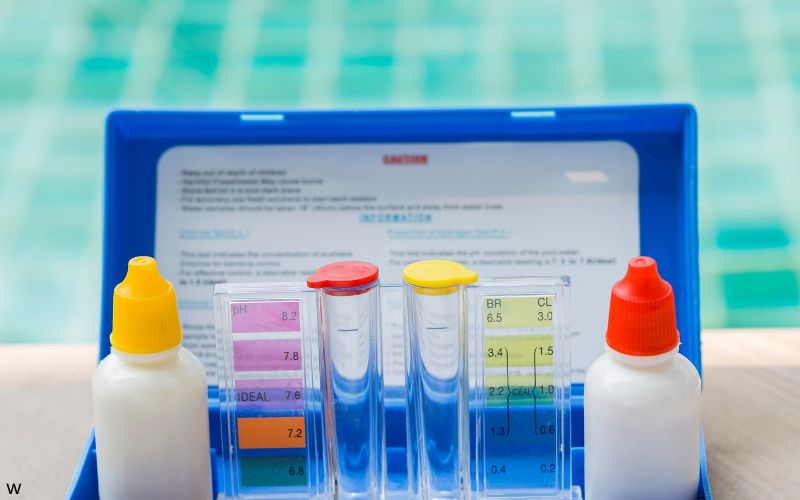
Monitor Your Water
Request water quality information from Plano Water by calling 972-769-4160 or visiting plano.gov/water-quality. NTMWD also publishes monthly and annual water quality reports at ntmwd.com. If you have concerns about your home’s internal plumbing — particularly in homes built before 1986 — consider having your water tested for lead. Use our Texas water quality checker for a quick local overview.

Follow Watering Guidelines
Adhere to Plano’s outdoor watering schedules: odd-numbered addresses may water on Wednesdays and Saturdays; even-numbered addresses on Thursdays and Sundays. Outdoor watering is only permitted before 10 AM and after 6 PM to minimise evaporation and support conservation across North Texas’s fast-growing water system.
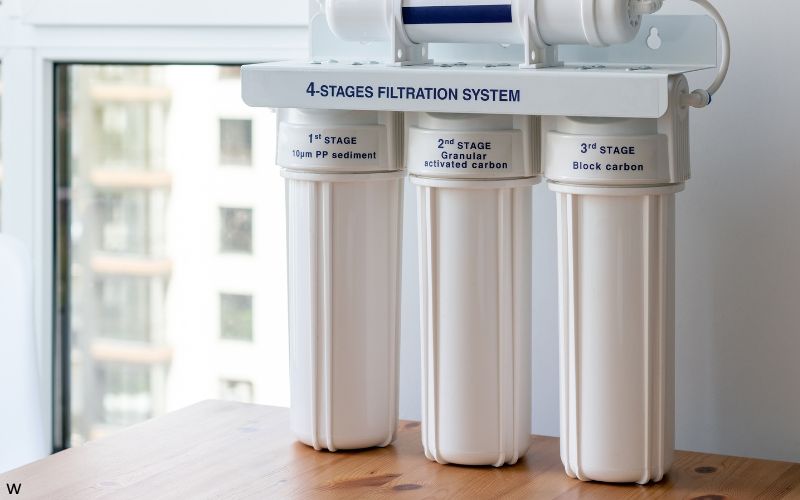
Consider Home Filtration
While Plano’s water meets all regulatory standards, chromium-6 at 120 ppt and persistent chloramine taste and odour make home filtration worth considering. NSF-certified filters (Standard 53 or 58) can reduce chromium-6, chloramine, disinfection byproducts, and trace contaminants. See our filter recommendations for options suited to Plano’s water profile, including reverse osmosis systems for maximum contaminant removal.
Practice Water Conservation
Take advantage of Plano’s Water Conservation Programs, including water-efficient landscaping techniques, indoor fixture upgrades, and smart irrigation technologies. NTMWD’s $1.7 billion 2026 capital programme is focused partly on maximising existing water supply efficiency across North Texas. Visit plano.gov/water-conservation for resources and rebate information.

Report Issues & Stay Alert
Contact Plano Water Customer Service at 972-769-4160 for water main breaks, pressure problems, or quality concerns. Emergency services are available 24/7. You can also monitor our live US boil water notice tracker and water alert news to stay informed of any incidents affecting Plano or surrounding North Texas communities.
Frequently Asked Questions
Is Plano’s tap water safe to drink in 2026?
Yes, Plano’s tap water meets all federal and state drinking water standards. The city’s water is sourced primarily from Lavon Lake and treated at NTMWD’s Wylie Water Treatment Plant — the largest facility of its kind in Texas — with NTMWD holding TCEQ recognition as a Superior Public Water System.
NTMWD conducts hundreds of water quality tests daily, and its 2024 Water Quality Report confirmed zero MCL violations across its system. Key concerns that remain below regulatory limits but warrant attention include chromium-6 at approximately 120 ppt (around 6× the level with negligible cancer risk) and disinfection byproducts up to 62.1 ppb. Use our water quality checker or see our Texas state overview for broader context.
Why does my Plano water sometimes taste or smell different?
Occasional taste and odour changes occur due to several factors:
1. Annual disinfection switchover: NTMWD temporarily converted from chloramine to free chlorine from 2–30 March 2026. During this period, a stronger chlorine smell is normal and does not indicate a safety issue
2. Chloramine levels: At an average of 3.05 ppm, chloramine provides persistent disinfection protection but also causes taste and odour concerns that won’t dissipate overnight the way free chlorine does
3. Seasonal water quality changes: Natural variation in Lavon Lake’s source water can affect taste, particularly during heavy rainfall or drought periods affecting surface water turbidity
4. Home plumbing: Infrequently used faucets or older internal plumbing can sometimes cause localised taste or odour concerns unrelated to the supply water
If taste or odour issues persist, contact Plano Water at 972-769-4160. You can also place a pitcher of water in the refrigerator overnight or add a slice of citrus to help with chlorine taste during the annual switchover period.
What about PFAS and lead in Plano’s water?
Plano Water maintains compliance with all current federal and state regulations:
• Lead service lines: NTMWD has completed its service line inventory and confirmed no lead service lines or galvanised-requiring-replacement lines in its regional system. The City of Plano has also inventoried its 81,000+ service lines, though the 90th percentile lead level in the city distribution system is 3 ppb — below EPA’s 15 ppb action level but above the 1 ppb level recommended by the American Academy of Pediatrics. Homes built before 1986 may have internal lead plumbing components
• PFAS compliance timeline: The EPA’s April 2024 PFAS regulations set MCLs of 4 ppt for PFOA and PFOS. Plano and NTMWD must begin monitoring by April 2027, with full compliance required by 2031. See our water alert news for the latest regulatory updates
• Chromium-6: Detected at approximately 120 ppt — around 6× higher than levels associated with negligible cancer risk — though below the current EPA regulatory limit. Reverse osmosis filters are effective at removing hexavalent chromium; see our filter guide for options
• Disinfection byproducts: TTHMs and HAAs detected at up to 62.1 ppb combined, within EPA limits but subject to ongoing monitoring across the NTMWD distribution system
What are the current water restrictions in Plano?
Plano operates under specific outdoor watering guidelines to promote conservation across the NTMWD service area:
Watering Schedule:
• Odd-numbered addresses may water on Wednesdays and Saturdays
• Even-numbered addresses may water on Thursdays and Sundays
• No outdoor watering between 10 AM and 6 PM to minimise evaporation
• No watering during rainfall or within 24 hours after measurable precipitation
Drought Response:
During severe drought, Plano may implement additional restrictions on outdoor watering, vehicle washing, pressure washing, and pool filling. NTMWD’s 2026 capital programme includes significant investment in expanding available water supply capacity to address long-term demand from rapid North Texas population growth.
Current restrictions are available at plano.gov/water or by calling 972-769-4160. Check our US boil water notice tracker for any emergency orders affecting Plano.
Contaminants of Concern
Disinfection Byproducts
Source: Formed when chloramine (Plano’s disinfectant, made by combining chlorine and ammonia) reacts with naturally occurring organic matter in source water. Levels may be more elevated during warmer months when organic matter concentrations in Lavon Lake are higher.
Health Effects: Long-term exposure to elevated disinfection byproduct levels is linked to an increased risk of bladder cancer and may affect liver, kidney, and central nervous system function.
Current Levels: NTMWD tests over 300 samples annually within city distribution systems for DBP compliance. Recent testing shows maximum combined TTHMs and HAAs at 62.1 ppb — within the EPA MCL of 80 ppb for TTHMs and 60 ppb for HAA5. NSF 58–certified reverse osmosis systems are effective at reducing DBP exposure; see our filtration guide.

PFAS Compounds
Source: Per- and polyfluoroalkyl substances originating from industrial processes, firefighting foams, and consumer products that can enter surface water sources such as Lavon Lake and Lake Texoma.
Health Effects: Research links PFAS exposure to potential impacts on immune function, thyroid health, cholesterol levels, and possible associations with certain cancers. Vulnerable groups include pregnant women, infants, and immunocompromised individuals.
Current Status: The EPA’s April 2024 PFAS regulations set enforceable MCLs of 4 ppt for PFOA and PFOS. Public water systems including Plano must begin monitoring by April 2027 and achieve full compliance by 2031. NTMWD and Plano are coordinating to assess current PFAS levels and develop compliance plans. Follow our water alert news for updates as UCMR 5 data continues to be released. For comparison, see how other Texas cities are approaching PFAS compliance in our Texas water quality report.
Quality News About Your Water
Get the comprehensive water quality news coverage you need with our dedicated US Water News Service. From coast to coast, we deliver in-depth reporting and expert analysis on PFAS contamination, EPA regulatory changes, infrastructure developments, and emerging water safety issues affecting communities nationwide. While mainstream media only covers the biggest stories, we provide the detailed, ongoing coverage that helps you understand the full scope of America’s water challenges.
What’s actually in your tap water? Enter your ZIP code for a full breakdown of contaminants detected in your local supply
Drinking water from a well? Check our directory here for more information

Water Conservation Tips
Indoor Water Conservation
Simple steps to reduce indoor water usage:
• Fix leaky faucets and toilets promptly — a dripping faucet can waste up to 3,000 gallons per year
• Install water-efficient fixtures — look for WaterSense-labelled products
• Run dishwashers and washing machines only when full
• Take shorter showers — aim for 5 minutes or less
• Turn off water while brushing teeth or shaving
• Consider upgrading to high-efficiency appliances when replacing older models
Outdoor Water Conservation
Efficient outdoor water use practices:
• Follow Plano’s watering schedule and any active restrictions
• Water deeply but infrequently to encourage deeper root growth
• Use drip irrigation for plants and gardens
• Install rain sensors on irrigation systems
• Consider native and drought-tolerant landscaping (xeriscaping) — NTMWD’s 2026 capital programme prioritises maximising existing water supply efficiency across North Texas, making conservation at every level more important than ever
• Use mulch around plants to retain moisture and reduce evaporation
• Use a broom instead of a hose to clean driveways and sidewalks
Please read – our information
The information presented on cleanairandwater.net is compiled from official water quality reports, trusted news sources, government websites, and public health resources. While we strive for accuracy and thoroughness in our presentations, we are not scientists, engineers, or qualified water quality professionals.
Our mission is to present water quality information in an accessible, real-world format that helps people understand what’s in their water and make informed decisions about their health and safety. We believe that complex environmental information should be available to everyone in a format that’s easy to understand.
We make every effort to ensure our content is current and accurate, but we cannot guarantee that all information is complete or error-free. This website should not replace official communications from your local water utility or health department. We always recommend consulting official sources for the most up-to-date information regarding your specific water system.
Clean Air and Water is not liable for any unintentional errors, omissions, or outdated information. The content on this site is provided for informational purposes only and should not be considered professional advice.