← Private Well Water Directory / Georgia
Georgia Private Well Water Quality 2026
Approximately 1.7 million Georgians rely on private wells for their drinking water — with zero state or federal regulation protecting them. From PFAS-contaminated carpet manufacturing country in the northwest to naturally elevated arsenic in the south, Georgia well owners face a range of serious risks that most have never tested for.
Georgia’s PFAS Problem: Carpet Country and Beyond
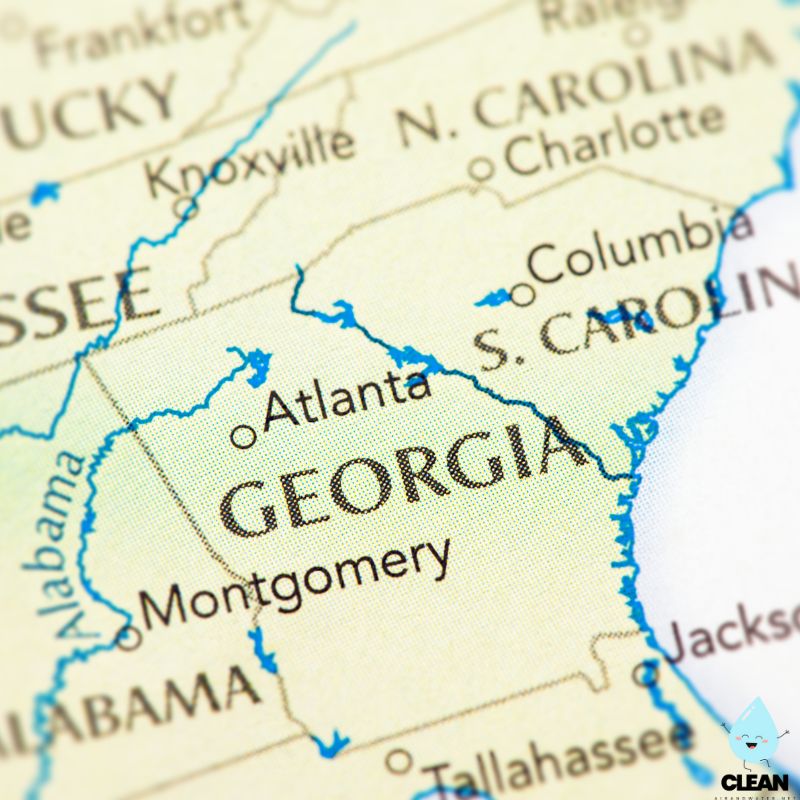
Northwest Georgia — centred on Gordon, Floyd, and Whitfield counties around the cities of Calhoun, Rome, and Dalton — is the heart of the US carpet manufacturing industry. For decades, carpet and textile manufacturers applied PFAS chemicals for stain resistance and discharged them into local waterways and groundwater. The result is one of the most significant PFAS contamination zones in the southeastern United States.
The scale of the problem is now documented at the human level. Preliminary findings released in June 2025, based on blood samples from 177 Rome and Calhoun residents, found that 76% had PFAS levels high enough to warrant prioritised medical screening, and 23% had levels warranting additional medical evaluation and lab testing — per clinical guidelines from the National Academies of Sciences, Engineering, and Medicine. The study was led by researchers at Emory University’s Rollins School of Public Health and is undergoing peer review. One participant was found to have a PFAS blood level of 141 nanograms per millilitre — far exceeding the recommended threshold of 2 ng/mL. Lawsuits filed by area residents allege that carpet manufacturers contaminated local drinking water supplies and endangered community health.
Georgia’s Environmental Protection Division (EPD) has been running PFAS monitoring since 2021, initially focused on the Coosa and Tennessee basins — the highest-risk zones. That monitoring found multiple public water systems with PFAS detections. A USA Today and SimpleLab analysis of EPA data found Georgia’s Augusta area recording PFAS at 1,175% above EPA minimum reporting levels, Calhoun at around 625%, and Morrow at 112.5% — all in public systems. Private well data across the same groundwater zones remains largely unknown, because the state has no programme to systematically test private wells.
Environmental activist Erin Brockovich has held multiple town halls across Northwest Georgia — in Calhoun, Chatsworth, Dalton, and Rome — drawing crowds of over 600 people at the March 2026 Rome event alone. She has described the PFAS contamination in this region as among the worst she has encountered in 30 years of environmental advocacy. Military bases are a second major PFAS source statewide: a 2019 Harvard School of Public Health and Atlanta Journal-Constitution investigation documented extensive groundwater contamination surrounding Georgia’s military installations, and private wells near bases remain at direct risk.
Arsenic in Georgia Well Water
South Georgia presents a very different but equally serious risk: naturally occurring arsenic. University of Georgia testing has found arsenic above 10 ppb — the EPA’s legal limit — in private wells across Camden, Irwin, Tift, Bibb, and Lowndes counties. The risk is concentrated in the Coastal Plain and Gulf Trough geology of South Georgia, where arsenic occurs naturally in the underlying aquifers.
Arsenic is colourless and tasteless — it cannot be detected without laboratory analysis. Long-term exposure at levels above the EPA limit is linked to cancers of the kidney, lung, bladder, and skin. If your property is in South Georgia, particularly in any of the counties named above, arsenic testing should be treated as a priority before using the well for drinking or cooking.
North Georgia’s Piedmont and Blue Ridge geology brings a different naturally occurring risk: uranium. UGA data indicates groundwater in these areas can exceed 30 ppb — above the EPA limit of 30 ppb. Point-of-use reverse osmosis removes 90–99% of uranium effectively.
Quick Important Advertisement – Boil Water Alerts continue below
Don’t Wait for the Next Emergency to Act
Boil water alerts are a warning sign. Whether caused by pipe breaks, contamination, or natural disasters, they highlight how vulnerable our water systems can be.
The safest long-term solution? A reliable home water filtration system designed to remove bacteria, parasites, and harmful chemicals — so you’re protected even when advisories are issued.
Stay Ready with Trusted Filtration:
✅ Removes pathogens, chlorine, PFAS, and heavy metals
✅ Safer than boiling alone — no need to wait for alerts
✅ Easy options for homes, renters, and families
Prefer no installation? Check out the A2 Countertop System
Note: This advert may contain affiliate links. If you choose to buy, we may receive a small commission — thank you for supporting our work!
Nitrate, Bacteria, and Agricultural Risks
Georgia has a large agricultural sector, and nitrate contamination from fertiliser and pesticide runoff is a documented risk for private wells — particularly shallow bored wells near farmland. Nitrate above 10 mg/L is the federal limit and poses a serious health risk for infants under six months. Rural agricultural communities in South Georgia are among the highest-risk areas.
Bacterial contamination is also common. A 2010 study of 1,075 private wells in Georgia found 31% had coliform bacteria contamination — a stark figure that reflects the combination of older shallow bored wells, proximity to septic systems, and agricultural runoff. Bored wells — shallow wells drawing from above the bedrock — are far more vulnerable to surface contamination than deeper drilled wells. If your property has a bored well, annual bacterial testing is essential.
Regulatory Situation for Georgia Well Owners
Private wells in Georgia are not regulated under the Safe Drinking Water Act or its state equivalent. Georgia has no state PFAS maximum contaminant levels of its own, and no systematic programme to test or monitor private wells. Testing and treatment of your well is entirely your responsibility.
The federal EPA PFAS MCLs — 4 ppt for PFOA and PFOS — apply only to public water systems, not private wells. Georgia’s public water systems have until 2027 to complete initial PFAS monitoring and until 2029 to meet the limits if detections are found. For well owners, there is no equivalent deadline or requirement. Georgia is one of more than 20 states with no programme to test private wells for PFAS outside of known contamination zones. See our PFAS Protection Map for a full state-by-state breakdown of where protections exist and where they don’t.
Check our Georgia municipal water quality page for city-by-city tap water data, including Augusta, or use our live boil water notice tracker for active advisories across the state.
Known High-Risk Areas in Georgia
If you live near any of the following locations, well water testing is urgent — not precautionary.
Calhoun & Gordon County
A centre of carpet manufacturing PFAS contamination. June 2025 Emory University preliminary findings found 76% of 177 blood-tested residents warranted prioritised medical screening — with 23% at levels requiring additional evaluation. PFAS levels in the Calhoun area water system have been recorded at around 625% above EPA reporting thresholds.
Rome & Floyd County
Multiple carpet and textile industry PFAS sources have contaminated the Coosa basin. EPD monitoring found PFAS detections at the Bruce Hamler Water Plant (56 ppt PFOA/PFOS combined) in early monitoring rounds. Erin Brockovich drew a crowd of over 600 to a town hall here in March 2026. Surrounding private wells draw from the same contaminated groundwater.
Dalton & Whitfield County
Known as the Carpet Capital of the World, Dalton has decades of PFAS discharge from the flooring industry. EPD monitoring found detections at the Mill Creek Water Plant (34 ppt). Erin Brockovich has described the PFAS levels here as among the worst she has seen in 30 years of environmental advocacy.
Augusta Area
A USA Today and SimpleLab analysis of EPA data found the Augusta area recording PFAS at 1,175% above the EPA’s minimum reporting level — the highest in Georgia in that dataset. Both public water systems and surrounding private wells in the region are at risk from the same groundwater contamination.
South Georgia — Arsenic Counties
Camden, Irwin, Tift, Bibb, and Lowndes counties have UGA-documented arsenic levels above 10 ppb (the EPA legal limit) in private wells. The Coastal Plain and Gulf Trough geology is responsible. Arsenic testing is essential before using any well in South Georgia for drinking or cooking.
Military Base Communities Statewide
A 2019 Harvard School of Public Health and Atlanta Journal-Constitution investigation found extensive groundwater contamination surrounding Georgia military installations from decades of AFFF firefighting foam use. Any private well within several miles of a base should receive a full PFAS panel urgently.
How to Test Your Georgia Well Water — and What to Do Next
Georgia DPH recommends annual testing for bacteria and a full chemical panel every three years for all private well owners. If your property is in northwest Georgia near the carpet manufacturing corridor, near any military installation, or in the southern arsenic counties, testing should be treated as urgent — not as a routine annual exercise.
The UGA Soil, Plant and Water Analysis Lab is the main statewide resource for private well testing in Georgia. Your local UGA Extension office — present in all 159 Georgia counties — can collect samples and advise on the right test panel for your location. Georgia EPD also maintains a certified lab list at epd.georgia.gov, where you can also access the PFAS StoryMap to see monitoring results across the state.
For filter options, our well water filter guide covers reverse osmosis systems for PFAS, arsenic, and uranium, UV disinfection for bacteria, and whole-house well systems for comprehensive treatment. You can also browse our full water filter solutions page or check your ZIP code for local water quality context.
For other Southeast well water risks, see our pages on North Carolina wells, Florida wells, and Virginia wells. Return to the private well water directory to find your state.
Quality News About Your Water
Get the comprehensive water quality news coverage you need with our dedicated US Water News Service. From coast to coast, we deliver in-depth reporting and expert analysis on PFAS contamination, EPA regulatory changes, infrastructure developments, and emerging water safety issues affecting communities nationwide. While mainstream media only covers the biggest stories, we provide the detailed, ongoing coverage that helps you understand the full scope of America’s water challenges. Whether you’re a concerned citizen, water professional, or community leader, our daily updates and analytical insights keep you informed about the issues that matter most to public health and environmental safety.
What’s actually in your tap water? Enter your ZIP code for a full breakdown of contaminants detected in your local supply
Please read – our information
The information presented on cleanairandwater.net is compiled from official water quality reports, trusted news sources, government websites, and public health resources. While we strive for accuracy and thoroughness in our presentations, we are not scientists, engineers, or qualified water quality professionals.
Our mission is to present water quality information in an accessible, real-world format that helps people understand what’s in their water and make informed decisions about their health and safety. We believe that complex environmental information should be available to everyone in a format that’s easy to understand.
We make every effort to ensure our content is current and accurate, but we cannot guarantee that all information is complete or error-free. This website should not replace official communications from your local water utility or health department. We always recommend consulting official sources for the most up-to-date information regarding your specific water system.
Clean Air and Water is not liable for any unintentional errors, omissions, or outdated information. The content on this site is provided for informational purposes only and should not be considered professional advice.