Virginia Water Quality at a Glance
Is Virginia Water Safe to Drink?
Generally Safe, But With Growing Concerns — Virginia’s water typically meets federal and state safety standards, but 59 water systems now exceed EPA PFAS maximum contaminant levels, affecting 2.5 million residents. A fish consumption advisory was issued for the Chickahominy watershed in May 2025 due to elevated PFOS in fish tissue. Environmental groups have filed lawsuits over PFAS contamination at Fort Belvoir (threatening the Potomac) and over the Chickahominy River’s impairment status. EPA’s compliance deadline has been extended to 2031 for PFOA/PFOS. Additional concerns include disinfection byproducts, private wells outside PFAS regulation, and ongoing sewage sludge biosolids contamination.
⚠️ Key Concerns for Virginia Residents in 2026
- PFAS Exceedances Rising: 59 Virginia water systems now exceed EPA PFAS MCLs — up from 26 systems in earlier reporting phases — as VDH Phase 3 sampling (Sept 2024–April 2025) expanded testing across smaller groundwater systems
- Chickahominy Fish Advisory (May 2025): VDH issued a fish tissue consumption advisory for the Chickahominy watershed due to elevated PFOS levels; Wild Virginia has sued the EPA for failing to list the river as impaired
- Fort Belvoir / Potomac Threat: Lawsuits filed December 2025 over DEQ’s failure to require PFAS monitoring at Fort Belvoir, where contaminated stormwater discharges into Potomac River tributaries
- Compliance Deadline Extended to 2031: EPA announced (May 2025) that PFOA/PFOS MCLs are maintained at 4 ppt, but the compliance deadline has been extended from 2029 to 2031; MCLs for other PFAS (PFHxS, PFNA, GenX) are under reconsideration
- Private Wells Excluded: Over 1 million Virginians on private wells have no PFAS monitoring requirement — the state does not require testing, disclosure, or limits for private well owners
- Sewage Sludge Biosolids: PFAS-contaminated sludge is being applied to Virginia farmland without PFAS testing requirements, with legislation pending in the 2026 General Assembly session to address this
Read the full report below for detailed analysis, city-specific data, and actionable recommendations for Virginia residents.
Advertisement — Report continues below
Think Your Tap Water Is Safe? Think Again.
Even when it looks clear, tap water can carry hidden contaminants—like chlorine, heavy metals, and microplastics—that don’t always affect the taste but still reach your glass.
A professionally engineered water filtration system can help protect your household, providing cleaner, safer, and better-tasting water every day.
Smart Solutions for Safer Drinking Water:
✅ Reduces common contaminants like chlorine and microplastics
✅ NSF/ANSI certified for trusted performance
✅ Smart, space-saving tankless design
✅ Long-term investment in cleaner water
Looking for a simple, no-install option? (Check out the A2 Countertop System)
Note: This advert contains affiliate links. If you buy through these links, we may earn a commission at no extra cost to you.

Virginia – The Old Dominion – Water Quality Report 2026: PFAS Testing, Infrastructure Concerns & Safety Across Your State
Virginia’s water infrastructure serves approximately 8.6 million residents across diverse geographical regions, from the Blue Ridge Mountains in the west to the Chesapeake Bay in the east. The Commonwealth operates through a complex network of over 2,800 public water systems, ranging from large municipal utilities like Norfolk’s systems serving hundreds of thousands of customers, to smaller community systems providing essential services to rural areas. Virginia’s water sources include the James, Rappahannock, York, and Potomac river systems, along with the Potomac Aquifer and numerous reservoirs including the critically important Occoquan Reservoir.
Virginia’s water quality picture has darkened significantly heading into 2026. VDH’s Phase 3 PFAS sampling programme (completed April 2025) has identified 59 water systems now exceeding EPA PFAS maximum contaminant levels — more than double earlier estimates. A fish consumption advisory was issued for the Chickahominy watershed in May 2025, and environmental groups have filed two major lawsuits: one against the EPA for approving Virginia’s water quality report without listing PFAS-impaired rivers, and one against DEQ for failing to require PFAS controls at Fort Belvoir, whose contaminated runoff threatens Potomac River tributaries. Virginia’s 2026 General Assembly session is considering further PFAS legislation, including restrictions on PFAS in sewage sludge applied to farmland. Check our live U.S. boil water notices tracker for any current Virginia advisories.
Virginia Water Quality: Current Status (2025–2026)
Statewide Compliance and Testing
- PFAS Exceedances Now at 59 Systems: VDH’s Phase 3 sampling programme (September 2024 through April 2025) significantly expanded testing across smaller groundwater systems. As a result, 59 Virginia water systems are now confirmed to exceed EPA PFAS MCLs — a major increase from the 26 systems reported in 2024. These systems collectively serve approximately 2.5 million Virginians. Check your local results using our water quality checker.
- Compliance Deadline Extended to 2031: Following Trump administration changes to EPA PFAS policy (May 2025), PFOA and PFOS MCLs of 4 ppt are maintained, but the compliance deadline has been pushed from 2029 to 2031. MCLs for PFHxS, PFNA, and GenX/HFPO-DA are under reconsideration, with EPA expected to finalise a revised rule by spring 2026.
- Infrastructure Investment: Virginia has received substantial Bipartisan Infrastructure Law funding for water infrastructure, including dedicated emerging contaminant grant funding. Virginia Tech researchers are actively developing PFAS-free firefighting foam alternatives to reduce future contamination of the Occoquan Reservoir and other water sources.
Major Water Sources and Challenges
- Chickahominy / James River System: VDH issued a fish consumption advisory for the Chickahominy watershed in May 2025 due to elevated PFOS levels in multiple fish species. Wild Virginia filed a federal lawsuit in December 2025 challenging the EPA’s approval of Virginia’s water quality report, which failed to classify PFAS-contaminated waterways including the Chickahominy as “impaired.” DEQ investigations at Richmond International Airport continue, with a Remedial Investigation and Feasibility Study scheduled for 2025–2026.
- Potomac River / Fort Belvoir: Wild Virginia and Potomac Riverkeeper Network filed suit in December 2025 after DEQ issued Fort Belvoir a water pollution permit without PFAS monitoring requirements, despite the Army’s own studies confirming high PFAS levels in groundwater and stormwater discharging into Potomac River tributaries near critical Atlantic sturgeon habitat.
- Occoquan Reservoir: A specific Virginia law requires facilities to track and report PFAS in discharges affecting the Occoquan Reservoir, which supplies Northern Virginia drinking water. Any compliance schedule for these systems extends beyond 2029 under the new EPA timeline.
- Potomac Aquifer / SWIFT: Hampton Roads’ SWIFT (Sustainable Water Initiative for Tomorrow) aquifer recharge programme continues to address groundwater depletion in eastern Virginia through treated water injection, an innovative approach to long-term water supply sustainability.
Emerging Contaminant Response (2025–2026)
- DEQ Source Notification Programme: DEQ notified 185 facilities of self-reporting obligations in November 2024, ahead of the December 2024 statutory deadline. The first industrial PFAS effluent samples were required by October 2025. By July 2027, any facility with PFAS discharges exceeding drinking water MCLs must have permit modifications requiring controls.
- Sewage Sludge Biosolids Problem: PFAS-contaminated sewage sludge is routinely applied to Virginia farmland without testing requirements. Virginia Conservation Network and environmental groups are pushing 2026 General Assembly legislation (including SB 386) to prohibit land application of PFAS-containing sludge and mandate testing. Virginia does not currently require monitoring, disclosure, or limits on PFAS in biosolids.
- Richmond International Airport: New 2026 legislation directs the Capital Region Airport Commission to develop a plan for discontinuing PFAS-containing firefighting materials at Richmond International Airport by January 1, 2028, with a report due to the Virginia Aviation Board by November 2026.
Rural and Disadvantaged Communities
- Private Well Exclusion: Over 1 million Virginians on private wells have no PFAS monitoring requirements. Virginia does not require testing, disclosure, or limits on PFAS for private well owners — meaning these residents are entirely excluded from state PFAS assessments despite being potentially as exposed as public water customers near contamination sources.
- Infrastructure Disparities: Rural water systems and smaller communities face disproportionate challenges with aging infrastructure and higher per-capita compliance costs. Phase 3 sampling specifically targeted smaller groundwater systems serving under 500 people — and found PFAS exceedances in many, highlighting the scale of the rural contamination problem.
- Equity Concerns: Research shows low-income communities and communities of colour are more likely to live near PFAS-contaminated sites. Virginia’s public water system costs for PFAS compliance are estimated in the hundreds of millions of dollars; private well households face additional individual filtration costs. Follow our water alert news for developments.
Looking Forward: 2026 and Beyond
Virginia’s water quality landscape is at a critical juncture in 2026. The expansion of PFAS exceedances to 59 systems, the Chickahominy fish advisory, the Fort Belvoir lawsuit, and pending biosolids legislation all signal that PFAS contamination is far broader and more complex than earlier assessments suggested. The extended compliance deadline to 2031 gives utilities more time, but advocacy groups argue it leaves Virginians exposed longer. The 2026 General Assembly session is active on PFAS legislation across multiple fronts. Virginia’s public water systems will ultimately need to spend hundreds of millions of dollars on treatment upgrades. For the over one million private well users, individual action remains the only protection. See our water filter recommendations for certified PFAS-removal options.
Recommendations for Virginia Residents
Know Your Water Source
Contact your water utility to request their Consumer Confidence Report and ask specifically about PFAS testing results — Phase 3 sampling has revealed exceedances in many systems not previously identified. Visit VDH’s interactive PFAS sampling map to check your system. If you’re near a military base, airport, or industrial area, assume elevated risk. Use our water quality checker to look up your local system’s data.
Support PFAS Legislation
Virginia’s 2026 General Assembly session is considering bills to restrict PFAS in sewage sludge biosolids, expand industrial self-reporting, and require monitoring at publicly owned treatment works. Stay engaged with your legislators on these issues. The most cost-effective way to tackle Virginia’s PFAS problem is stopping it at industrial source points before it reaches drinking water — contact your representatives to support legislation that requires disclosure and monitoring.
Consider PFAS-Certified Filtration
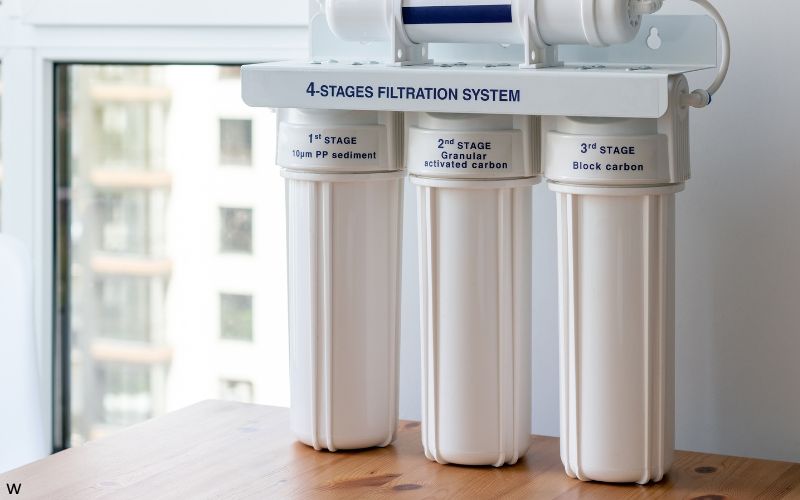
With 59 systems now exceeding PFAS MCLs and private wells entirely excluded from regulation, many Virginia households should consider additional treatment. NSF-certified reverse osmosis systems provide the most comprehensive PFAS removal and are strongly recommended for households near military bases, airports, or industrial areas. See our full filter guide for certified options matched to Virginia’s contaminant profile.

Report Water Quality Concerns
Contact your local water utility immediately for taste, odour, or colour concerns. Report suspected contamination to VDH’s Office of Drinking Water at (804) 864-7500 or to DEQ for source investigation. If you’re a private well owner near Fort Belvoir, any military base, or industrial area, request specific PFAS testing — your well is not covered by state monitoring programmes. Monitor active advisories on our boil water notices tracker.
Protect Virginia’s Waterways
Support restoration of the Chesapeake Bay watershed by reducing nutrient and PFAS inputs — avoid PFAS-containing products where possible, support stormwater management improvements, and participate in advocacy for stronger DEQ permitting requirements. The Chickahominy River fish advisory and the Fort Belvoir Potomac threat both underscore how PFAS contamination spreads well beyond original source sites. Follow our water alert news for the latest Virginia developments.
Virginia Cities We Cover
Chesapeake Water Quality
Comprehensive analysis of Chesapeake’s water infrastructure, including water sources, treatment processes, infrastructure modernisation efforts, and response to emerging contaminants — particularly PFAS monitoring near Naval Air Station Oceana and other military installations in the Hampton Roads area.
Richmond Water Quality
Detailed assessment of Richmond’s water systems, covering water quality testing, the James River source, infrastructure challenges, PFAS investigation at Richmond International Airport (DoD Remedial Investigation scheduled 2025–2026), and compliance with emerging contaminant regulations in Virginia’s capital city.
Frequently Asked Questions
Is Virginia’s tap water safe to drink?
Most of Virginia’s public water systems meet federal drinking water standards. However, 59 systems are now confirmed to exceed EPA PFAS maximum contaminant levels, affecting approximately 2.5 million residents.
VDH’s Phase 3 sampling (completed April 2025) found PFAS exceedances in many smaller groundwater systems not previously identified, significantly expanding the scope of Virginia’s PFAS challenge. EPA’s compliance deadline for PFOA/PFOS has been extended to 2031. The state is implementing source identification and treatment programmes, but over 1 million private well users have no PFAS protections under current Virginia law. Residents should review their utility’s annual Consumer Confidence Report and use our water quality checker. For households near military bases or former industrial sites, consider certified PFAS filtration now rather than waiting for 2031 compliance.
What are PFAS chemicals and why are they a concern in Virginia?
PFAS (per- and polyfluoroalkyl substances) are synthetic “forever chemicals” that persist in the environment and accumulate in the human body, causing serious health concerns including cancer, liver damage, immune suppression, and developmental effects.
Virginia’s PFAS problem is primarily driven by military installations (Fort Belvoir, Naval Air Station Oceana, Langley AFB), airports (Richmond International), and industrial discharges where AFFF firefighting foam was used for decades. Phase 3 testing confirmed 59 systems now exceed EPA limits. A fish consumption advisory was issued for the Chickahominy watershed in May 2025 due to PFOS in fish tissue. EPA’s April 2024 rule set PFOA/PFOS MCLs at 4 ppt — a standard that must be met by 2031 under updated EPA guidance. Virginia has no requirement to test private wells for PFAS. See our filter guide for certified treatment options.
How can I find out about my local water quality?
Virginia residents can access comprehensive water quality information through several resources:
• Annual Water Quality Reports: Contact your water utility directly for their Consumer Confidence Report, which details all testing results and any violations or concerns
• VDH PFAS Dashboard: Visit VDH’s interactive PFAS sampling map online for results from all three sampling phases (2021–2025) — Phase 3 results covering small groundwater systems are the most recent
• DEQ Statewide PFAS Dashboard: Access surface water and source identification data through DEQ’s online dashboard
• Our Tools: Use our water quality checker and monitor our live boil water tracker for Virginia advisories. Sign up for our water alert news for ongoing updates.
Why does Virginia have water infrastructure challenges?
Virginia’s water infrastructure faces several interconnected challenges heading into 2026:
Military Legacy Contamination: Decades of AFFF firefighting foam use at Virginia’s numerous military bases and airports created widespread PFAS contamination that continues to spread into groundwater and surface water — Fort Belvoir’s threat to the Potomac is the most prominent current example
Biosolids on Farmland: PFAS-contaminated sewage sludge is applied to Virginia farmland without PFAS testing requirements, creating ongoing contamination of soil, groundwater, and crops — the 2026 General Assembly is considering legislation to address this
Rapid Growth: Northern Virginia and Tidewater regions continue to experience significant population growth, straining existing infrastructure and water supply systems
Climate Impacts: Sea level rise in Hampton Roads, increased flooding, and extreme weather events affect treatment operations and distribution reliability, particularly in low-lying coastal areas
Quality News About Your Water
Get the comprehensive water quality news coverage you need with our dedicated US Water News Service. From coast to coast, we deliver in-depth reporting and expert analysis on PFAS contamination, EPA regulatory changes, infrastructure developments, and emerging water safety issues affecting communities nationwide. While mainstream media only covers the biggest stories, we provide the detailed, ongoing coverage that helps you understand the full scope of America’s water challenges. Whether you’re a concerned citizen, water professional, or community leader, our daily updates and analytical insights keep you informed about the issues that matter most to public health and environmental safety.
Contaminants of Concern
PFAS “Forever Chemicals”
Source: Military installations (Fort Belvoir, Naval Air Station Oceana, Langley Air Force Base), Richmond International Airport (DoD investigations ongoing), firefighting foam use, industrial manufacturing, and sewage sludge biosolids applied to agricultural land throughout Virginia
Health Effects: Linked to kidney, testicular, pancreatic, and breast cancer; liver damage; immune suppression; reduced fertility; cardiovascular disease; and developmental effects in children. EPA classifies PFOA and PFOS as likely human carcinogens with health goals of zero.
Current Status (2026): 59 Virginia water systems exceed EPA PFAS MCLs following Phase 3 sampling (April 2025). Fish consumption advisory issued for Chickahominy watershed (May 2025). Fort Belvoir discharges into Potomac River tributaries subject to December 2025 lawsuit. Compliance deadline extended to 2031. EPA Limits: 4 ppt for PFOA and PFOS individually (maintained); MCLs for PFHxS, PFNA, and GenX under reconsideration with final rule expected spring 2026. Explore certified PFAS-removal filters for home protection.
Disinfection Byproducts, Biosolids & Other Concerns
Disinfection Byproducts: Chlorine disinfection creates trihalomethanes (THMs) and haloacetic acids (HAAs) when chlorine reacts with organic matter in source water. Multiple Virginia systems have detected these above EWG health guidelines, though within federal legal limits. Long-term exposure may increase cancer risk and cause liver, kidney, and reproductive effects.
Biosolids / Sewage Sludge: PFAS-contaminated sewage sludge is applied to Virginia farmland without testing requirements, contaminating soil, groundwater, crops, and surface water. Virginia Conservation Network and environmental groups are pushing 2026 General Assembly legislation (SB 386) to ban land application of PFAS-containing sludge and require testing before any application occurs.
Private Well Contaminants: Over 1 million Virginians on private wells face natural contaminants including arsenic, nitrates, bacteria, and radon, alongside potential PFAS from nearby sources — all without any state monitoring requirement. Well owners should test regularly and consider certified filtration. See our water filter guide for options. Follow our water alert news for ongoing updates.