← Private Well Water Directory / Delaware
Delaware Private Well Water Quality 2026
PFAS has been found in wells drawing from the Columbia aquifer across Delaware — the shallow, unconfined aquifer that supplies water to over 90% of the state, including the private wells of 173,000 residents. With no mandatory testing requirement for private wells, Delaware well owners face serious, largely invisible contamination risks.
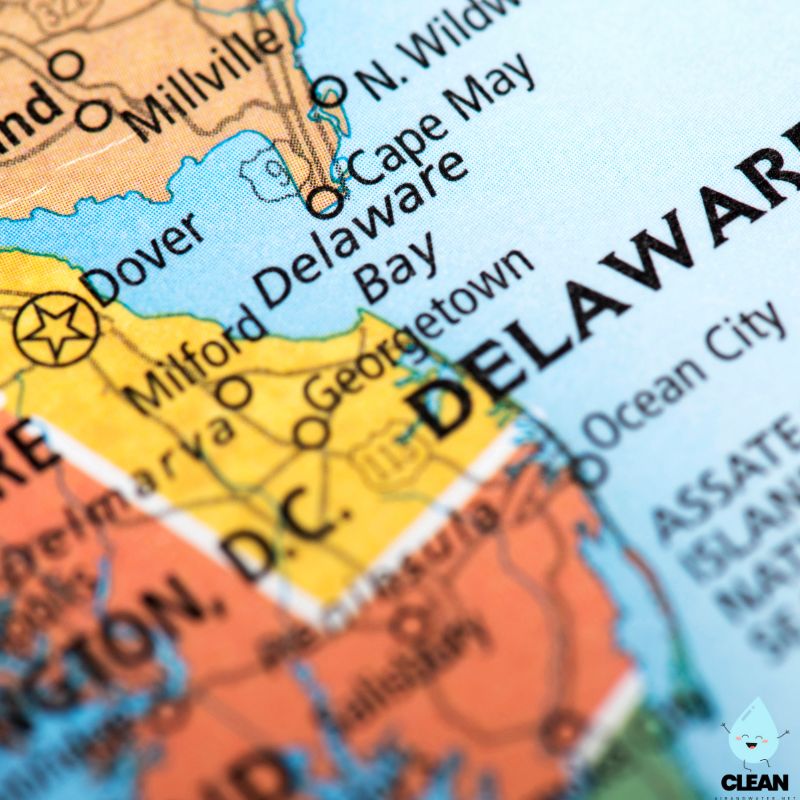
Delaware’s PFAS Problem in Private Wells
Delaware sits atop the Columbia aquifer — a largely unconfined, shallow aquifer that supplies groundwater to over 90% of the state and is particularly vulnerable to surface contamination. A 2021 USGS study of this aquifer sampled 30 public water-supply wells across the state and found PFAS in 16 of them — over half. Crucially, the USGS also confirmed that all 30 wells had at least one PFAS compound detected when a broader screening was applied. Because private residential wells draw from the same Columbia aquifer, these findings are directly relevant to private well owners. The aquifer’s shallow, unconfined nature means contaminants from the land surface — industrial discharges, military base runoff, agricultural chemicals — move relatively freely into the groundwater.
The highest single PFAS detection in the USGS study reached 130 ppt — more than 30 times above the current federal limit of 4 ppt for PFOA and PFOS. Two wells, located near New Castle and Selbyville, had combined PFOA and PFOS levels above 70 ppt. The most frequently detected PFAS types were PFOA, PFHxA, PFOS, and PFHxS.
EWG has identified two military installations in Delaware with confirmed PFAS presence, and flagged 82 companies that could be discharging PFAS into Delaware air and water. The New Castle Air National Guard Base has been specifically identified as a PFAS contamination source, with high illness rates reported in nearby communities who suspect exposure through groundwater.
In the town of Blades, PFAS in the municipal water supply was measured at up to 187.1 ppt in 2018 — across three municipal wells, all above the then-advisory level of 70 ppt. Residents were told not to drink the water and were supplied with bottled water by the state. The site was added to the EPA’s Superfund National Priorities List in September 2020. The contamination is suspected to originate from two nearby electroplating facilities — Procino Plating and Peninsula Plating — though the source has not been definitively confirmed. PFOA and PFOS continue to be detected in private residential wells in the area despite treatment of the public supply.
Nitrate Contamination: Sussex County’s Agricultural Legacy
Sussex County — where 98,000 residents, more than half the county’s population, rely on private wells — has a long agricultural history that has left a lasting mark on its groundwater. A DNREC hydrologist has stated that approximately 25% of wells in Sussex County have nitrate levels over the EPA drinking water standard of 10 mg/L, driven by fertiliser runoff from farmland. Agriculture covers roughly 37% of Delaware’s total land area, with most activity concentrated in Kent and Sussex Counties.
The town of Millsboro illustrates how severe this contamination can become. In late 2017, residents found bottled water delivered to their homes with a note from Mountaire Farms — a local poultry processing plant — advising them not to drink their well water. It later emerged that hundreds of gallons of effluent containing nitrates at over 25 mg/L — two and a half times the safe limit — had been infiltrating the northern Columbia aquifer for years. A $65 million class action settlement was approved by Delaware Superior Court on April 12, 2021. The settlement class encompassed anyone who lived or worked full-time in most of Millsboro or Dagsboro since May 2000; attorneys estimated up to 7,000 people could be eligible, with around 4,000 having registered claims.
High nitrate exposure carries serious health risks, particularly for infants under six months (where it causes potentially fatal blue baby syndrome), and has been linked in research to cancers, birth defects, and neurological conditions. Shallow wells — those less than 50 feet deep — are most vulnerable. The Columbia aquifer in the Millsboro area sits at around 110 feet, meaning residents who drill to 65 feet miss the protective clay layer entirely.
Quick Important Advertisement – Boil Water Alerts continue below
Don’t Wait for the Next Emergency to Act
Boil water alerts are a warning sign. Whether caused by pipe breaks, contamination, or natural disasters, they highlight how vulnerable our water systems can be.
The safest long-term solution? A reliable home water filtration system designed to remove bacteria, parasites, and harmful chemicals — so you’re protected even when advisories are issued.
Stay Ready with Trusted Filtration:
✅ Removes pathogens, chlorine, PFAS, and heavy metals
✅ Safer than boiling alone — no need to wait for alerts
✅ Easy options for homes, renters, and families
Prefer no installation? Check out the A2 Countertop System
Note: This advert may contain affiliate links. If you choose to buy, we may receive a small commission — thank you for supporting our work!
Iron, Manganese, and Bacteria in Delaware Wells
Iron and manganese are naturally occurring contaminants in Delaware’s shallow Coastal Plain aquifers and are among the most common problems reported by private well owners. At elevated levels they cause staining, odour, and taste problems. While not acutely toxic at typical concentrations, high manganese in drinking water has been associated with neurological effects in children with long-term exposure.
Coliform bacteria contamination is an ongoing risk in Delaware’s rural areas, particularly near poultry and livestock operations. DNREC and DHSS recommend testing for coliform bacteria annually. Well construction quality, proximity to septic systems, and flooding events all increase bacterial contamination risk. In Sussex County, where poultry farming is widespread, bacterial contamination from animal waste entering groundwater has been a documented issue.
Volatile organic compounds (VOCs) have also been detected in Delaware wells near industrial sites. The New Castle County area, with its heavier industrial and military presence, has seen a broader range of contaminants in groundwater compared to the more agricultural south.
Regulatory Situation for Delaware Well Owners
Private residential wells in Delaware are not regulated under federal safe drinking water law. DNREC issues well construction permits and flags proposed wells within 1,000 feet of a known contamination source for additional review — but there is no ongoing monitoring requirement and no system to alert existing well owners when nearby contamination is discovered.
Delaware does not have its own enforceable state PFAS MCLs for private wells. The federal limits of 4 ppt for PFOA and PFOS apply only to public water systems. Testing and treatment of private wells is entirely the homeowner’s responsibility. DNREC and DHSS both recommend annual testing for bacteria and nitrate, with PFAS testing strongly advised — especially for wells in New Castle County, Sussex County near Blades or Millsboro, and anywhere within a mile of a military installation or industrial facility.
Check our Delaware municipal water quality page for city and utility tap water data, or see our Wilmington water quality page for the state’s largest city. Use our live boil water notice tracker for active advisories statewide.
Known High-Risk Areas in Delaware
If you live near any of the following locations, well water testing is urgent — not precautionary.
Blades, Sussex County
Three municipal wells measured up to 187.1 ppt PFAS in 2018 — all above the then-advisory level. The site is on the EPA Superfund National Priorities List since September 2020. Contamination is suspected to originate from nearby electroplating facilities. Private residential wells in the area continue to show detections.
New Castle Air National Guard Base
EWG has confirmed PFAS presence at this New Castle County military installation. Residents near the base have reported elevated illness rates and attribute contamination to PFAS-laden firefighting foam used on site.
Millsboro, Sussex County
Nitrate contamination from Mountaire Farms poultry operations exceeded 25 mg/L — two and a half times the safe limit — in the Columbia aquifer. A $65 million settlement was approved in April 2021, with up to 7,000 people eligible and around 4,000 registered claims.
Selbyville, Sussex County
One of two wells in the USGS study found with combined PFOA and PFOS above 70 ppt — the EPA’s former advisory level and 17 times the current 4 ppt limit. The aquifer here is shallow and sits beneath agricultural land.
Dover Air Force Base, Kent County
Private wells near Dover AFB have been found with elevated PFAS levels from firefighting foam used on base. Delaware’s congressional delegation has pushed Air Force leadership to address the contamination. The base has installed water filtration for some affected nearby homeowners.
Rural Sussex County — Agricultural Wells
DNREC data shows approximately 25% of Sussex County wells exceed nitrate limits. Shallow wells near poultry farms, crop fields, and older septic systems face the highest ongoing risk from agricultural runoff.
How to Test Your Delaware Well Water — and What to Do Next
Given Delaware’s contamination profile — particularly the USGS finding that more than half of tested wells contained PFAS — every private well owner in the state should test their water regardless of location. PFAS is colourless, odourless, and tasteless. Nitrate has no detectable smell or appearance. Neither can be identified without laboratory analysis.
Delaware residents can access low-cost testing through the Delaware Public Health Laboratory (DPHL) for $2 per bacteria or basic chemical test by picking up sample forms from any county health office. For PFAS testing, DPHL does not conduct this test for private well owners directly — contact DNREC’s Office of Drinking Water or a private certified laboratory. DNREC’s Well Viewer at dnrec.delaware.gov is a useful first step to check whether your well is within 1,000 feet of a flagged contamination source.
For filter options, our well water filter guide covers reverse osmosis for PFAS and nitrate, iron filters for elevated iron and manganese, and UV systems for bacteria. See our full water filter solutions page or check your ZIP code for local water quality context.
For neighbouring state well water risks, see our pages on New Jersey water quality, Pennsylvania water quality, and Maryland water quality. You can also see our Michigan private well water guide or return to the private well water directory to find your state.
Quick Important Advertisement – Boil Water Alerts continue below
Don’t Wait for the Next Emergency to Act
Boil water alerts are a warning sign. Whether caused by pipe breaks, contamination, or natural disasters, they highlight how vulnerable our water systems can be.
The safest long-term solution? A reliable home water filtration system designed to remove bacteria, parasites, and harmful chemicals — so you’re protected even when advisories are issued.
Stay Ready with Trusted Filtration:
✅ Removes pathogens, chlorine, PFAS, and heavy metals
✅ Safer than boiling alone — no need to wait for alerts
✅ Easy options for homes, renters, and families
Prefer no installation? Check out the A2 Countertop System
Note: This advert may contain affiliate links. If you choose to buy, we may receive a small commission — thank you for supporting our work!
Quality News About Your Water
Get the comprehensive water quality news coverage you need with our dedicated US Water News Service. From coast to coast, we deliver in-depth reporting and expert analysis on PFAS contamination, EPA regulatory changes, infrastructure developments, and emerging water safety issues affecting communities nationwide. While mainstream media only covers the biggest stories, we provide the detailed, ongoing coverage that helps you understand the full scope of America’s water challenges.
What’s actually in your tap water? Enter your ZIP code for a full breakdown of contaminants detected in your local supply
Drinking water from a well? Check our directory here for more information
Please read – our information
The information presented on cleanairandwater.net is compiled from official water quality reports, trusted news sources, government websites, and public health resources. While we strive for accuracy and thoroughness in our presentations, we are not scientists, engineers, or qualified water quality professionals.
Our mission is to present water quality information in an accessible, real-world format that helps people understand what’s in their water and make informed decisions about their health and safety. We believe that complex environmental information should be available to everyone in a format that’s easy to understand.
We make every effort to ensure our content is current and accurate, but we cannot guarantee that all information is complete or error-free. This website should not replace official communications from your local water utility or health department. We always recommend consulting official sources for the most up-to-date information regarding your specific water system.
Clean Air and Water is not liable for any unintentional errors, omissions, or outdated information. The content on this site is provided for informational purposes only and should not be considered professional advice.