Anchorage Water Quality at a Glance
Last updated: March 6, 2026 | Based on AWWU’s most recent published Water Quality Reports and 2025 Water Master Plan
Is Anchorage Water Safe to Drink?
Yes — Anchorage’s water meets all federal and state standards and benefits from one of the best source water profiles in the country: glacier-fed Eklutna Lake, surrounded by protected Chugach State Park wilderness1. The most important 2026 update is that AWWU identified PFAS in a small number of groundwater wells and has taken the well exceeding the drinking water standard completely out of service3. Ongoing watch items include disinfection byproducts from chlorine treatment and the active lead service line inventory under way for older homes. Browse our Alaska state page for statewide PFAS context, check the boil water notice tracker for active alerts, or visit our water alert news page for the latest updates.
⚠️ Key Topics for Anchorage Residents — 2026 Update
- PFAS in groundwater wells (action taken): AWWU found PFAS in three wells — management controls have been implemented on all three, with the one well exceeding the EPA drinking water standard fully removed from service3. The 2025 Water Master Plan identifies PFAS contamination as an ongoing system-level consideration4.
- Disinfection byproducts: TTHMs and HAA5 form when chlorine reacts with natural organic matter — monitored routinely and regulated under EPA MCLs of 80 ppb and 60 ppb respectively1.
- Lead service line inventory (ongoing): AWWU mailed 20,000 postcards in 2024 asking residents to check their household pipes. AWWU’s own mains are lead-free, but some older homes may have lead solder or fixtures5.
- Aging infrastructure: AWWU’s 2025 Water Master Plan notes that water system assets are at approximately half their useful life and are entering a major reinvestment phase. Focus has shifted from expansion to maintenance and resilience4.
- Girdwood supply: The 2025 Master Plan flags that Girdwood — served entirely by groundwater — will need improvements to water supply as demand grows4.
Read the full report below for detailed analysis, source information, and actionable recommendations for Anchorage residents.
advertisment – report continues below
Your water passed the test.
Legal isn’t the same as safe.
Regulated contaminants like PFAS, chromium-6, and disinfection byproducts can sit inside the legal limit and still carry long-term health risks. Passing isn’t the same as clean.
✅ Removes PFAS, lead & chromium-6 — the contaminants most flagged even in passing city reports
✅ NSF/ANSI 42, 58 & 372 certified — independently tested, not just manufacturer claims
✅ Installs in 30 minutes, no plumber — fills a glass in 8 seconds, smart LED filter monitor
Renting or can’t drill? The Waterdrop K19 Countertop RO — plug in, fill the tank, done. No installation, no drilling, no plumber.
Advertisement — this page contains affiliate links. If you buy through these links, we may earn a commission at no extra cost to you.

Anchorage Water Quality Report 2026 | Is Anchorage Tap Water Safe?
Last updated: March 6, 2026
The Anchorage Water and Wastewater Utility (AWWU) serves more than 285,000 residents across the Municipality of Anchorage — including Chugiak-Eagle River, Peters Creek, Eklutna, and Girdwood2. The system runs on 13 wells, 850+ miles of water distribution pipes, 6,100+ fire hydrants, and 19 reservoirs storing more than 58 million gallons2.
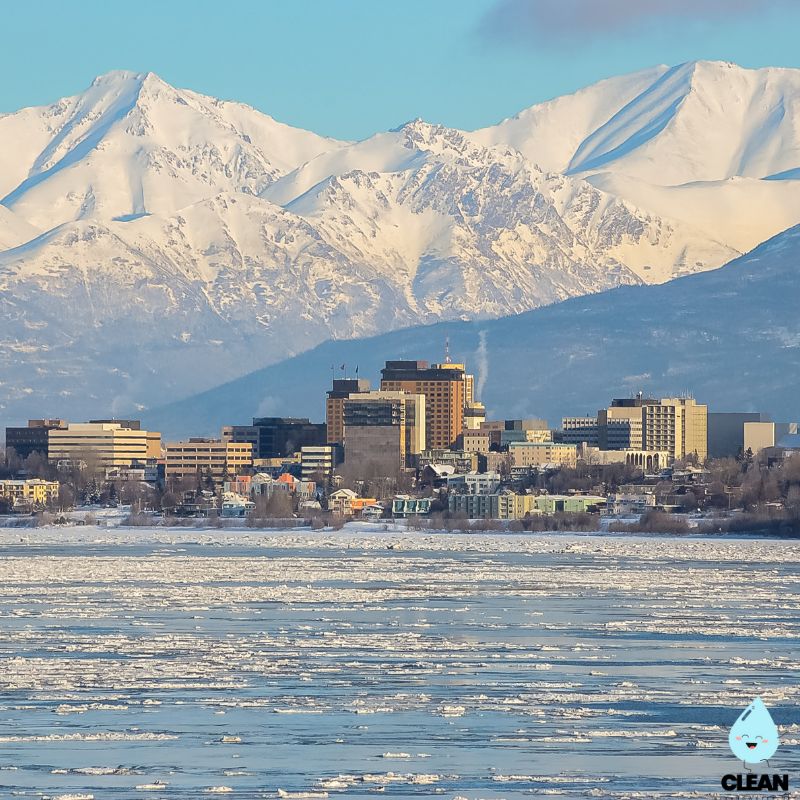
Anchorage’s main water source is Eklutna Lake in the Chugach Mountains, fed by glacial snowmelt and protected by surrounding state parkland. Surface water from Eklutna and Ship Creek provides around 90% of supply, with groundwater wells covering the rest1. The water consistently meets all federal and state standards.
The key 2026 development: PFAS was detected in three of AWWU’s groundwater wells. Management controls have been implemented on all three; the well with PFAS above the EPA drinking water standard has been fully removed from service3. The 2025 Water Master Plan — finalised for board approval in December 2025 — identifies PFAS and aging infrastructure as the system’s central long-term challenges4. See our Alaska state page for the broader statewide PFAS picture, compare cold-climate water systems in our Billings, Montana and Casper, Wyoming reports, or browse the full US water quality directory.
Anchorage Water Quality: Current Status (2025–2026)
Latest Testing Results
- Compliance status: Anchorage meets all federal and state drinking water standards based on the most recent published monitoring data1. Check the boil water notice tracker and water alert news for any current advisories.
- Monitoring scale: Over 3,000 water samples are collected and tested annually across the system to ensure safety1.
- Pathogen protection: AWWU has never detected viable Giardia or Cryptosporidium in its treated drinking water — protected source waters and multi-barrier treatment are key reasons1.
- PFAS in wells — action taken: PFAS was found in three groundwater wells. Management controls applied to all three; the one well exceeding EPA’s drinking water standard has been completely removed from service3.
- Disinfection byproducts: TTHMs and HAA5 monitored throughout the distribution system; results reported below EPA MCLs of 80 ppb and 60 ppb1.
- Lead: AWWU’s mains are lead-free. A federally required lead service line inventory was launched in 2024, with 20,000 postcards sent to residents — homes built before 1986 may have lead solder in household plumbing5.
- Fluoride: AWWU fluoridates at 0.7 ppm, the level recommended by the American Water Works Association and required by Anchorage Municipal Code6.
Water Sources
- Eklutna Lake: Primary source — approximately 90% of supply — glacier-fed from the Chugach Mountains, treated at the Eklutna Water Treatment Facility1.
- Ship Creek: Secondary surface water source from protected watershed areas, processed at the Ship Creek Water Treatment Facility.
- 13 groundwater wells: Supplement supply, primarily during peak demand periods. Three wells now subject to PFAS management controls3.
- Watershed protection: Source waters are surrounded by Chugach State Park — no agricultural or industrial land use in the catchment1.
2025 Water Master Plan — Infrastructure Focus
AWWU’s 2025 Water Master Plan — developed for board approval at the December 2025 board meeting — marks a strategic shift from expansion to maintenance and resilience. Key findings: water system assets have consumed approximately half of their useful lives and are entering a major reinvestment phase7. The plan prioritises repair and replacement projects, system redundancy for transmission main failures, and PFAS risk management4. Anchorage’s population is expected to remain relatively stable over the next 20 years — so the focus is on maintaining quality and reliability, not rapid growth4. For a comparison of how other northern cities are managing aging infrastructure, see our reports for Fargo, North Dakota and Burlington, Vermont. For statewide context, visit our Alaska state water quality page.
Recommendations for Anchorage Residents
Check Your Home’s Pipes
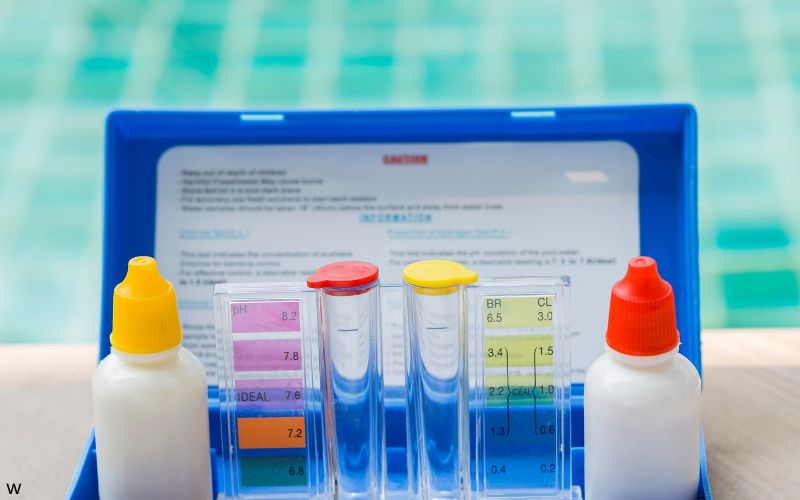
AWWU’s mains are lead-free, but homes built before 1986 may have lead solder in household plumbing. If you received a service line inventory postcard from AWWU, complete the survey at awwu.biz. For lead service line questions, call (907) 311-1300 or email info@lcr.awwu.biz5. Flushing the cold tap for 30–60 seconds before drinking is a simple precaution. Use our water quality directory to compare lead results across US cities.

Conserve Water
Despite Anchorage’s abundant glacial supply, AWWU’s 2025 Master Plan notes that peak demand can exceed 50 million gallons per day4. Fix leaks promptly, install efficient fixtures, and consider native Alaskan landscaping that needs minimal summer irrigation. Good stewardship now supports a reliable supply for the next 20 years.
Consider Home Filtration (Optional)
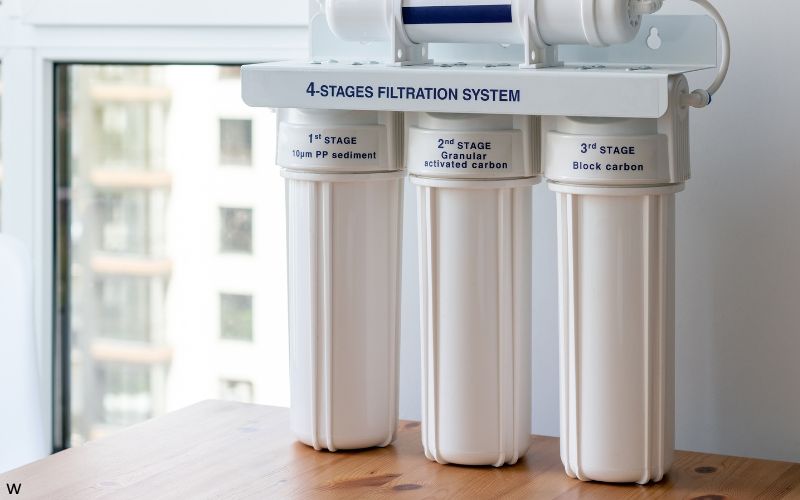
Anchorage’s water meets all standards, but for extra peace of mind — particularly around disinfection byproducts, PFAS, or lead at older taps — a certified NSF/ANSI filter is a practical option. Activated carbon reduces chlorine taste/odour and DBPs; a reverse osmosis system provides more comprehensive coverage including PFAS. View our recommended RO option or browse all certified water filter solutions. Affiliate link — commission may apply at no cost to you.
Prepare for Winter
Alaska’s extreme cold requires special attention to plumbing. Insulate pipes in unheated areas, keep indoor temperature consistent even when away, and know how to safely thaw frozen pipes. During extended absences, shut off your water supply and drain pipes. Contact AWWU at (907) 564-2700 if you experience low pressure or flow issues during cold snaps. Check the boil water notice tracker and water alert news for any active advisories in your area.

Report Issues
AWWU Customer Care is available 24/7 at (907) 564-2700 for water main breaks, pressure problems, taste, odour, or discolouration concerns. For lead service line questions, call (907) 311-1300 or email info@lcr.awwu.biz. For stormwater drain problems, contact Municipality of Anchorage Street Maintenance at (907) 343-8277. You can also monitor our water alert news page for system-wide notifications.
Quality News About Your Water
Get the comprehensive water quality news coverage you need with our dedicated US Water News Service. From coast to coast, we deliver in-depth reporting and expert analysis on PFAS contamination, EPA regulatory changes, infrastructure developments, and emerging water safety issues affecting communities nationwide. While mainstream media only covers the biggest stories, we provide the detailed, ongoing coverage that helps you understand the full scope of America’s water challenges.
What’s actually in your tap water? Enter your ZIP code for a full breakdown of contaminants detected in your local supply
Drinking water from a well? Check our directory here for more information
Contaminants of Concern
Disinfection Byproducts (TTHMs & HAA5)
Source: Form when chlorine used in water treatment reacts with naturally occurring organic matter — levels vary seasonally with water temperature and organic content.
What the rule says: EPA MCLs are 80 ppb for total trihalomethanes (TTHMs) and 60 ppb for haloacetic acids (HAA5).
Current status: Monitored routinely throughout the distribution system with results below EPA MCLs1. If concerned, an activated carbon or certified reverse osmosis filter can reduce DBPs at the tap. See how DBP levels compare in our Boise, Idaho and Billings, Montana reports.
PFAS “Forever Chemicals” — Wells Under Management
Source: PFAS in the Anchorage area is associated with legacy firefighting foam use near certain facilities. Environmental monitoring has also identified PFAS in nearby surface waters.
What the rule says: EPA’s 2024 National Primary Drinking Water Rule sets MCLs of 4 ppt for PFOA and PFOS, and 10 ppt each for PFNA, PFHxS, and HFPO-DA (GenX), plus a hazard index for PFAS mixtures.
2026 status: PFAS was detected in three of AWWU’s groundwater wells. Management controls have been implemented on all three; the well with PFAS exceeding the proposed EPA drinking water standard has been completely removed from service3. The 2025 Water Master Plan identifies PFAS as an ongoing system-level risk to be managed4. For a full statewide picture, see our Alaska PFAS overview. NSF-certified PFAS filters are available if you want added protection.
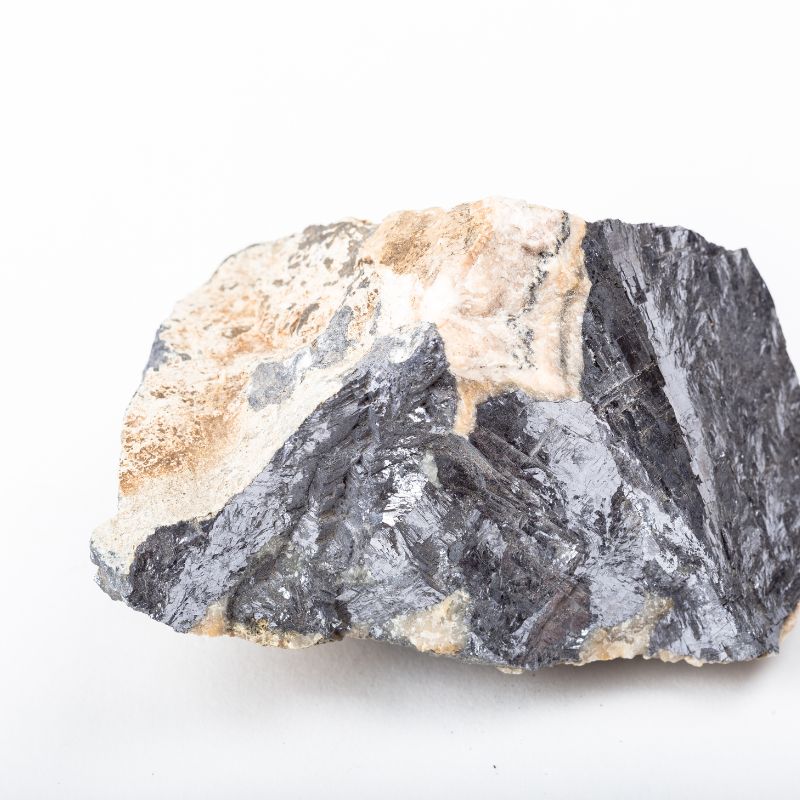
Lead (At-the-Tap Risk from Older Home Plumbing)
Source: AWWU’s system mains are lead-free. Risk comes from lead solder, fixtures, or internal plumbing in homes built before 1986.
What the rule says: EPA action level is 15 ppb. The Lead and Copper Rule Revisions (LCRR) require utilities to inventory service line materials system-wide.
2026 status: AWWU launched a service line inventory in late 2024, mailing 20,000 survey postcards to customers in the Anchorage bowl5. If you received one, complete the survey at awwu.biz. If your home is pre-1986, flushing the cold tap for 30–60 seconds before use is a sensible precaution. AWWU optimises water chemistry for corrosion control. See how other northern cities handle lead risk in our Burlington, Vermont and Fargo, North Dakota reports.
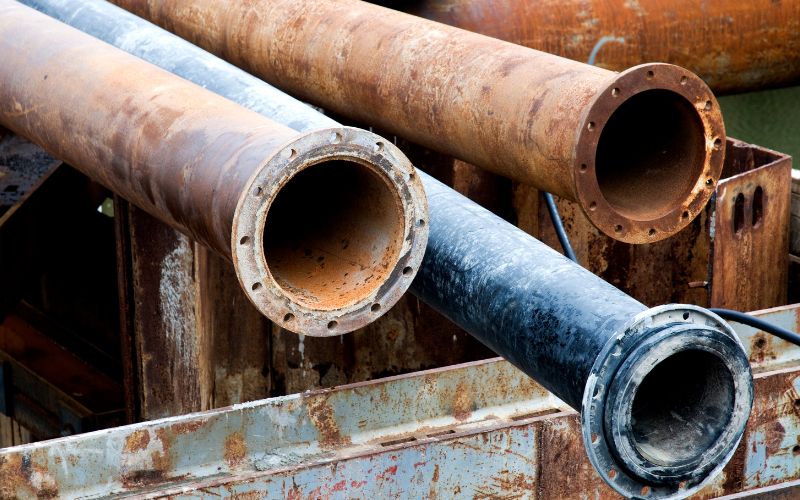
Infrastructure Age & Resilience
Context: Anchorage’s water distribution pipe network has a weighted average age of over 35 years7. Water system assets have collectively consumed approximately half of their useful lives.
What AWWU is doing: The 2025 Water Master Plan shifts focus from expansion to repair, replacement, and resilience. Key priorities include reducing reliance on pumped infrastructure, building redundancy into transmission mains, and improving water quality in distribution zones4. Girdwood’s groundwater-only supply is identified as needing specific improvements.
For comparison on how other cold-climate communities handle infrastructure challenges, see our Alaska state page, our Casper, Wyoming report, or the full water quality directory.
Frequently Asked Questions: Anchorage Drinking Water
Is Anchorage tap water safe to drink in 2026?
Yes. Anchorage’s water meets all federal and state standards and benefits from some of the most pristine source water in the US — glacier-fed Eklutna Lake surrounded by protected wilderness1. The notable 2026 update is that AWWU found PFAS in three groundwater wells and has taken the one exceeding EPA’s drinking water standard fully out of service3. For home-specific results — especially lead — check your plumbing age and complete AWWU’s service line survey if requested. Use our water quality directory to compare with other cities, or check water alert news for the latest system updates.
Was PFAS found in Anchorage’s drinking water?
PFAS was detected in three of AWWU’s groundwater wells — not in the main surface water supply from Eklutna Lake or Ship Creek. AWWU implemented management controls on all three wells and fully removed from service the one well where PFAS exceeded the proposed EPA drinking water standard3. The 2025 Water Master Plan treats PFAS as an ongoing system consideration4. See our Alaska PFAS overview for the full statewide context, and our Boise and Casper reports for regional comparison.
Should I be concerned about lead in Anchorage’s water?
AWWU has never used lead pipes in its system. However, homes built before 1986 may have lead solder or fixtures in household plumbing. AWWU launched a federally required lead service line inventory in late 2024 — if you received a survey postcard, please respond at awwu.biz5. Simple precautions: flush the cold tap for 30–60 seconds before drinking, especially after long periods of non-use. For lead service line questions, call (907) 311-1300. Browse our certified water filter solutions for NSF-verified options that remove lead at the tap.
Why does my water sometimes taste different in winter?
Seasonal taste variations in Anchorage can result from temperature changes affecting taste perception, seasonal shifts in the balance of surface water and groundwater sources, or treatment adjustments to address changing water characteristics. Indoor plumbing can also contribute in very cold temperatures. Running cold water for a few minutes after periods of non-use often helps. If the taste seems unusual or persistent, contact AWWU at (907) 564-2700 and check the boil water notice tracker and water alert news.
Are there water restrictions in Anchorage?
Anchorage does not typically implement mandatory water restrictions — its reliable supply from Eklutna Lake and groundwater means scarcity is not a usual concern. However, voluntary conservation is encouraged, especially as peak demand can exceed 50 million gallons per day in summer4. In rare emergencies (major infrastructure failure, natural disaster), temporary restrictions may be issued via public notification. Current system status is at awwu.biz or (907) 564-2700. Compare water management approaches in other western cities via the water quality directory.
What This Means for Anchorage Residents
Anchorage has among the best source water in the US and its tap water is safe to drink. The 2026 picture is largely positive, with one important caveat: PFAS was found in groundwater wells, and AWWU has acted — removing the most contaminated well from service. The ongoing challenges are managing an aging distribution system entering a major reinvestment phase, completing the lead service line inventory, and monitoring PFAS as EPA compliance timelines roll out. If you live in an older home or want extra coverage for DBPs or PFAS, a certified reverse osmosis or carbon filter is a straightforward option. For the broader Alaska picture, visit our Alaska state page, or compare with nearby cold-climate cities like Billings, Boise, and Casper in our water quality directory.
Sources & Notes
- AWWU Drinking Water Quality overview (awwu.biz) — source water, treatment, monitoring
- AWWU 2025 Water Master Plan Fact Sheet (April 2025) — system stats: 285,000+ residents, 13 wells, 850+ miles pipe, 58M+ gallon storage
- Municipality of Anchorage 2024 Approved Utility Enterprise — PFAS well detections and management controls including removal from service
- AWWU 2025 Water Master Plan Online Open House — PFAS risk, aging infrastructure, Girdwood supply, demand projections
- Alaska’s News Source — “Anchorage homeowners asked to test their pipes for lead” (November 2024)
- AWWU Water Quality FAQs — fluoridation at 0.7 ppm per Anchorage Municipal Code
- AWWU Reliable Infrastructure page — pipe network age, capital investment overview
- Alaska DEC PFAS drinking water sample results database
- EPA drinking water regulations — MCLs, PFAS rule, Lead and Copper Rule Revisions
- PFAS note: “Removed from service” refers to the one AWWU groundwater well exceeding the proposed EPA MCL. Two additional wells with lower-level detections remain under management controls. Main surface water supply from Eklutna Lake and Ship Creek is not affected.
- Lead note: AWWU mains are lead-free. At-the-tap lead risk is from household plumbing in pre-1986 homes — test at awwu.biz if unsure.
- Affiliate disclosure: Filter recommendations are optional extra protection. Affiliate links are marked as sponsored and never affect the factual content of this report.
Please read – our information
The information presented on cleanairandwater.net is compiled from official water quality reports, trusted news sources, government websites, and public health resources. While we strive for accuracy and thoroughness in our presentations, we are not scientists, engineers, or qualified water quality professionals.
Our mission is to present water quality information in an accessible, real-world format that helps people understand what’s in their water and make informed decisions about their health and safety. We believe that complex environmental information should be available to everyone in a format that’s easy to understand.
We make every effort to ensure our content is current and accurate, but we cannot guarantee that all information is complete or error-free. This website should not replace official communications from your local water utility or health department. We always recommend consulting official sources for the most up-to-date information regarding your specific water system.
Clean Air and Water is not liable for any unintentional errors, omissions, or outdated information. The content on this site is provided for informational purposes only and should not be considered professional advice.